
Last updated November 15, 2026
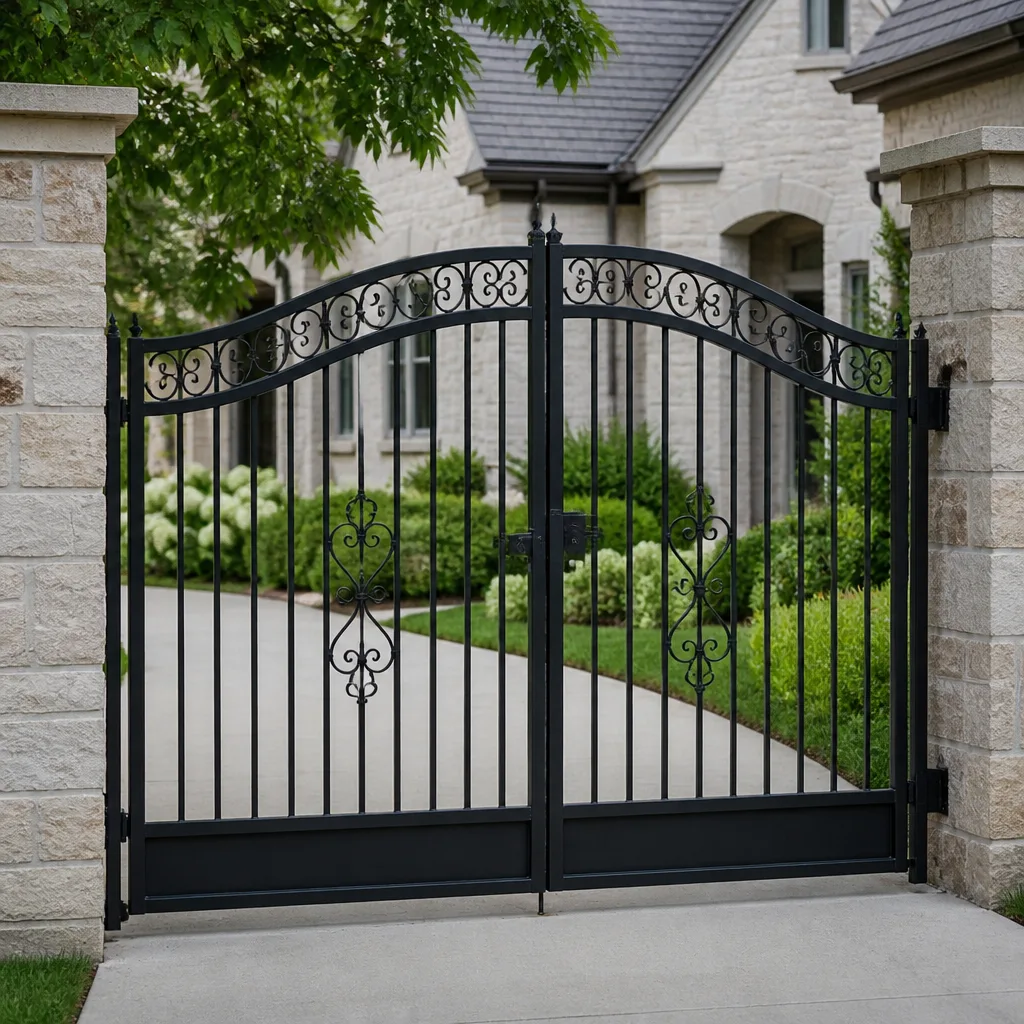 Wrought iron
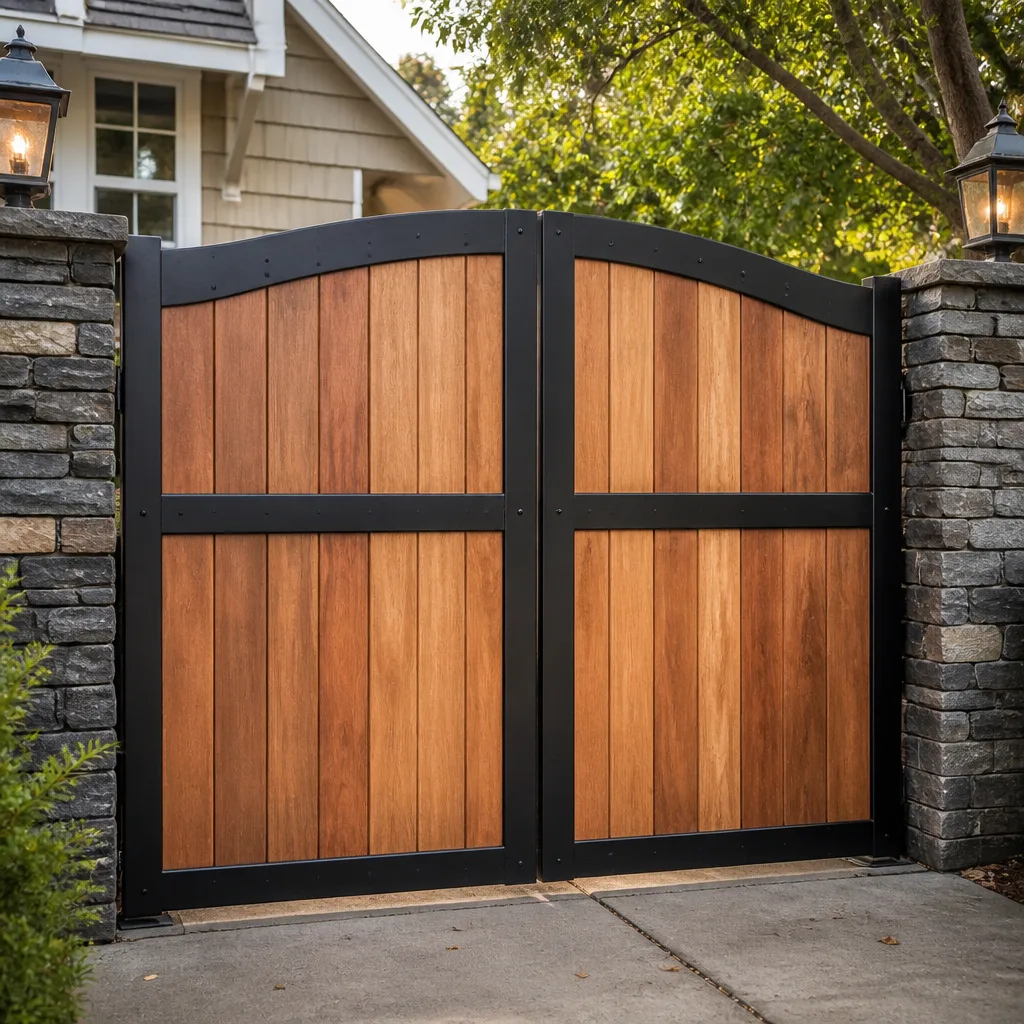 Wood & steel frame
 Farm & ranch
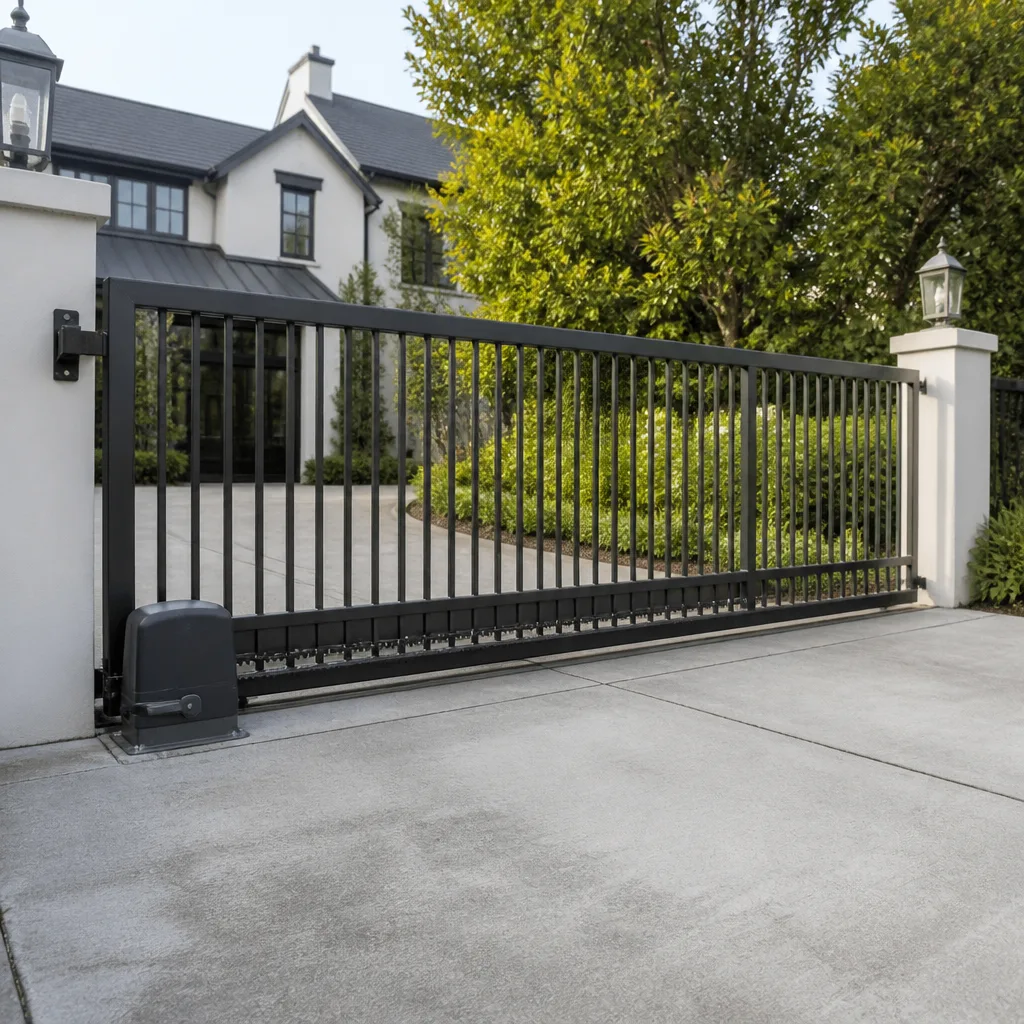 Sliding driveway gates
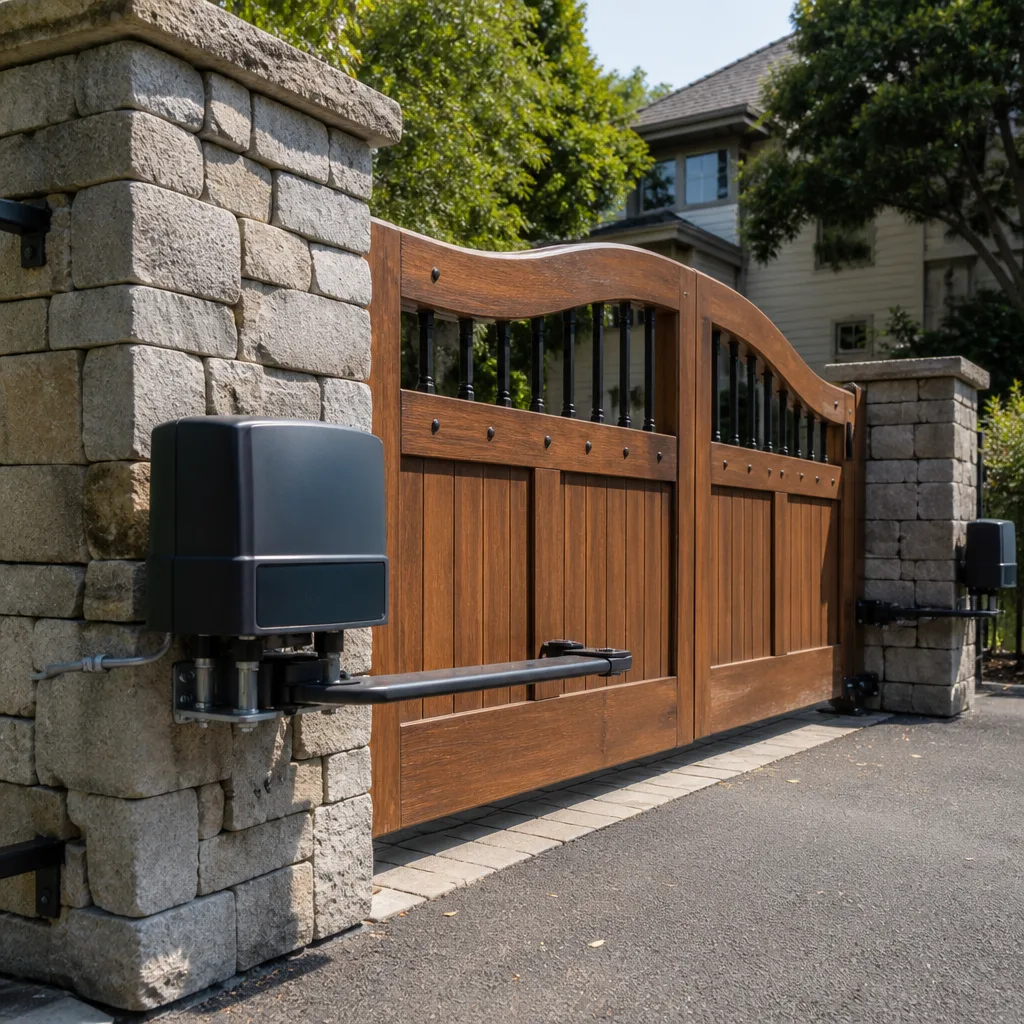 LiftMaster operators
Free on-site gate assessment - hinges, posts, and your LiftMaster or Nice gate operator checked before anything is quoted
The assessment is free and the quote is the invoice.
Get your free estimateGate Repair Troubleshooting in New Braunfels: Common Problems and How to Fix Them
A gate that reverses before it fully opens and a gate that won’t move at all look like the same problem from the driveway. They aren’t. One is usually a sensor or obstruction-logic issue; the other is usually power, a dead control board, or a motor that has given up. Misreading the symptom is the single biggest reason troubleshooting goes wrong, and it’s why a part gets replaced that was never the problem. In this guide, we’ll walk through how to read your gate’s behavior like a technician does, map each symptom to its most likely cause, and show you which problems you can safely check yourself in New Braunfels and which ones need a trained hand on live wiring.
Quick Answer
Most automated gate failures in New Braunfels fall into one of five categories: obstruction or safety-sensor logic, motor and drive failure, limit-switch misalignment, control-board fault, or power supply. Reversing stalks usually point to sensors; grinding points to the drive; a completely silent gate points to power or the board. Match the symptom to the category first, and you’ll cut diagnostic time roughly in half before anyone touches a tool.
Styles & brands we work with
- Wrought iron
- Wood & steel frame
- Farm & ranch
- Sliding driveway gates
- LiftMaster operators
Table of Contents
- Symptom-to-Cause Map: Reading Your Gate Like a Technician
- Why Does My Gate Reverse or Stop Mid-Travel?
- Grinding, Squealing, and Stalling: When It’s Mechanical
- Dead Silence: Power, Breakers, and Control Boards
- How Central Texas Caliche Soil Causes Post Lean That Mimics Operator Failure
- Summer Heat Above 95°F: Thermal Cutoff vs. a Dead Board
- Manual Release: Getting Your Gate Open Without Being Trapped
- What You Can Safely Check Yourself vs. What Needs a Technician
Symptom-to-Cause Map: Reading Your Gate Like a Technician
The first thing a gate technician does on any service call isn’t grab a screwdriver. It’s watch the gate cycle and listen. Your gate is telling you exactly what’s wrong if you know what to look for, and the symptom almost always narrows the cause down to one of five categories. Here’s how we map it.
| Symptom | Most Likely Category | Typical Next Step |
|---|---|---|
| Reverses mid-travel or won’t close the last few inches | Obstruction logic, safety sensors, or limit switch | Check the photo-eye alignment and clear the path |
| Grinding, squealing, or stalling under load | Mechanical: drive gears, chain, hinges, or track | Inspect moving parts for wear or debris |
| Motor hums but the gate doesn’t move | Mechanical bind or stripped drive gear | Check for a bent post, off-track slide gate, or seized hinge |
| Completely silent, no response to remote or keypad | Power supply, breaker, transformer, or control board | Verify power at the operator |
| Works from the keypad but not the remote (or vice versa) | Control board, receiver, or remote programming | Test each input separately |
| Opens fine in the morning, quits by mid afternoon on a hot day | Thermal cutoff in the operator | Let it cool, then test; check the manual for thermal protection |
That mapping holds whether you’re running a Mighty Mule DIY swing operator or a DoorKing commercial unit at the entrance to a small business park. The hardware differs; the diagnostic logic is the same. Gate repair in New Braunfels starts with observation, not parts. When a homeowner tells us on the phone “it just won’t open,” the next question we ask is what it does right before it fails. The answer almost always tells us which of the five categories we’re walking into.
Why Does My Gate Reverse or Stop Mid-Travel?
A gate that reverses before it fully closes is almost always obeying a safety input, not malfunctioning. The operator is doing its job: it thinks something is in the path, so it backs off. Nine times out of ten, the fix is in the sensor circuit or the limit setting, not the motor.
Here’s where to look, in order:
- Photo-eye alignment. The safety sensors at the gate opening send an invisible beam across the path. If the beam is broken by a shifted bracket, a spider web, or debris, the gate reverses. Wipe the lenses and check that the brackets haven’t been bumped.
- Obstruction in the track or path. For slide gates, gravel and leaves collect in the track and create resistance the operator reads as an obstruction. Clear the track before assuming anything else.
- Limit switch position. If the gate reverses right before it fully closes, the close limit may be set too tight, or the reverse-adjustment on the board may be too sensitive.
- Safety-edge wiring. If your gate has a safety edge on the closing side, a damaged wire in the loop will cause intermittent reversals, often worse in wind or after rain.
- Board sensitivity setting. Some control boards have an adjustable reverse-sensitivity dial. It can drift and needs recalibration.
In our experience, photo-eye misalignment is the single most common cause of reversing we see across New Braunfels, especially on gates shaded by live oaks where shifting soil and summer heat move the mounting posts just enough to break the beam. Before you touch anything electrical, though, note that sensor circuits run on low voltage and are usually safe to inspect. The control board itself is not. If the sensor checks out and the gate still reverses, it’s time for a technician to test the board.
Grinding, Squealing, and Stalling: When It’s Mechanical
Noise is mechanical. If your gate grinds, squeals, or stalls under load, the operator’s drive system or the gate’s moving hardware is telling you where it hurts. This is also where post lean and physical binding show up, and it’s why a mechanical assessment needs to happen before anyone diagnoses the motor.
The main mechanical culprits:
- Worn drive gears. Inside the operator, nylon or metal gears wear over time. A grinding operator that still moves the gate slowly usually has a stripped gear. Fixable on most residential units; a technician can confirm.
- Chain or belt tension. On chain-drive units, a loose chain slaps and a tight one binds. Both cause noise and premature wear.
- Hinge and pivot wear. Swing gates hang on hinges that wear out, especially on heavy metal or wood panels. A gate that drops slightly and drags on the ground is fighting its own operator.
- Slide gate rollers and track. Off-track rollers or a bent track create resistance that reads as a motor problem. It usually isn’t.
- Post lean. A gate post that has shifted out of plumb throws the whole mechanism out of alignment. This is common in New Braunfels because of the caliche soil, which we cover in the next section.
One important safety note: grinding noises from a heavy gate that’s also binding can put enormous stress on the operator and the panel itself. Don’t keep cycling a gate that’s clearly fighting itself. Stop it, and have a technician assess it. A panel that comes off its track or a hinge that fails under load is a real injury risk, and no amount of troubleshooting is worth a crushed hand.
Dead Silence: Power, Breakers, and Control Boards
A gate that won’t respond at all is the easiest category to start checking and the most dangerous to probe carelessly. Silence means the operator isn’t getting power, is getting power and rejecting it, or is getting power and sitting in a fault state. There’s a big difference between those three.
Here’s the order a technician works through:
- Check the breaker panel. The gate operator should be on its own dedicated circuit. A tripped breaker is the most common cause of complete silence, and resetting it is safe from the panel.
- Check the disconnect switch. Many operators have a service disconnect near the unit. Make sure it’s on, not accidentally bumped.
- Check the operator’s internal fuse or reset. Some control boards have a small fuse that blows on power surges, and some require a board reset after a fault. The owner’s manual for your brand tells you where to look.
- Test the input. If the remote fails but the keypad works, the problem is the receiver or remote programming, not power. If both fail, the board is a suspect.
- Power at the operator. This is where it becomes a technician’s job. Verifying 120V or 240V at the operator terminal requires opening the control enclosure and testing live wiring. That’s not something to do yourself, and it’s not something the manual will walk you through safely.
The uncomfortable fact is that a dead circuit board and a dead transformer look identical from the outside. Both are silent. Both fail after a power event or a burnt component. A technician can test both quickly with a multimeter; a homeowner can’t. That’s why the “just replace the board” guess is expensive. We see gates where the board was replaced and the gate still didn’t work because the real issue was the transformer or a control wire chewed by a squirrel. Electric gate repair isn’t guesswork when someone who works on the electrical and mechanical sides daily takes a look.
How Central Texas Caliche Soil Causes Post Lean That Mimics Operator Failure
New Braunfels sits on some of the hardest, most unforgiving soil in Central Texas: caliche. It’s a calcium-carbonate-rich layer that can be nearly as hard as concrete in dry months. It’s great for driving fence posts; it’s not great for the posts holding up a swing gate. That’s a local reality that affects gate performance in ways that have nothing to do with the operator, and it’s high on the list of misdiagnosed failures.
Here’s how post lean creates apparent operator problems:
- Misaligned hinges. When one post settles or leans a fraction of an inch, the gate’s weight shifts and the hinges bind. The operator strains, overheats, or trips its limit.
- Changed swing path. A gate that hangs crooked may start contacting the ground or an adjacent structure. The safety edge interprets the resistance as an obstacle and reverses.
- Limit-switch drift. The operator’s close and open limits were set when the gate was plumb. A leaning gate no longer reaches those positions, so it reverses or fails to latch.
- Slide gate track misalignment. For slide gates, a settling post can pull the track out of level, and the operator fights the whole run.
This is why a good gate repair technician checks the post before diagnosing the motor. If the post is leaning and the operator checks out, the operator is not the problem. The fix is a post correction or reset, sometimes a hinge adjustment, and a re-calibration of the limits. Replacing a perfectly functional operator because the post leaned is a classic caliche misdiagnosis, and it’s expensive. If you’re in New Braunfels and your gate suddenly fights itself after a dry summer or a heavy rain season, have the post checked first.
Summer Heat Above 95°F: Thermal Cutoff vs. a Dead Board
If your gate works in the morning and quits by mid-afternoon on a hot day, you’re looking at thermal cutoff, not a dead control board. That distinction saves customers a lot of money. New Braunfels summers regularly push past 95°F, and operators that sit in direct sun can hit their thermal limits after hours of use.
How to tell them apart:
- Thermal cutoff trips after the operator has been running repeatedly or has been baking in the sun. The gate goes unresponsive, then works again once the unit cools. The reset is automatic on most units. Check the manual for your brand’s thermal protection behavior.
- A dead board doesn’t come back after cooling. The silence is permanent. The remote, keypad, and manual inputs all fail together.
- A failing motor can mimic thermal cutoff because winding resistance rises with heat. But a motor going bad usually gets weak before it stops; a thermal-protected operator stops cleanly and then restarts when cool.
The practical tip: if your gate quits on a hot afternoon, let it rest and test again later. If it comes back to life, it’s thermal. If it doesn’t, it’s electrical. Don’t replace a board on a thermal trip. Some operators, especially units mounted in direct sun, benefit from a shading correction or a technician checking the cooling path. For heavier commercial operators like those from DoorKing and FAAC, thermal issues show up under constant use at driveways with high traffic, so matching duty cycle to gate use matters. We work on the brand you already have, so we can tell you whether yours is undersized for its job.
Manual Release: Getting Your Gate Open Without Being Trapped
Every automated gate has a manual release, and it’s the most important piece of troubleshooting knowledge a homeowner can have. When the operator fails or the power is out, you shouldn’t be stuck inside or outside your own property.
The release procedure varies by brand, so check the owner’s manual for your specific unit. The general steps:
- Turn off the power to the operator. Flip the breaker or the disconnect switch before you touch the release mechanism.
- Locate the release. On swing operators, it’s usually a keyed lever or a manual release handle on top of the operator housing. On slide gates, it’s often a chain hoist or lever. On barrier arms, it’s a mechanical clutch.
- Engage the release. Insert the key, turn it, and pull or push the lever. You should hear or feel the motor disengage from the gate.
- Move the gate by hand. Push the gate to the open position. It should move smoothly. If it doesn’t, the mechanism is bound and you should stop and call for help.
- Re-engage the release. On most units, cycle the operator or the manual release to reset it. Test with the remote when power is restored.
For common residential brands like Elite, Ghost Controls, and Mighty Mule, the manual release is designed for homeowner use, but it does require a little strength and the correct key. Heavy commercial gates are different. If the gate is large, the release mechanism is different, and releasing it by hand can be risky. A technician should be handling those. We answer 24/7. Fast dispatch from 7am to 7pm, Sunday through Friday, and a call outside dispatch hours is booked into the next opening. If you’re locked out, say so when you call; we’ll help you sort out the release first.
What You Can Safely Check Yourself vs. What Needs a Technician
Some troubleshooting is safe for a homeowner, and some can hurt you. Here’s the dividing line, and it matters because too many DIY attempts end with a damaged board and a bigger invoice than a service call would have been. The general principle: low-voltage diagnostics are usually fair game; anything involving the live power supply is not.
Safe to check yourself:
- Photo-eye lenses and their mounting brackets
- Obstructions in the gate path or slide track
- Remote batteries and remote programming
- The breaker panel
- Visual inspection of hinges, rollers, and the gate for damage or post lean
- Loose hardware on the gate and hinges (tighten only)
- The manual release, when you need to free the gate
Needs a technician:
- The control board and its fuse or reset points
- Any wiring inside the operator enclosure
- Testing voltage at the operator
- Limit-switch adjustment on an unfamiliar brand
- Safety-edge wiring and sensor replacement
- A motor or operator that has failed
- Anything involving live 120V or 240V circuits
There’s a reason for that line. Gate operators contain live 120V or 240V circuits inside the same enclosure as low-voltage control wiring. A wrong probe bridged across the wrong terminal can fry a board or injure you, and the safety reverse system is meant to protect people. A trained gate technician knows the hardware and the wiring order. Our technicians have up to 14 years of experience across residential and commercial systems, covering nine major brands. That doesn’t mean you can’t check the obvious, it just means the electrical side belongs to someone who does it daily.
Common Mistakes to Avoid
- Assuming the motor is bad. In our experience, half the calls that start with “I need a new motor” end with a sensor, hinge, or post fix. The motor is usually doing exactly what it’s told.
- Replacing the control board on a thermal trip. If the gate works again after it cools, the board is fine. Let it cool and retest before spending on parts.
- Ignoring a leaning post. Caliche soil and heavy gates are a tough combination in New Braunfels. A post that has shifted out of plumb throws limits and hinges out of alignment, and no operator will run right until it’s corrected.
- Probing the control enclosure with the power on. Live 120V or 240V inside the operator can injure you and fry the board. If the board is a suspect, call a technician.
- Forcing a gate that’s clearly binding. A gate that grinds and resists is telling you something is stuck. Cycling it repeatedly wears the operator and risks a heavy panel coming loose.
- Adjusting limits on an unfamiliar brand without the manual. Every brand sets limits differently. Without the manual, it’s guessing.
- Replacing the whole system when a repair would do. Factory-familiar with brands from Mighty Mule to commercial DoorKing, we diagnose honestly and only recommend replacement when the repair isn’t cost-effective.
See the difference
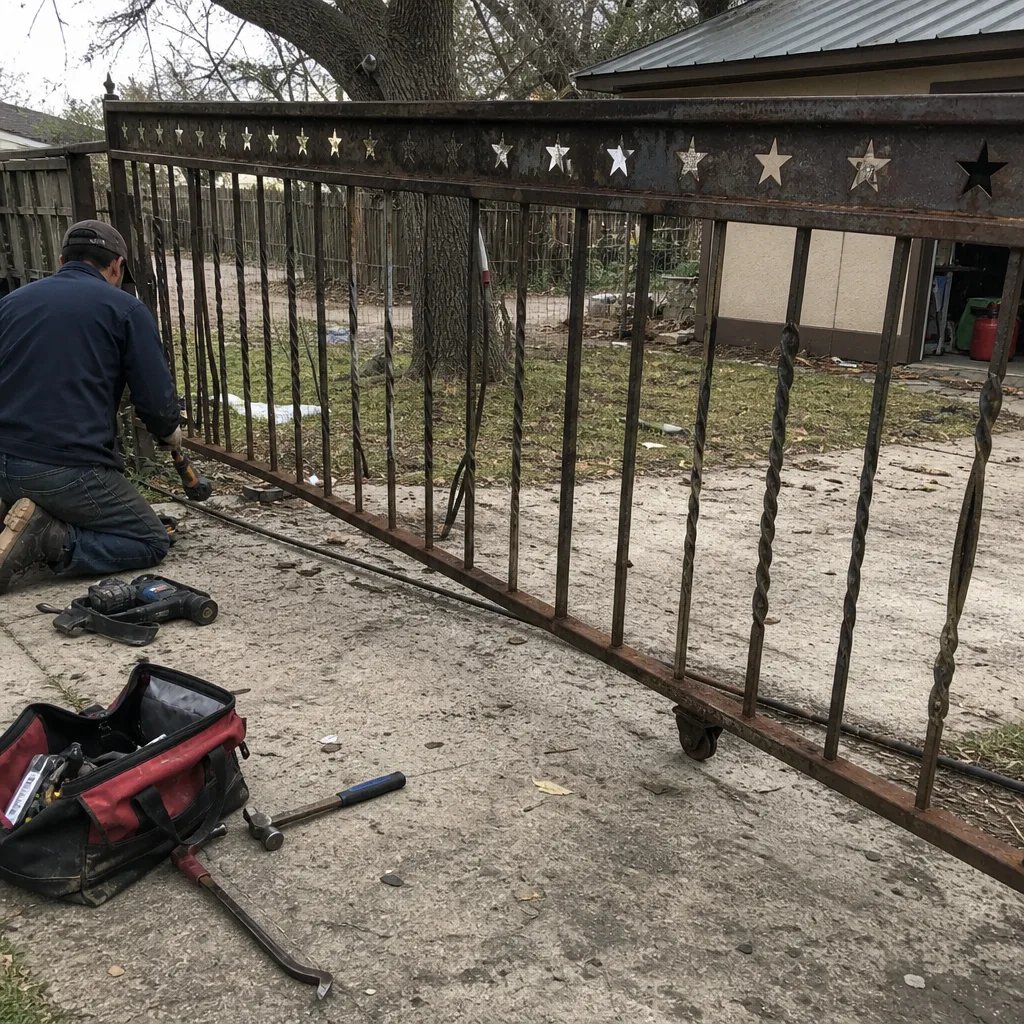 Before
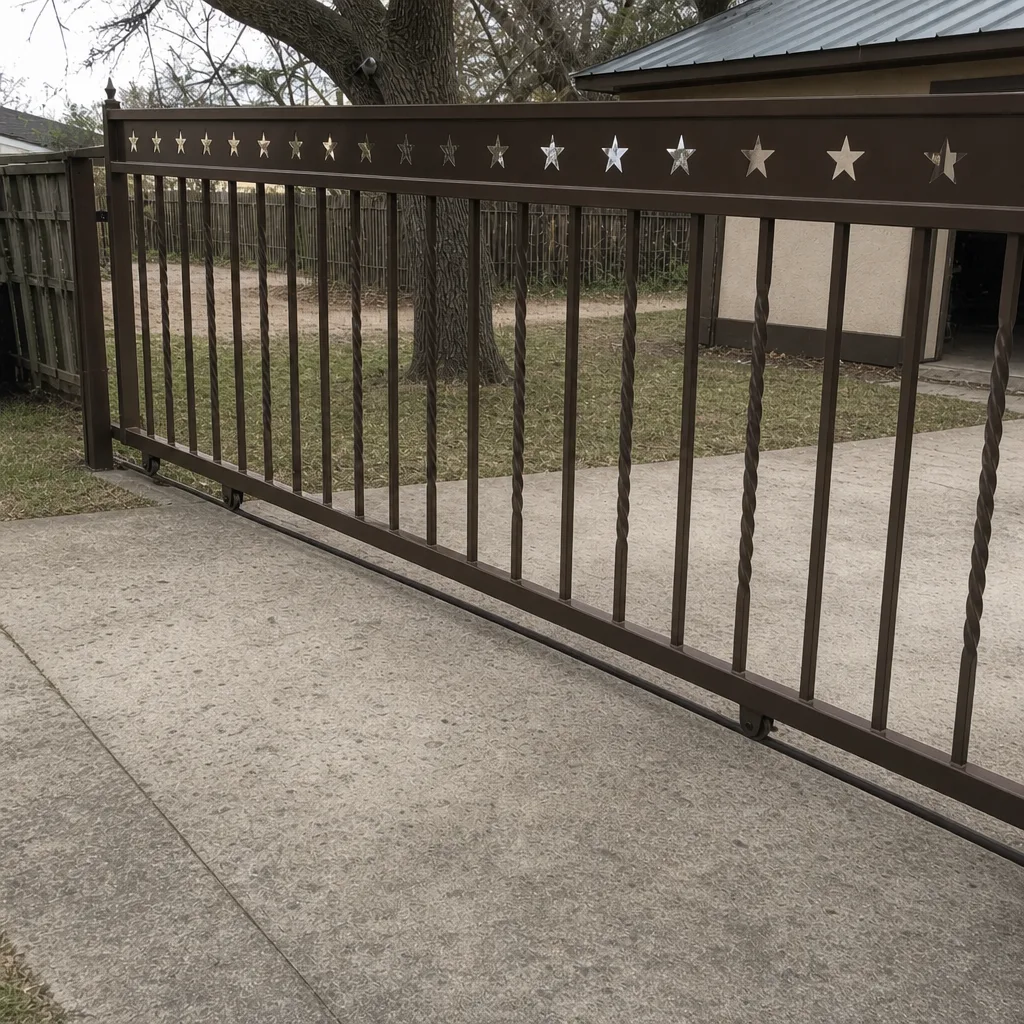 After
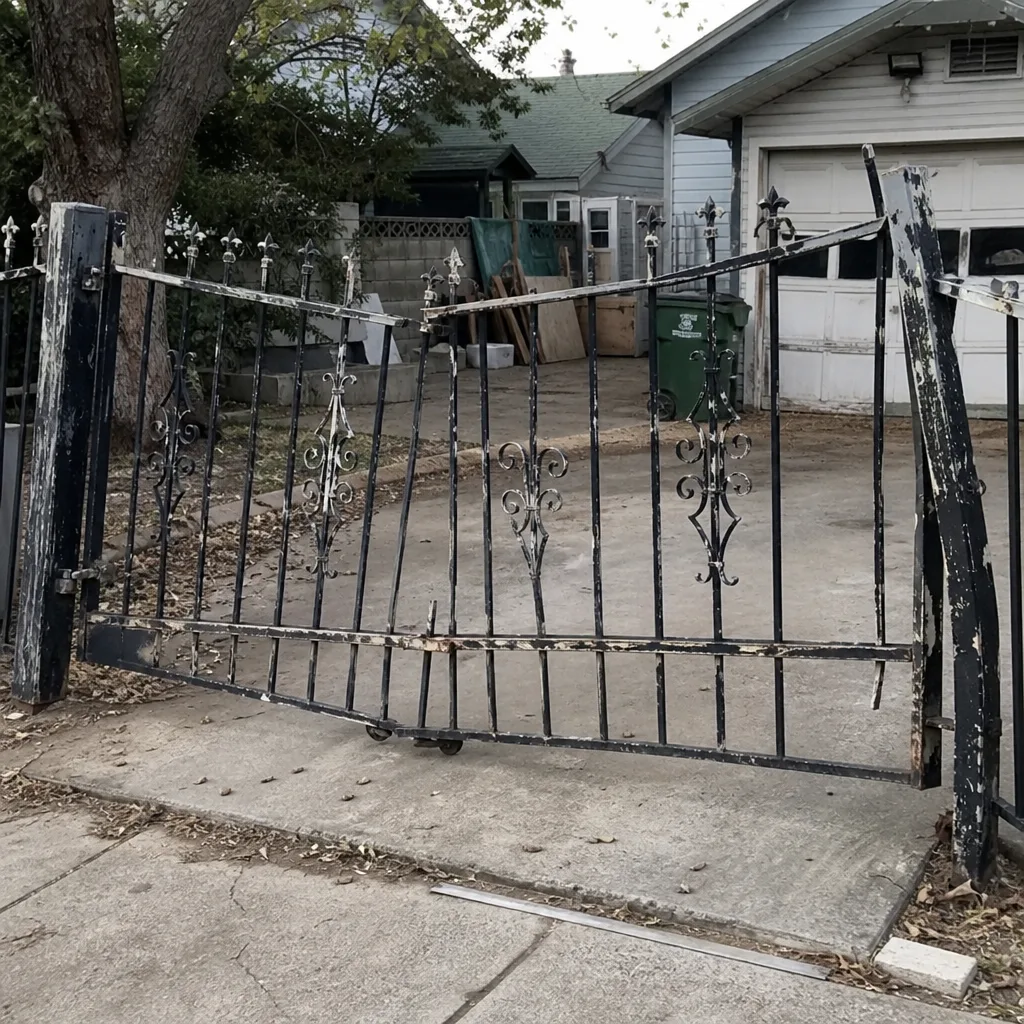 Before
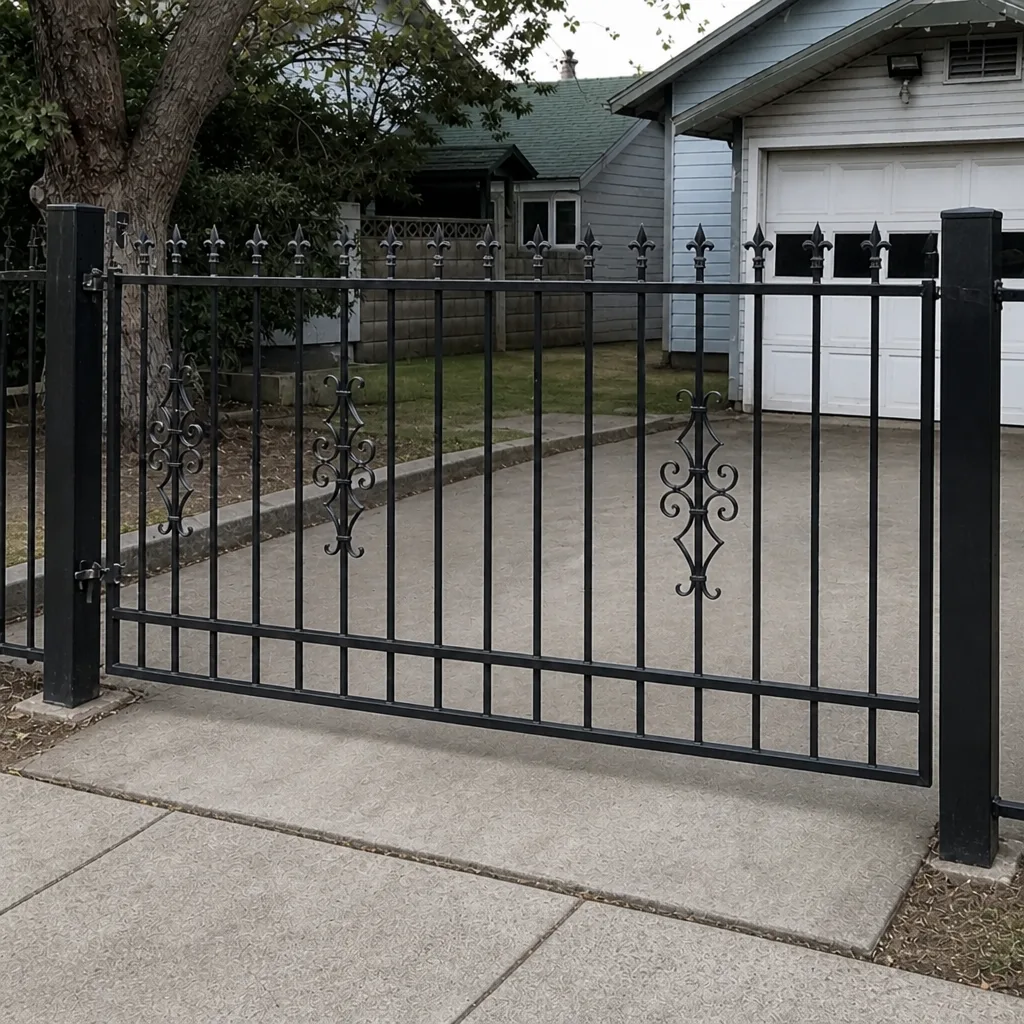 After
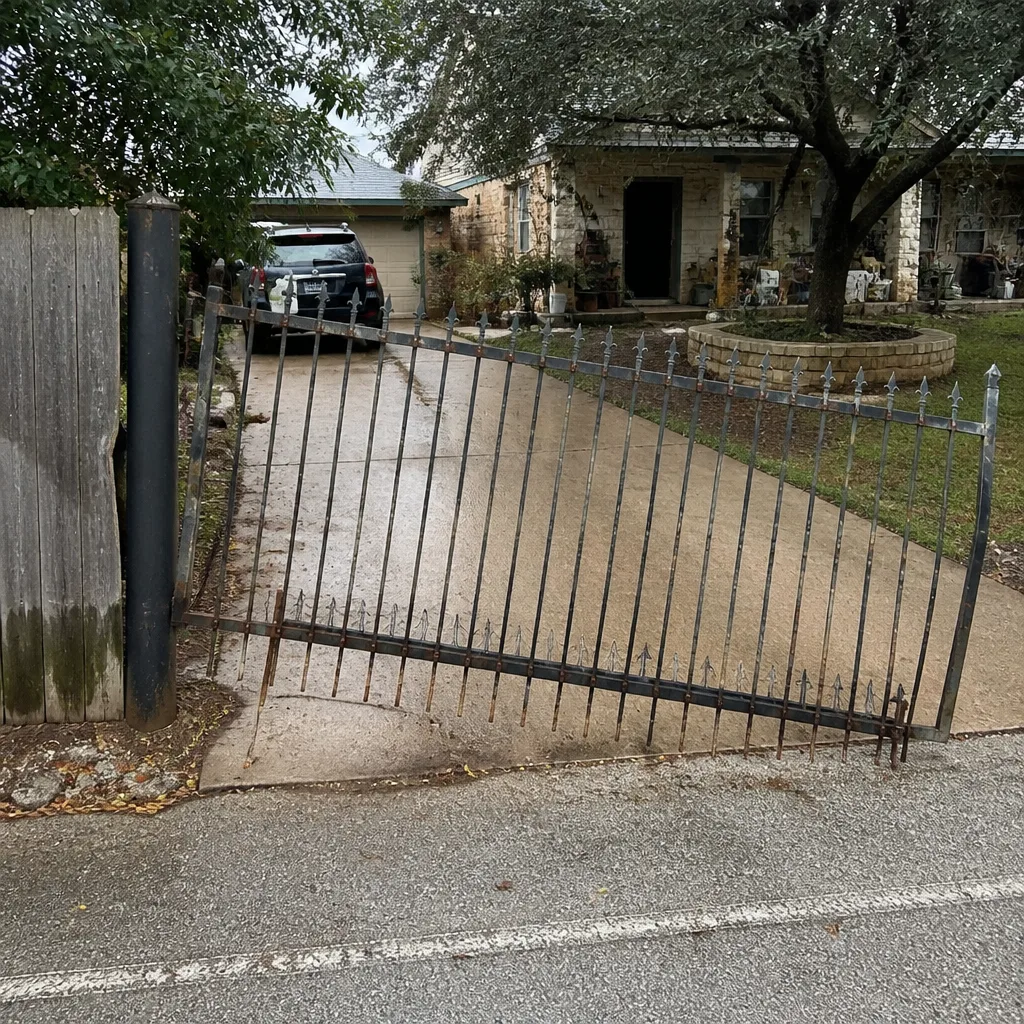 Before
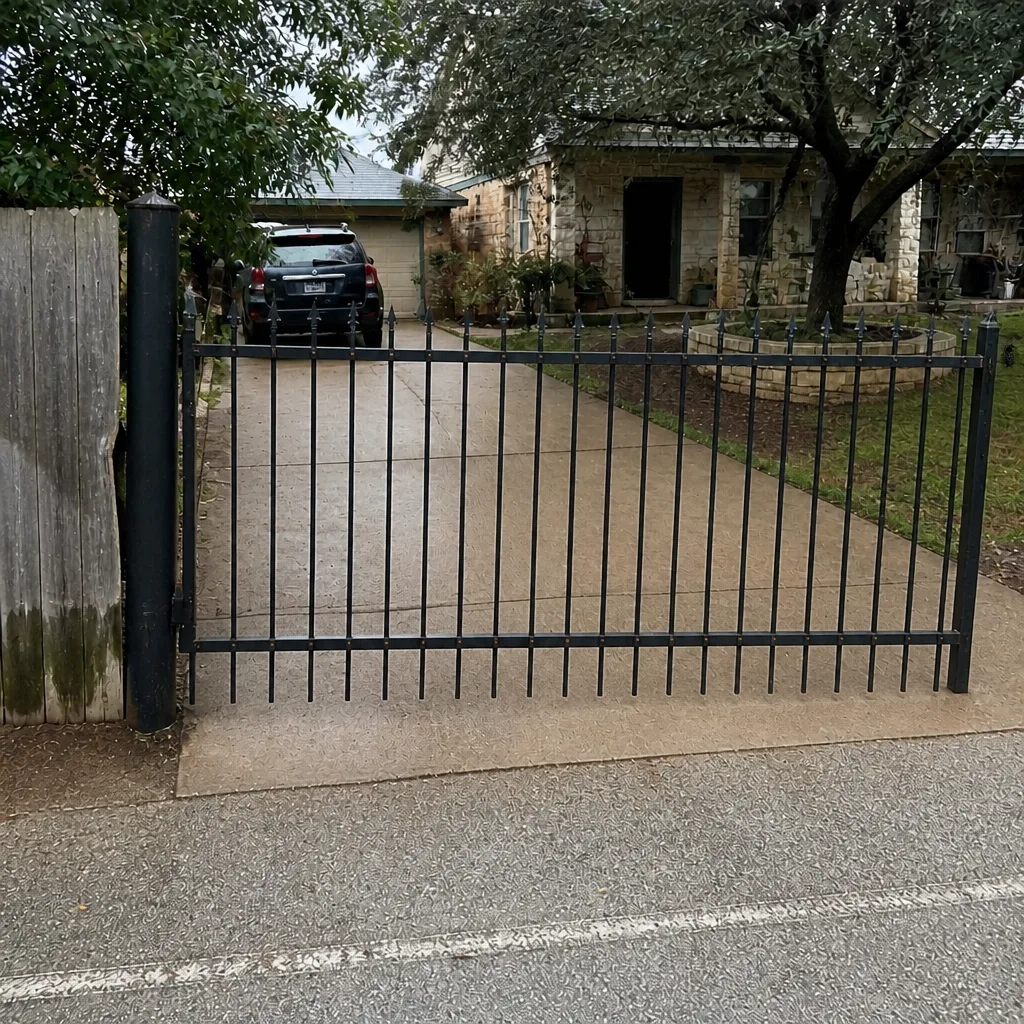 After
When to Call a Professional
Call a gate technician when the gate is completely silent and the breaker is fine, when it reverses and the sensor check didn’t fix it, or when anything inside the control enclosure needs attention. Call when the gate grinds under load, when the post has visibly moved, or when the gate is used for security and access control and downtime is a real risk. Call when the manual release doesn’t free the gate, or when you’re unsure what you’re looking at. For HOA managers and small commercial properties, a single failed operator can lock out a whole resident gate or loading area. Gate Repair New Braunfels offers free estimates in New Braunfels, call (855) 939-0250.
Frequently Asked Questions
Yes, within limits. You can safely check the photo-eye lenses, clear the track and path, replace remote batteries, inspect hinges and post lean, and check the breaker panel. Anything inside the control enclosure, any testing of voltage at the operator, and any work on the safety-edge wiring should go to a technician. When in doubt, describe the symptom on the phone and get guidance rather than experimenting.
Reversing usually means the operator is detecting an obstruction, not that the motor is failing. The most common cause is photo-eye misalignment, followed by debris in the track, a tight close limit, or a damaged safety-edge wire. In New Braunfels, shifting soil and summer heat can knock sensor brackets slightly out of alignment over time. Call (855) 939-0250 for an exact diagnosis and a free estimate on the repair.
A humming operator with no movement is almost always a mechanical bind or a stripped drive gear. The motor is trying to run but the gate can’t travel: a leaning post, a seized hinge, a slide gate off its track, or a worn gear inside the operator are the usual suspects. Stop cycling it so you don’t burn out the motor, and have a technician look at both the mechanical and operator sides together. Estimates are free, so call (855) 939-0250 and describe what the gate does.
Here’s the quick test: if the gate goes dead on a hot afternoon and comes back to life after it cools, it’s thermal cutoff, not a failed board. Real board failure doesn’t improve with rest, and all inputs, remote, keypad, and manual, fail together. New Braunfels summers push past 95°F often enough that this distinction matters. If it doesn’t recover, call (855) 939-0250 and let a technician test the board and power supply properly.
Use the manual release. Turn off power at the breaker, locate the release on your operator, usually a keyed lever on swing gates or a chain hoist on slide gates, engage it, and push the gate open. The procedure is brand-specific, so check the manual for your unit. If the gate won’t move smoothly by hand after the release is engaged, stop and call a technician; something is stuck. Call (855) 939-0250 and we’ll help you find the right release procedure for your brand.
Likely yes. We service nine major gate brands: LiftMaster, FAAC, BFT, Linear, Viking, Ghost Controls, DoorKing, Elite, and Mighty Mule. That range covers everything from entry-level DIY residential operators up through commercial-grade units. We’re independent, so we’re not tied to any one brand. Whether it’s a Ghost Controls swing operator at a home or a heavy commercial unit at a business, we diagnose the problem, not the label. Book a free estimate at (855) 939-0250.
The Bottom Line
reading your gate’s symptom correctly is the whole game. Reversing, grinding, stalling, silence, and heat shutdowns each point to a different root cause, and matching the symptom to the category is what separates a smart repair from wasted money on a part or an operator that was never broken. Caliche soil and summer heat make post lean and thermal trips especially common around New Braunfels, so check the simple, safe things first, and let a gate technician handle the wiring. When you’re ready to stop guessing, call (855) 939-0250, a free estimate is the best diagnostic there is.
If you’re looking for gate repair in New Braunfels, our gate technicians handle the mechanical and electrical sides together, and we work on the brand you already have. Learn more about how we approach electric gate repair and the gate repair we do across the area. If you’re north of the city, we also cover Gate Repair New Braunfels and nearby towns, or you can see the full New Braunfels service overview.
Call Gate Repair New Braunfels at (855) 939-0250 for a free estimate. We answer 24/7. Fast dispatch from 7am to 7pm, Sunday through Friday. We’ll listen to the symptom, tell you what’s most likely wrong, and quote the price in writing before any work starts.
Written by the team at Gate Repair New Braunfels.