
Last updated November 15, 2026
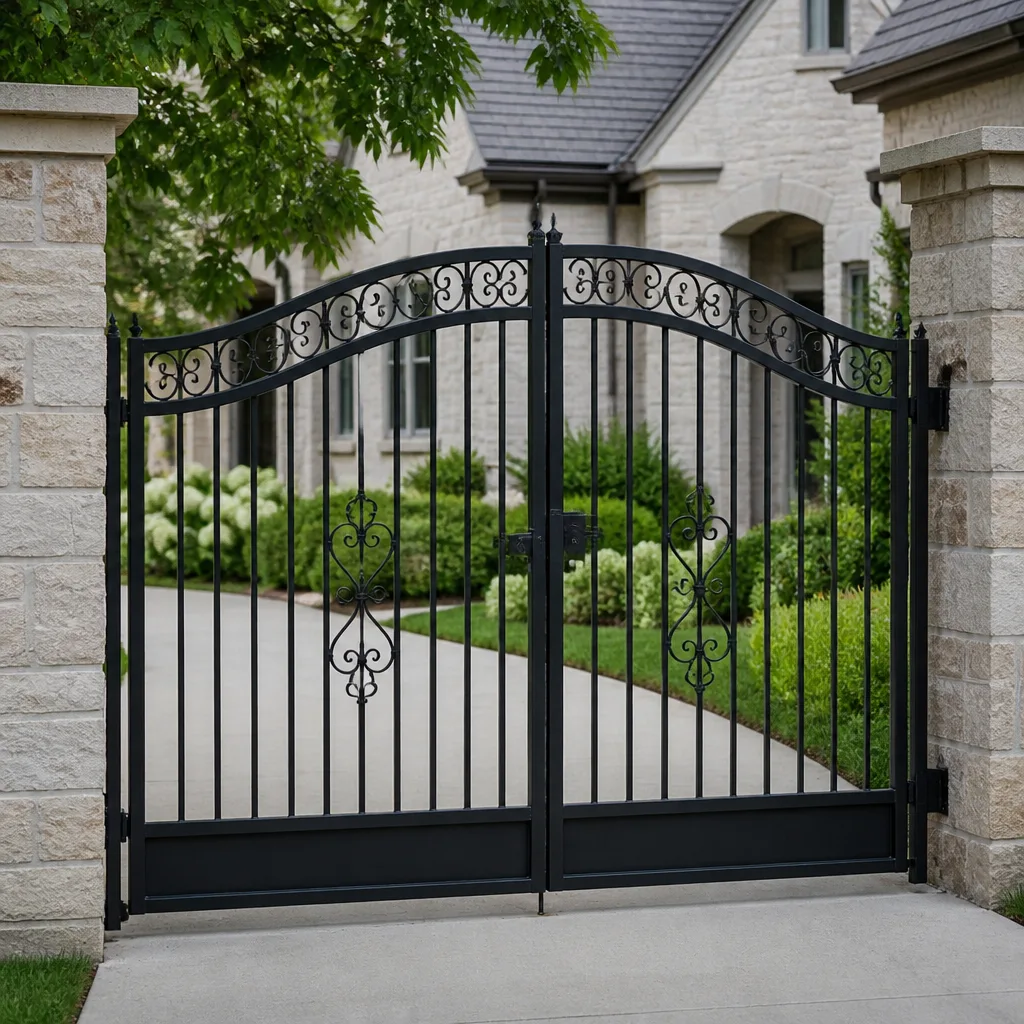 Wrought iron
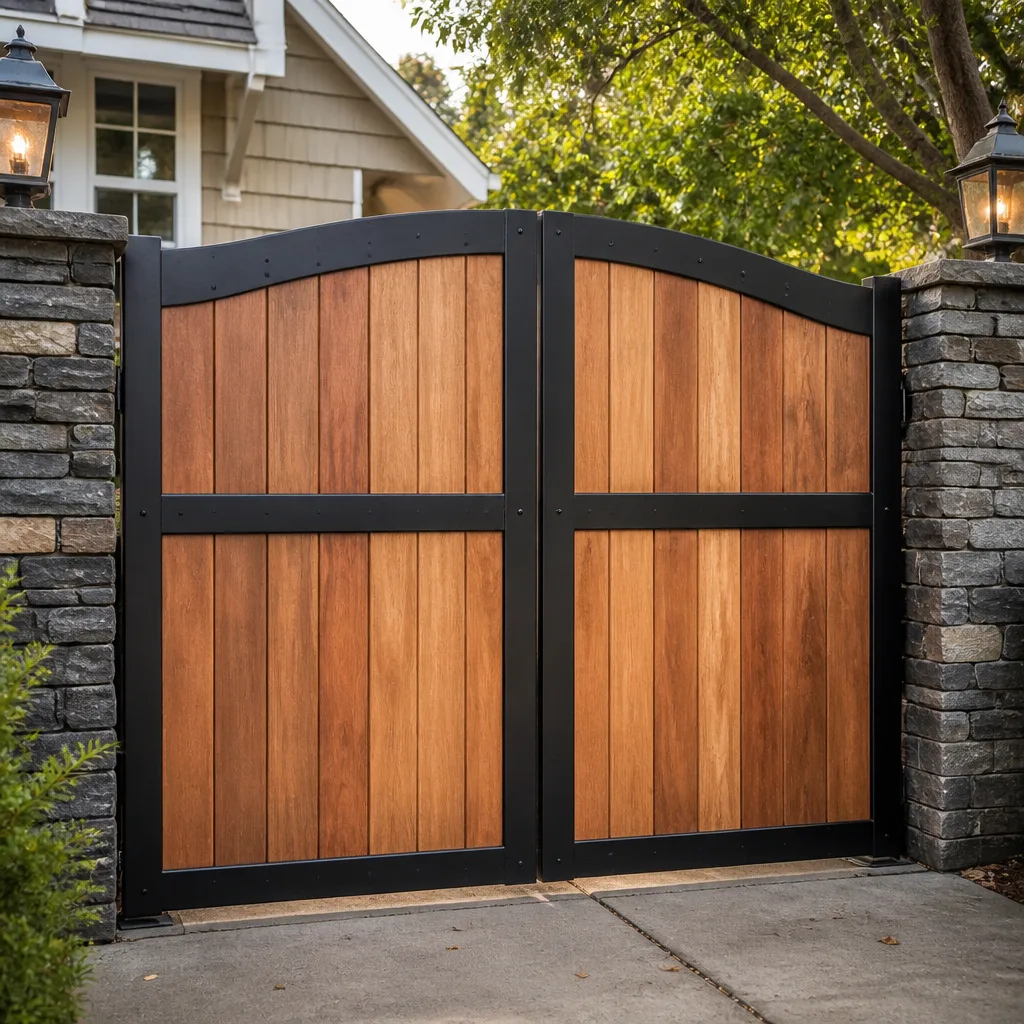 Wood & steel frame
 Farm & ranch
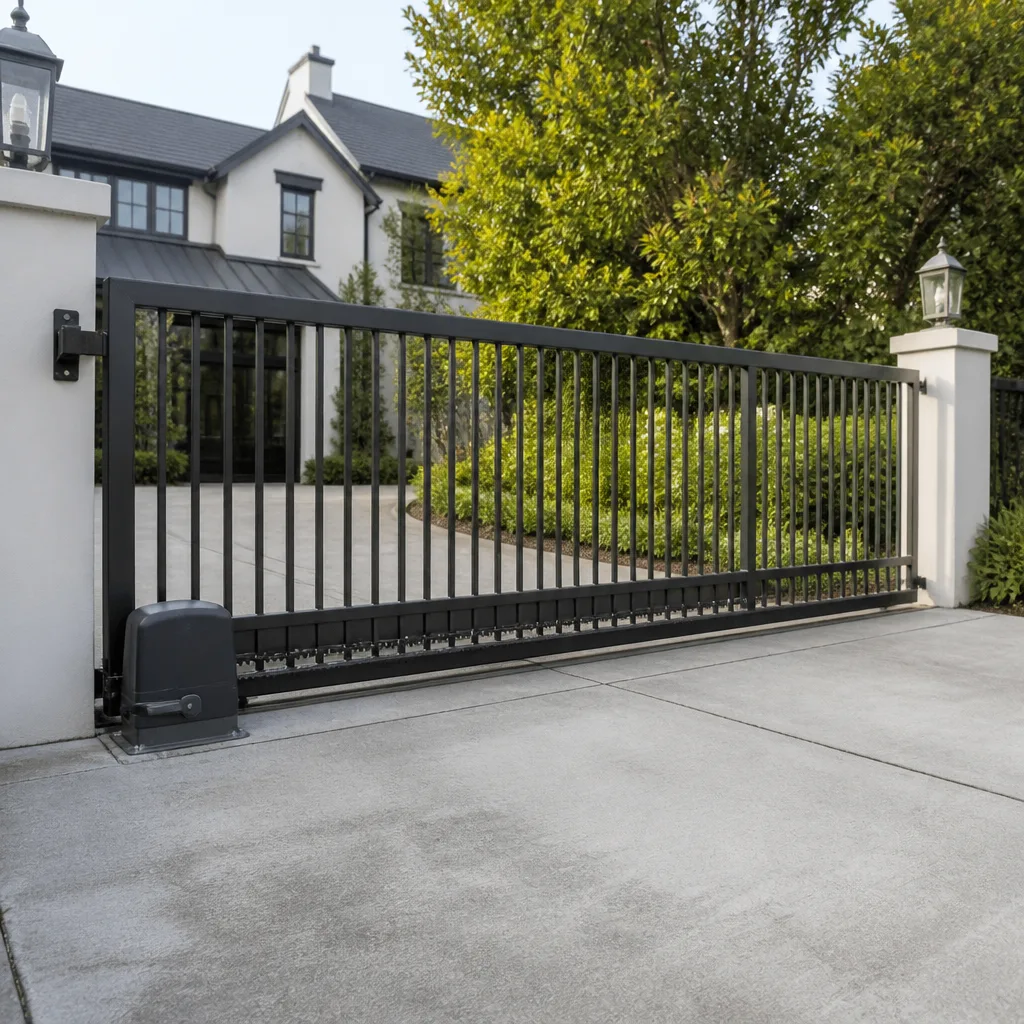 Sliding driveway gates
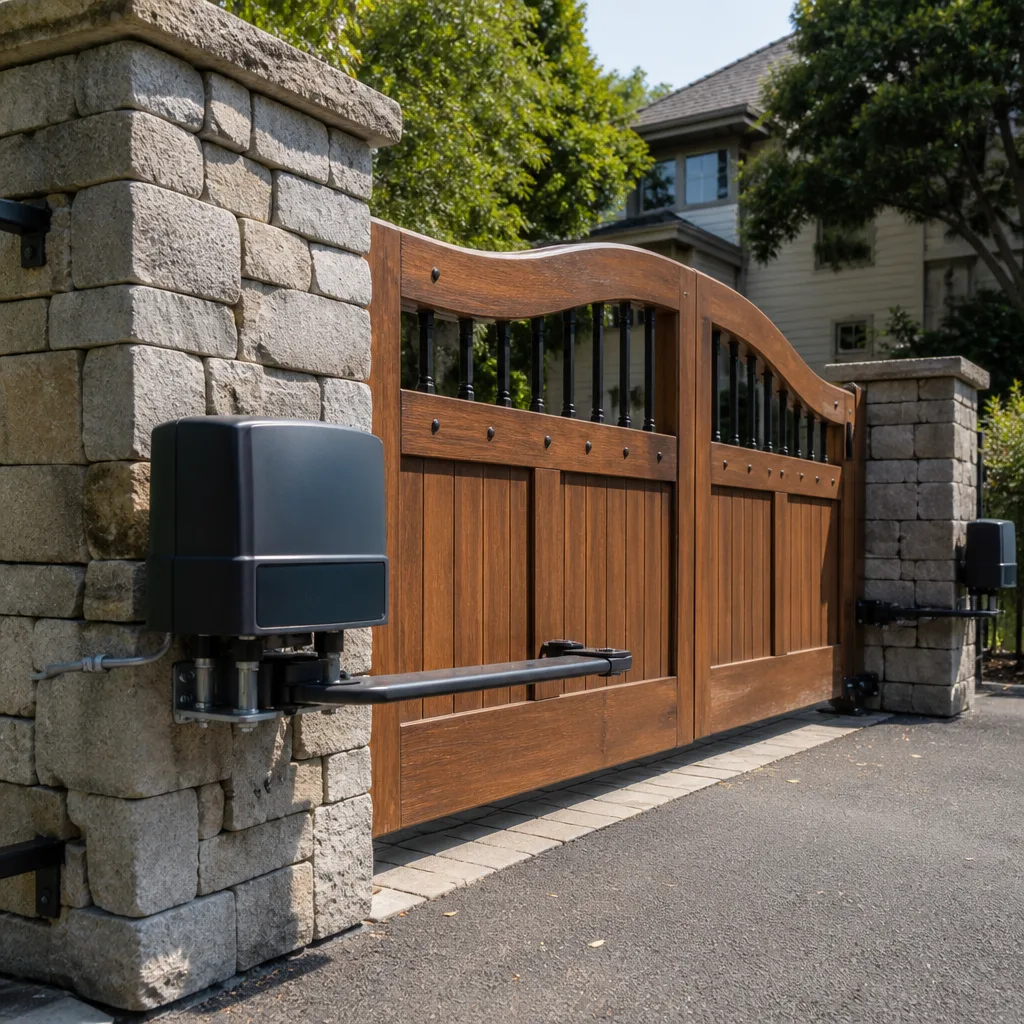 LiftMaster operators
Free on-site gate assessment - hinges, posts, and your LiftMaster or Nice gate operator checked before anything is quoted
The assessment is free and the quote is the invoice.
Get your free estimateGate Repair Warning Signs: A New Braunfels Homeowner’s Reference Guide
Most gate failures don’t start with a bang. They start with a small hesitation, a half-second pause before the arm swings, a faint noise you write off as normal aging. The dangerous part isn’t the breakdown itself. It’s the weeks or months beforehand when the gate was already telling you something specific. A gate that reverses mid-cycle isn’t glitching. It’s indicating a limit switch or safety sensor problem you can read like a symptom. In this guide we’ll decode the sounds, behaviors, and physical clues that point to specific failing parts, so that when you call for gate repair in New Braunfels, you already know what you’re likely dealing with.
Quick Answer
The most common gate repair warning signs are: a gate that reverses direction unexpectedly, jerky or uneven movement, grinding or clicking sounds during operation, a gate that sags at the latch, or a motor that works intermittently (e.g. fine in the morning, failing later). A gate that moves without being commanded to open or fails to stop when it hits an obstacle is a safety-critical sign and should be shut down immediately. Most of these signals point to a specific, repairable component: limit switches, control boards, hinges, or operator motors. In our experience, identifying the sign early often saves a homeowner from a much larger repair down the road.
Styles & brands we work with
- Wrought iron
- Wood & steel frame
- Farm & ranch
- Sliding driveway gates
- LiftMaster operators
Table of Contents
- Behavioral Warning Signs: What Your Gate’s Motion Tells You
- Motor Failure vs. Control Board Failure: Similar Symptoms, Different Repairs
- Intermittent Failures and Thermal Sensitivity
- Sagging at the Latch: Hinge, Post, or Weld?
- What Grinding, Clicking, and Whirring Sounds Mean
- Safety-Critical Signs That Require Immediate Shutdown
- How a Technician Diagnoses Your Gate
- What’s Different About Gates in New Braunfels
Behavioral Warning Signs: What Your Gate’s Motion Tells You
A gate’s movement is a running diagnostic readout if you know how to interpret it. Before you call anyone, watch the gate through three full open-and-close cycles and note anything that deviates from normal.
Here are the behavioral signs we check first, in order of what they usually indicate:
- Reversing mid-cycle: The gate opens partway, stops, and reverses. This usually points to a limit switch that’s out of adjustment, a safety sensor that’s falsely triggering, or a control board that’s lost its position memory.
- Jerky or uneven movement: A gate that stutters during travel is often dealing with a hinge that’s binding, a bent track (on sliding gates), or a motor losing torque.
- Slow response to commands: If the gate takes noticeably longer to begin moving after a signal, the operator may be struggling with low motor output or a failing capacitor.
- Stopping short of full open or closed: The limit switch is often the culprit here. It may have drifted out of position or the switch itself may have failed.
- Opening or closing on its own: This is the most serious behavioral sign. A gate that moves without input is a safety hazard and should be powered down until a technician can assess it.
Whether your system is an Elite swing operator or a Mighty Mule DIY unit, these behavioral patterns apply across brands. The underlying components differ, but the diagnosis logic is the same. What matters is catching the pattern before the gate stops moving entirely.
Motor Failure vs. Control Board Failure: Similar Symptoms, Different Repairs
This is the distinction that matters most, and it’s the one homeowners most often get wrong. A failing motor and a failing control board can produce almost identical symptoms: the gate won’t move, moves weakly, or stops unexpectedly. But the repair is completely different, and so is the cost.
Signs that point to the motor:
- The gate moves slowly or with noticeably less force than before.
- The motor housing gets unusually warm during operation.
- You hear the motor running but the gate doesn’t move (or barely moves).
- The problem worsens gradually over days or weeks.
Signs that point to the control board:
- The gate stops working suddenly with no gradual decline.
- The gate reverses direction or behaves erratically.
- The remote or keypad stops communicating, but the gate responds to a manual control.
- Indicator lights on the operator flash in an unusual pattern.
A motor failure is a mechanical problem: the component is wearing out. A control board failure is an electronic problem: the brain of the system has developed a fault. In our experience, an intermittent fault is much more often board-related than motor-related. We’ve seen many cases where a homeowner assumed the motor was dead and was ready to replace the whole operator, when the actual fix was a control board. That’s why we work on the brand you already have and diagnose before recommending any replacement. Whether it’s a LiftMaster swing operator or a FAAC barrier system, the diagnostic approach stays the same: isolate the fault before you price the fix.
Intermittent Failures and Thermal Sensitivity
One of the most informative patterns in gate diagnostics is an intermittent failure. When a gate works reliably in the morning and starts failing in the afternoon, that’s not random. That’s thermal sensitivity, and it tells a technician something specific about which component is breaking down.
Here’s how thermal sensitivity works. Electronic components inside the operator generate heat during use. As the day warms and the operator runs through more cycles, a failing component, often on the control board or a motor capacitor, becomes unreliable once it exceeds a certain temperature. The gate works fine in the cool morning hours, then starts stalling, reversing, or refusing to move in the afternoon. The next morning, it works again.
This pattern frustrates homeowners because it can’t be reproduced on demand. But it’s a useful diagnostic clue for our team. When a customer in New Braunfels describes a gate that’s only failing in the afternoon heat, we know to test the system under load and look at components that are sensitive to temperature.
Other intermittent patterns worth noting:
- Fails after multiple cycles: A component is overheating with repeated use. Let the operator cool and it works again.
- Fails in wet weather: A connection or sensor is being affected by moisture. Check for water intrusion in the control box.
- Fails at a specific time of day: Often related to sun exposure on a sensor, or another external factor triggering a false obstruction signal.
If you notice an intermittent pattern, write down the times and conditions when it happens. That information is genuinely useful when we arrive on-site.
Sagging at the Latch: Hinge, Post, or Weld?
A gate that droops at the latch is sending you a message about one of three possible failure points, and each one has a different urgency level.
1. Hinge wear. This is the most common cause and the least urgent. Hinges wear out from constant cycling, and the gate gradually loses its alignment. Signs include a visible gap between the gate and the post, a hinge that feels loose when you push on it, and the gate swinging with less resistance than it should. A hinge adjustment or replacement is a straightforward repair and can usually be done promptly.
2. Post settling. The gate post is sinking or tilting into the ground. This can happen from soil movement, poor original footing depth, or years of weight load on one side. Signs include a visibly tilted post and a gate that requires more force to open because it’s fighting the alignment. This is more urgent than hinge wear because a settling post will only get worse with time, and re-leveling or resetting a post is a bigger repair than replacing a hinge.
3. Weld failure. The frame of the gate itself is failing at a weld joint. This is the most serious of the three, especially on heavier gates. Signs include a visible crack at a weld point, a gate that flexes or twists under its own weight, and a gate that sags even after the hinges have been checked. A weld failure compromises the structural integrity of the gate and should be repaired before someone operates the gate and something gives way.
Here’s a quick way to tell them apart. Stand at the latch end of the gate and lift it up and down gently. If it moves but the post is level and the hinges are tight, look for a weld crack. If the post moves with it, the post is the problem. If the gate moves and the post stays still, it’s likely the hinges. If you’re unsure, don’t force it. Call a gate technician.
In New Braunfels, we find post settling is more common than people expect, especially on properties built on fill soil or where a gate has been installed without proper footing depth. New Braunfels sits in Comal and Guadalupe counties, and the local soil conditions can vary significantly from neighborhood to neighborhood.
What Grinding, Clicking, and Whirring Sounds Mean
Noises from a gate are worth paying attention to. Each type of sound corresponds to a specific mechanical component that may be a problem.
| Sound | Likely Component | What It Means |
|---|---|---|
| Grinding | Motor gears or track | The motor gearbox is wearing out, or the gate is dragging on the track. Debris under a sliding gate is a common cause. Don’t ignore – grinding accelerates wear. |
| Clicking | Relays or limit switches | A relay in the control board is failing, or a limit switch is not engaging properly. A rapid clicking that continues after the gate stops is a red flag. |
| Whirring (motor runs, gate doesn’t move) | Motor, capacitor, or mechanical coupling | The motor is receiving power but the drive mechanism is not engaging. This could be a failed capacitor, a broken belt or chain, or a stripped gear. |
| Buzzing | Control board or transformer | Often indicates an electrical issue. Buzzing combined with a non-functioning gate points to a board-level problem. |
| Thumping or banging | Limit switch or stopper | The gate is hitting its physical stop too hard because the limit switch isn’t slowing it down correctly. This causes long-term damage to the operator. |
Before you call, take a voice memo or short video of the noise while the gate is running. That single piece of evidence is often enough for a technician to narrow down the diagnosis before arriving. Whether your operator is a Linear unit or a Ghost Controls system, these sound-to-component relationships hold true.
Safety-Critical Signs That Require Immediate Shutdown
Most warning signs give you time. These don’t. If you see any of the following, stop operating your gate and call a gate technician immediately:
- The gate moves without being commanded to open or close. This means the operator is responding to a phantom signal or a short, which could cause the gate to open when a child or pet is behind it.
- The gate does not stop or reverse when it meets resistance. Safety sensors and obstruction detection exist to prevent injury. If a gate continues to press against an object, the sensor system has failed.
- A sliding gate comes off its track. This is a serious mechanical failure. The gate can fall, and on heavier gates the consequences can be serious. Do not try to push it back on yourself. Wait for a technician.
- Visible damage to electrical components. If you can see a damaged power wire or an exposed connection, do not touch it. Electric gate systems run on mains power, and electrical hazards are a safety issue.
- A gate that swings freely with no resistance. If your gate no longer holds itself open or closed, the operator’s clutch or braking system has failed. Do not try to manually force the gate into position.
For any of these scenarios, the right move is to disconnect power to the gate operator (if it’s safe to reach the switch), keep everyone clear of the gate, and call for electric gate repair. Don’t attempt to cycle the gate again to see if the problem repeats.
How a Technician Diagnoses Your Gate
When a gate technician arrives, they’re not guessing. They’re running a systematic check. Here’s roughly what that looks like, so you know what to expect.
- Visual inspection of the full gate system. This includes the gate itself (frame, hinges, welds, post), the operator (motor housing, control box, connections), and all accessory components (safety sensors, keypad, remote receiver).
- Cycle test. The technician cycles the gate several times under normal operation and observes the movement, response time, and any behavioral anomalies.
- Electrical testing. They check the voltage and signals at key points in the system: the control board inputs, the motor, the safety sensors, and the limit switches. This is how they distinguish a motor failure from a control board failure.
- Manual operation check. They disconnect the operator and manually move the gate to test the mechanical system independently. This tells them whether the problem is in the hardware or the electronics.
- Diagnostic report and written estimate. Once the fault is identified, the technician should walk you through the diagnosis in plain terms and provide a written estimate before any work begins. If the fix is a repair, you’ll see a repair estimate. If repair isn’t the right move, you’ll know that too.
When you call Gate Repair New Braunfels, you’re reaching a team that diagnostically services nine major gate brands: LiftMaster, FAAC, BFT, Linear, Viking, Ghost Controls, DoorKing, Elite, and Mighty Mule. That range matters because a technician who works on multiple brands is less likely to default to “replace the whole thing” when a brand-specific repair is available. We work on the brand you already have. No gate system is off-limits. Our technicians have up to 14 years of experience working on both the mechanical side and the control and electrical side of automated gates, and that includes both residential swing gates and commercial automation.
What’s Different About Gates in New Braunfels
Gate failures across New Braunfels follow patterns, and some of them are specific to this area.
First, the outdoor environment. New Braunfels sits between Austin and San Antonio in the Texas Hill Country, and that means a long, hot summer with significant UV exposure and dust. Exposure to heat and airborne dust accelerates wear on operator motors, control boards, and moving parts. Gates that sit in direct sun will run hotter and cycle harder than gates in shaded areas. We see this especially in neighborhoods with newer builds where the gate faces full sun for most of the day.
Second, the soil. Properties in New Braunfels, as across much of the Hill Country, can have varying soil conditions, including expansive clay and areas where fill was used during grading. This matters for post settling. A gate post that was fine in year one may start tilting in year three if the soil under its footing shifts. Homeowners in areas of New Braunfels with active new construction and grading should watch their gate posts more closely than they would on a property built on undisturbed ground.
Third, the housing mix. New Braunfels has a wide range of property types, from older homes in established neighborhoods to newer subdivisions with HOA-managed entry gates and individual driveway gates. Different property types have different systems. A Mighty Mule DIY unit on a single residential driveway has completely different warning signs than a DoorKing commercial operator on an HOA entry gate. As gate specialists, we handle both, and we know the specific diagnostic approach for every brand in our lineup.
Fourth, the local market context. Because New Braunfels sees a lot of new construction and property turnover, we often encounter gates that were installed by the previous owner and have no documentation. A technician can assess the system and tell you what you have, what shape it’s in, and what warning signs to watch for.
If you’re in New Braunfels and noticing a pattern you don’t recognize, a free estimate call is the right first step. We cover the New Braunfels area and can walk you through your options before any work begins.
Common Mistakes to Avoid
- Assuming a non-working gate means a dead motor. Most gate problems start with the control board, the limit switches, or the safety sensors, which are cheaper repairs than a motor or operator replacement. Don’t assume the worst before you’ve had a diagnostic.
- Forcing a jammed gate open or closed. If the gate is stuck, pushing it manually can bend the track, strip a gear, or damage the gate frame. Call a professional instead. If you need access, ask about a manual release – but only if it can be done safely.
- Replacing parts by symptom without diagnosing. A clicking relay and a clicking gear can sound nearly identical. A technician diagnoses systematically; a homeowner swapping parts by guess is often replacing components that aren’t the problem.
- Ignoring intermittent failures. A gate that fails one afternoon in ten doesn’t fix itself. Intermittent problems typically worsen and become total failures later. Have them checked early.
- Assuming sag is cosmetic. A gate sagging at the latch has a real cause – hinge wear, post settling, or weld failure – and those three causes have different fixes. Left alone, a sagging gate puts uneven strain on the operator and accelerates wear on the motor.
- Hiring a general contractor who treats gate calls as secondary. Gate systems have brand-specific electronics and specific safety requirements. Working with a company that specializes in gates means the technician knows the system you have, rather than having to look it up on the spot.
- Ignoring safety sensor problems. A gate that doesn’t reverse on contact is not just inconvenient – it’s a potential injury hazard. Safety sensors are the most important component to check if you have any doubt.
- Assuming a new gate is the only option. In many cases, gate repair is the right call, and a full replacement isn’t necessary. If you’re working with a technician who services multiple brands, they have no reason to push a replacement you don’t need.
See the difference
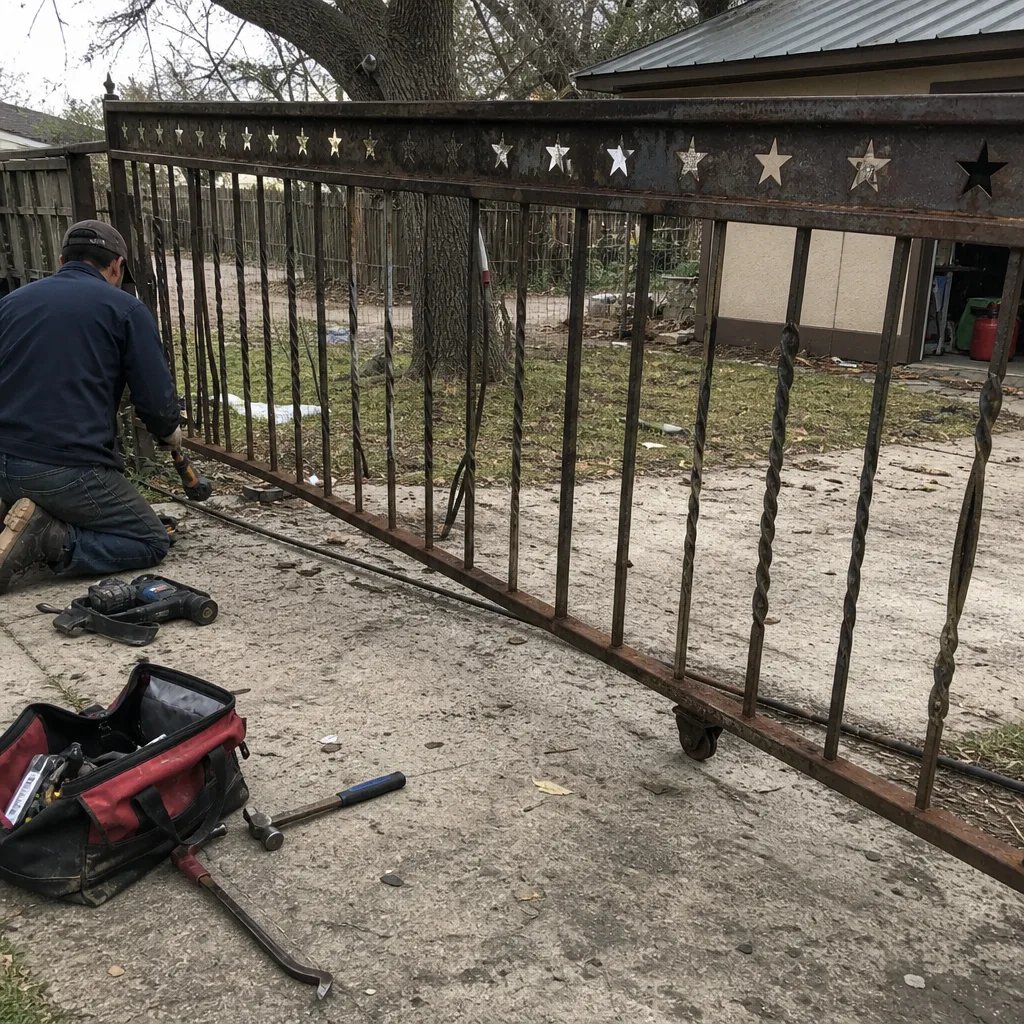 Before
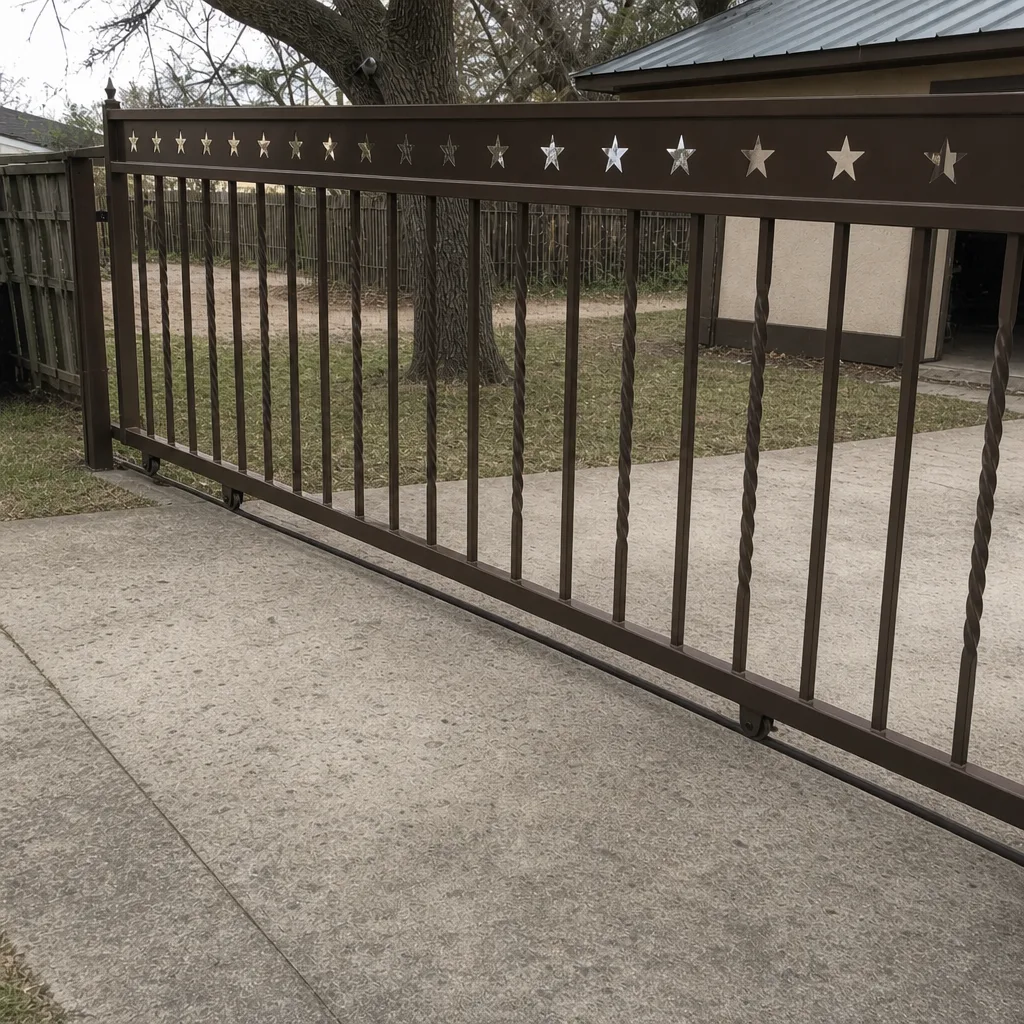 After
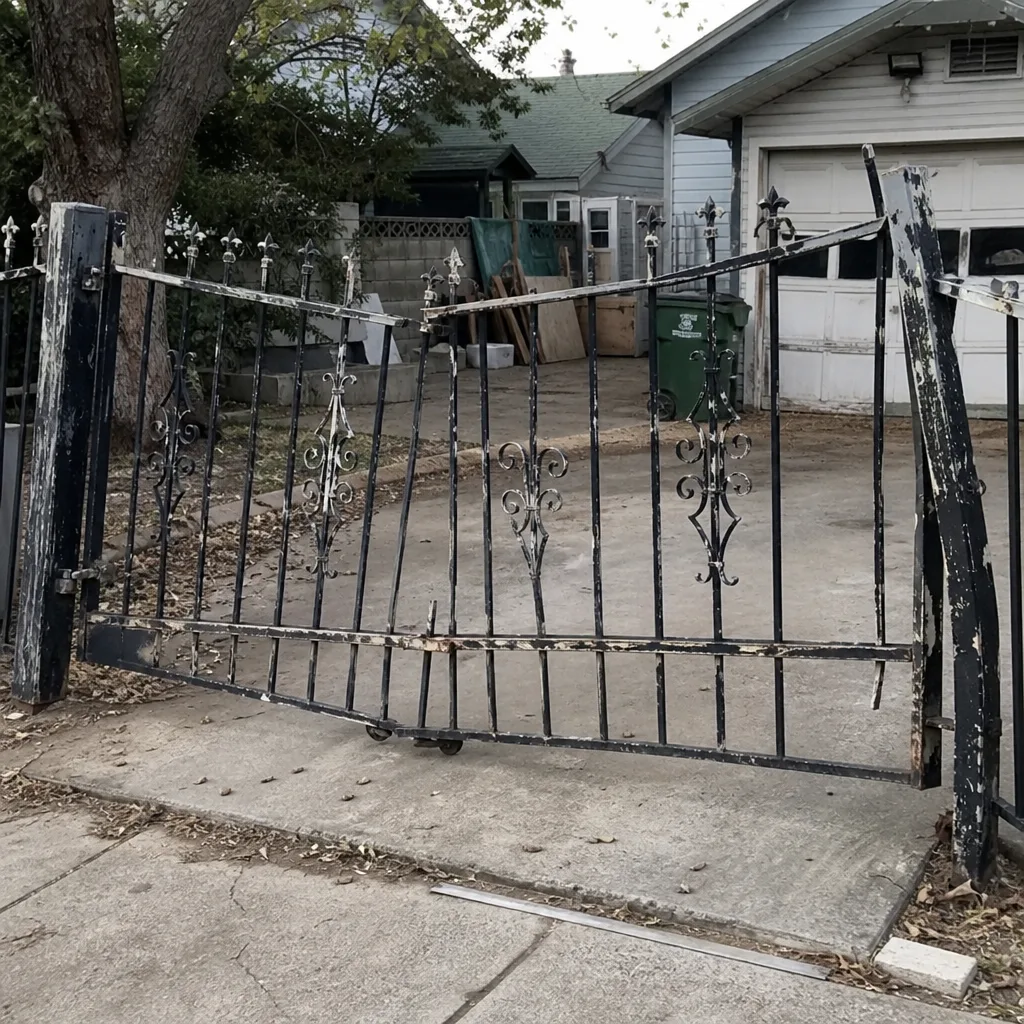 Before
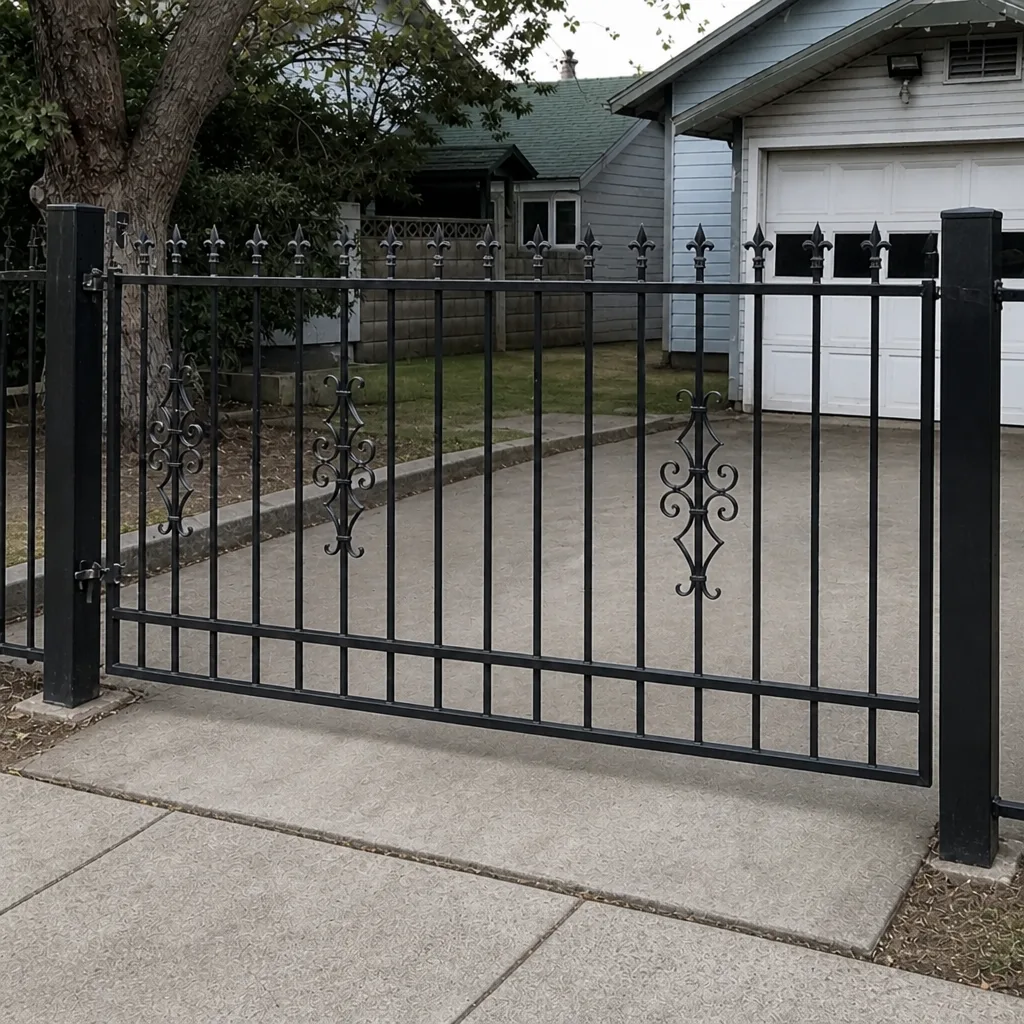 After
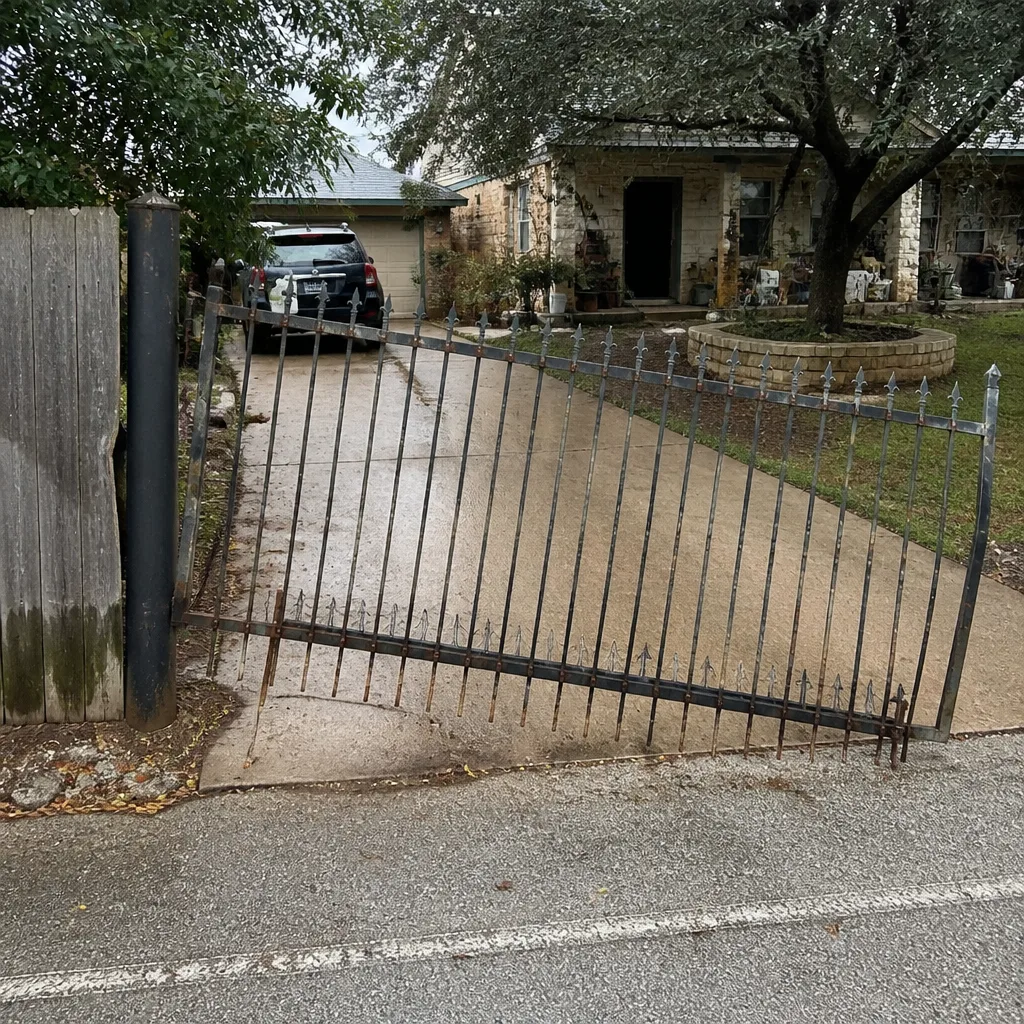 Before
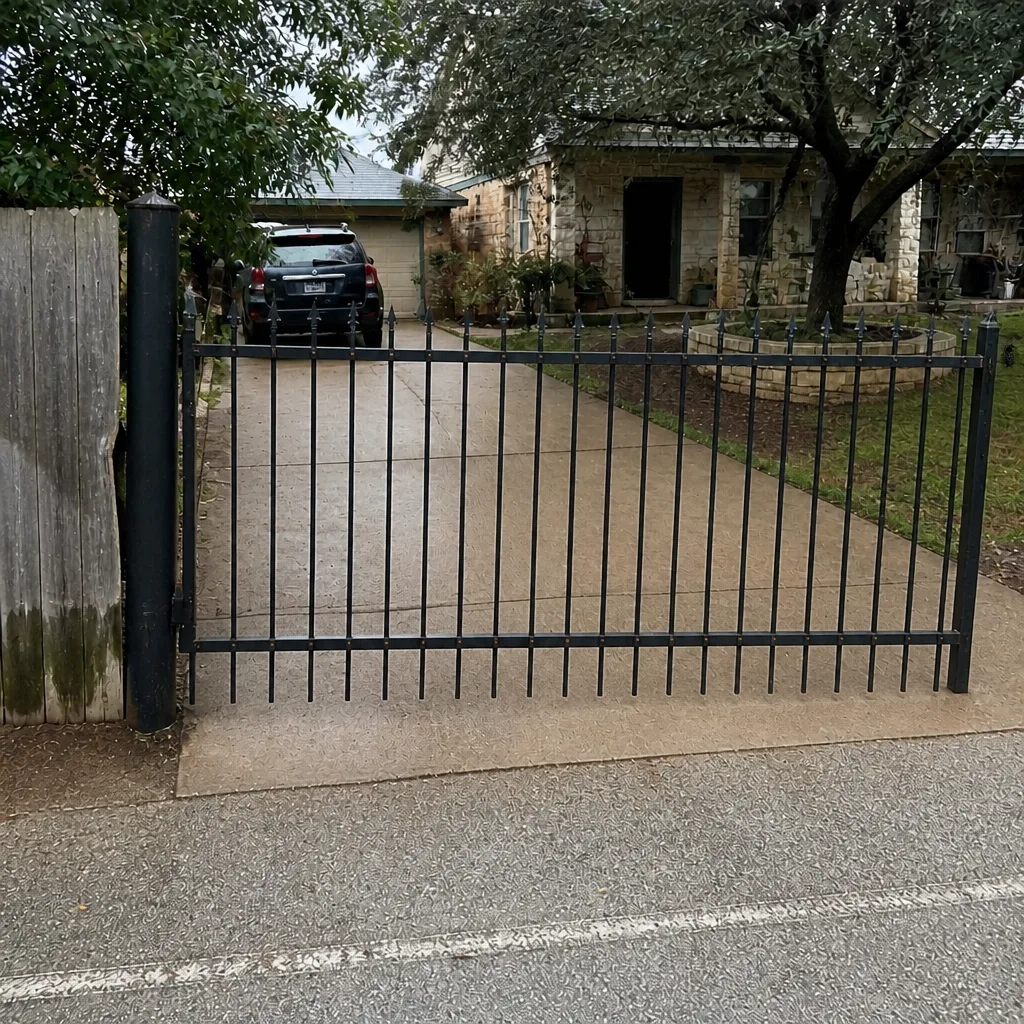 After
When to Call a Professional
Some gate issues are okay to watch for a few more cycles. Others need to be addressed immediately. Call a professional if:
- The gate behaves erratically (reverses, stops early, or moves without input)
- You hear a new grinding or thumping sound
- Your gate sags and you don’t know why
- The gate fails a safety test (doesn’t reverse on obstruction)
- You notice intermittent failures that are worsening
- Any electrical component shows damage or the gate stops responding to all inputs
Gate Repair New Braunfels offers free estimates in New Braunfels. Call (855) 939-0250. We answer 24/7. Fast dispatch from 7am to 7pm, Sunday through Friday. Our team can diagnose the specific problem, explain your repair options in plain terms, and give you a written estimate before any work starts. Whether it’s gate repair or a new gate installation, we’ll make sure you know exactly what you’re dealing with before we recommend a path forward.
Frequently Asked Questions
The most common warning sign is a gate that starts reversing mid-cycle or stops short of full open or closed. This almost always points to a limit switch or safety sensor that needs adjustment or replacement, and it’s usually a straightforward repair if caught early. If you’re seeing this pattern in New Braunfels, call (855) 939-0250 for a free estimate. We answer 24/7.
Often, yes. Grinding typically indicates motor gearbox wear or a gate dragging on the track; clicking usually points to relays or limit switches; and a whirring sound with no gate movement suggests a motor or capacitor issue. A voice memo or short video of the noise is really useful when you call, because it helps narrow the diagnosis before we arrive. Call (855) 939-0250 for a free estimate.
Intermittent failures that follow a time-of-day pattern are usually caused by thermal sensitivity, a failing component on the control board or motor that becomes unreliable as the system heats up during the day. This is a common finding during New Braunfels summers. If your gate works in the morning and fails in the afternoon, that’s a diagnostic pattern worth reporting when you call. Call (855) 939-0250 for a free estimate.
A sagging gate has one of three causes: hinge wear (least urgent), post settling (moderately urgent, because it gets worse over time), or weld failure (most urgent, because the gate’s structure is compromised). A technician can identify which of the three it is within a single site visit. Call (855) 939-0250 for a free estimate.
No. A gate that opens or closes without being commanded is a safety hazard, not normal behavior. It usually indicates a fault in the control board, a faulty sensor, or an electrical short. Power down the gate if it’s safe to do so, keep everyone clear, and call for repair. We answer 24/7 at (855) 939-0250. A call outside dispatch hours is booked into the next opening, Sunday through Friday, 7am to 7pm.
We repair all brands we work with, regardless of who installed them. Our coverage includes LiftMaster, FAAC, BFT, Linear, Viking, Ghost Controls, DoorKing, Elite, and Mighty Mule, from entry-level residential operators to commercial-grade systems. The brand you already have is the system we service. Call (855) 939-0250 for a free estimate.
The Bottom Line
Gate failure is rarely sudden. It’s the accumulation of small signals you either noticed and ignored or misread as normal aging. The behavioral signs (reversing, stalling, erratic movement), the sound cues (grinding, clicking, whirring), the physical signs (sagging at the latch), and the pattern clues (intermittent failures, thermal sensitivity) all point to specific, identifiable problems with specific repair paths. The safety-critical signs (moving without input, failing to reverse on contact, coming off its track) need to be acted on immediately. For anything else, an early diagnostic is the smartest move. It’s often the difference between a simple repair and a full operator replacement. If you’re in New Braunfels and your gate is showing any of these warning signs, call (855) 939-0250. We answer 24/7, with fast dispatch from 7am to 7pm, Sunday through Friday. Free estimates, and a written price before any work begins.
Written by the team at Gate Repair New Braunfels.