
Last updated November 15, 2026
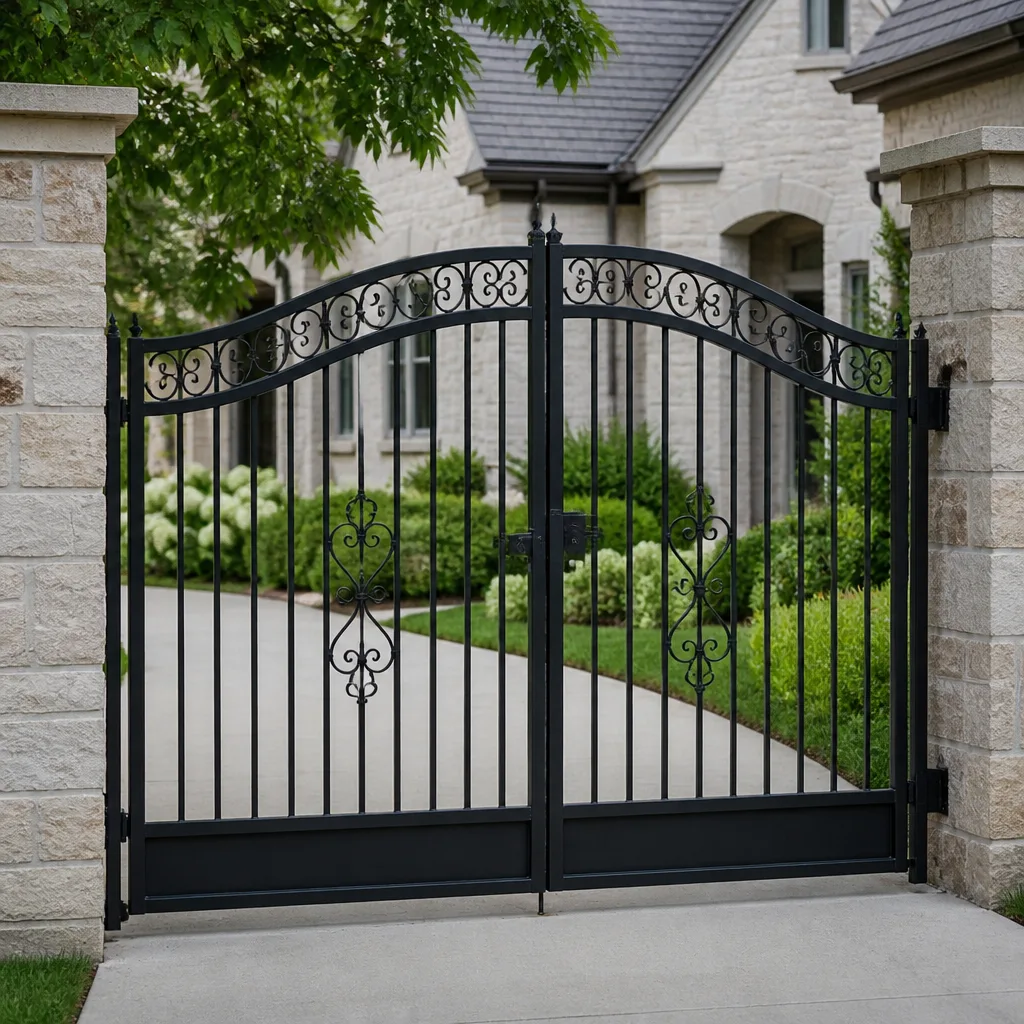 Wrought iron
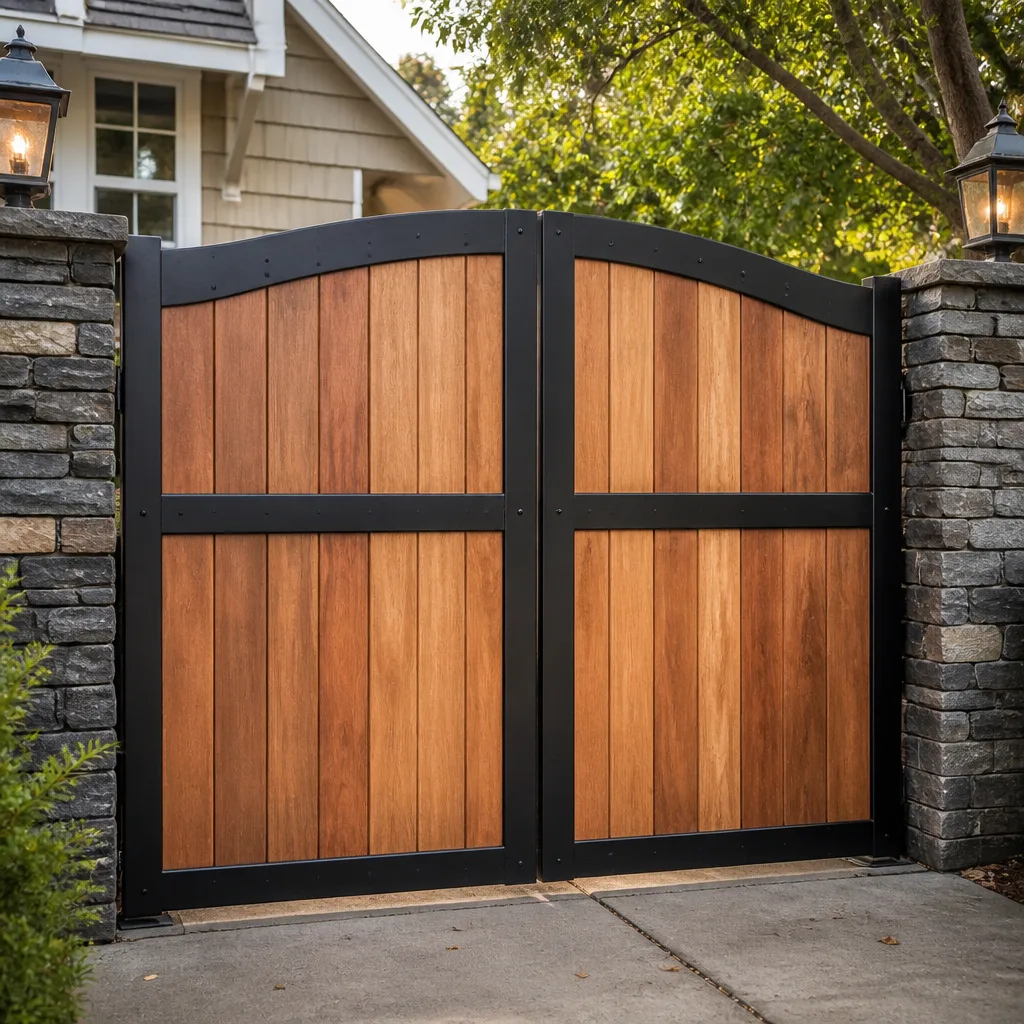 Wood & steel frame
 Farm & ranch
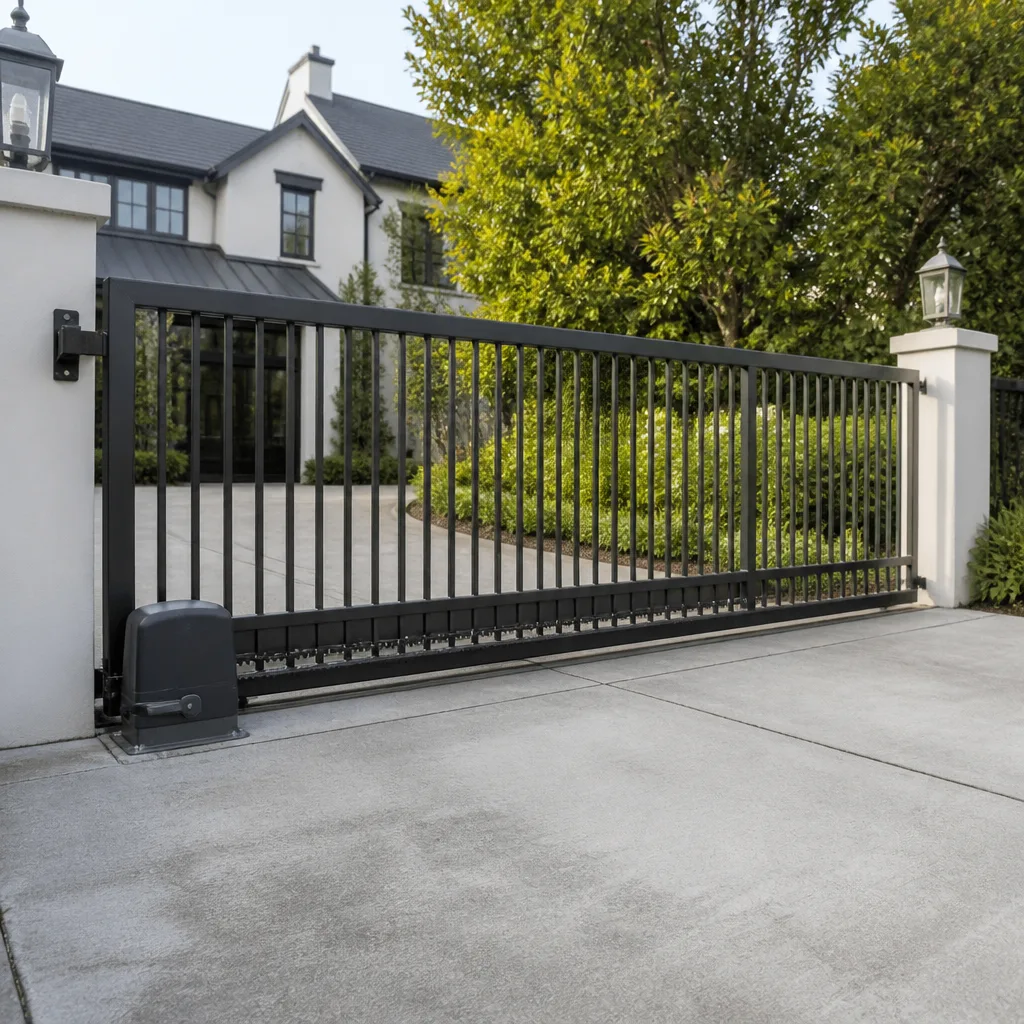 Sliding driveway gates
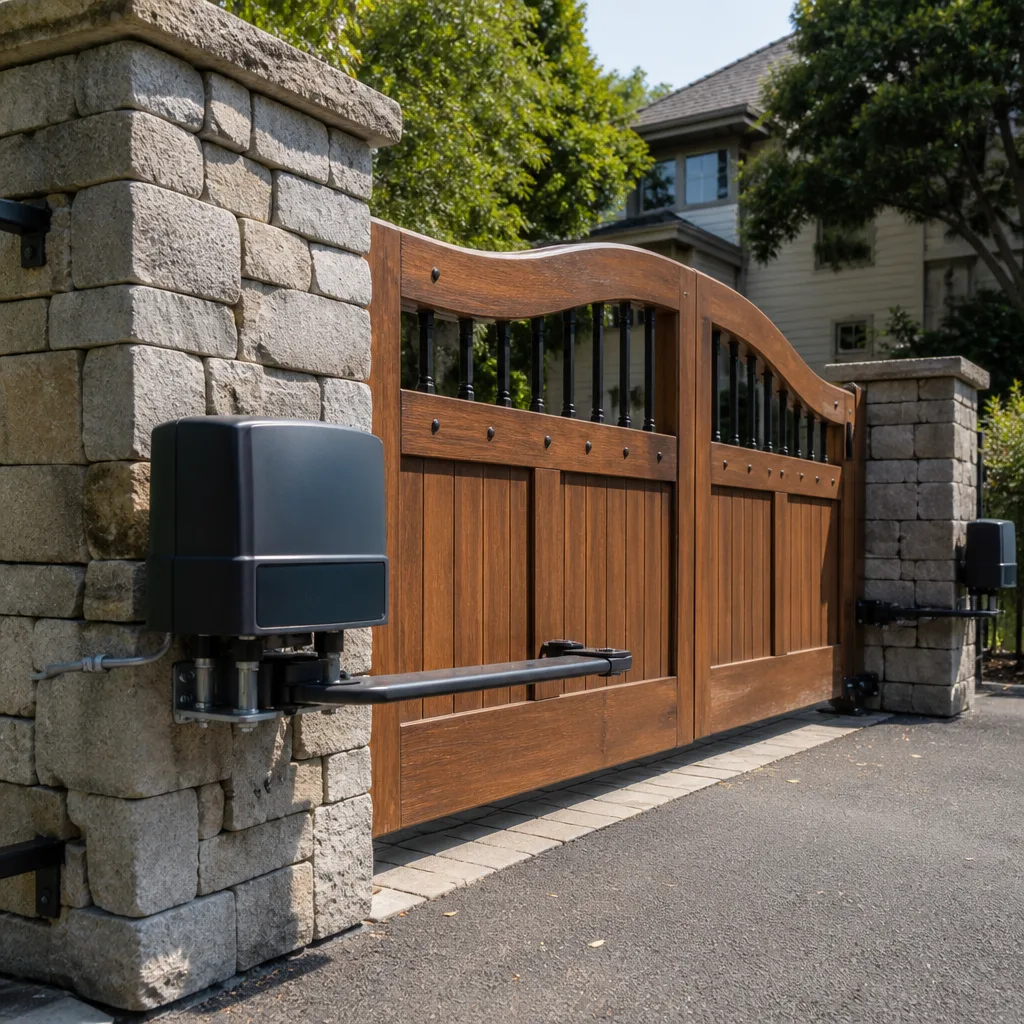 LiftMaster operators
Free on-site gate assessment - hinges, posts, and your LiftMaster or Nice gate operator checked before anything is quoted
The assessment is free and the quote is the invoice.
Get your free estimateSeasonal Gate Repair Care for New Braunfels: Year-Round Homeowner’s Guide
Here’s the counterintuitive part: the gate that sailed through August without a hiccup is the one most likely to fail in January. Months of sustained heat push metal panels, posts and operator housings into a slow expansion, and when the first hard freeze finally lands, that stored movement has somewhere to go. We’ve watched welds crack, hinges seize and slide tracks bind in the weeks after cold weather, on gates whose owners swore nothing had been wrong. New Braunfels doesn’t run four equal seasons. It runs a long brutal summer, an unpredictable freeze window, and two short shoulder periods, and each one stresses gate hardware in a completely different way. This guide maps the right inspection and care tasks to the climate cycle you actually live in.
Styles & brands we work with
- Wrought iron
- Wood & steel frame
- Farm & ranch
- Sliding driveway gates
- LiftMaster operators
Quick Answer
Seasonal gate care in New Braunfels follows a simple rhythm: inspect and lubricate running gear in spring as the ground swells, protect operator electronics and rubber seals through the long summer, run a dedicated pre-freeze checklist before the first hard cold snap, and check for lightning surge damage after severe thunderstorms. The two high-risk windows are the days right after a freeze and the early-spring ground movement that follows a dry winter. Everything else is routine checking spread across the year.
Table of Contents
- Why New Braunfels Weather Treats Gates Differently
- Summer: Heat, Thermal Protection and Electronics
- The Pre-Freeze Checklist for New Braunfels Properties
- Spring: Ground Movement and Slide Gate Tracks
- Humidity Near the Comal and Hinge Contact Points
- After a Severe Thunderstorm: The Surge Check
- Repair or Replace? The Honest Conversation
- Common Mistakes to Avoid
- When to Call a Professional
- Frequently Asked Questions
Why New Braunfels Weather Treats Gates Differently
Most seasonal gate advice is written for places with a slow, predictable swing from cold to hot. That’s not the pattern here. New Braunfels sits in a stretch of central Texas where summer heat holds well past the point most people would call it reasonable, where a hard freeze can arrive with only a few days of warning, and where the shoulder months between the two are short. A gate operator doesn’t care about the calendar; it cares about temperature extremes, moisture, ground movement and power quality. All four of those behave strangely in this part of Texas.
The practical result is that the biggest threats don’t line up with the seasons most homeowners expect. The month people worry about most, August, is usually survivable because the hardware has had months to settle into the heat. The month that actually breaks things is the one where temperatures drop fast, because every material on the gate is contracting at a different rate at the same time.
We work on gates only, so we see this cycle across a wide spread of systems. Whether it’s a LiftMaster swing operator on a residential driveway or a DoorKing unit controlling access to a small commercial lot, the same seasonal stresses show up in the same order every year. Our technicians have up to 14 years of experience, and the pattern they describe hasn’t changed.
Here’s what to keep in mind as you read the sections that follow:
- Heat stress accumulates quietly over summer and shows up as failure in winter.
- Freeze damage in central Texas is usually a one-night event, not a slow winter decline.
- Ground movement in spring strains slide gate tracks more than the gate itself.
- Local humidity near the rivers accelerates corrosion at specific points, not evenly.
- Summer thunderstorms are a power-quality event, and control boards pay for it.
Understanding which phase you’re in tells you what to actually look at. That’s the whole idea behind seasonal care.
Summer: Heat, Thermal Protection and Electronics
A gate operator that runs five times a day in mild weather can run into trouble when the ambient temperature sits above 100°F for weeks. The motor’s thermal protection circuit is doing its job when it shuts things down, and homeowners often read that shutdown as a failure. It’s usually not. It’s the operator telling you it got too hot to keep going safely.
What matters is understanding how the heat affects each part of the system, because they don’t all behave the same way.
Motor and thermal protection. Most residential and light commercial operators carry a thermal cutoff that trips when the motor windings reach a set temperature. In sustained 100°F+ heat, that threshold arrives faster, and cycles that were fine in April start hitting the limit by July. If your gate stops after a busy morning and starts working again an hour later, thermal protection is the likely explanation. If it stops and stays stopped, something else is wrong.
Circuit boards. Control boards are sensitive to heat and to voltage swings. A board mounted in a metal housing that sits in direct afternoon sun runs hotter than the surrounding air, and prolonged heat shortens the life of capacitors and solder joints. Shade and airflow around the operator housing make a real difference, and it’s one of the cheapest things to get right.
Rubber seals and gaskets. Weather seals on the operator housing, limit switch covers and any exposed wiring entry points all degrade in UV and heat. A seal that’s dried and cracked lets in dust and moisture long before it lets in enough water to cause an obvious problem. The damage shows up months later.
Batteries in solar and backup systems. If your operator runs on a solar-charged battery, summer heat is genuinely hard on it. Lead-acid and similar backup batteries lose capacity faster in hot conditions. A battery that seemed fine in March can be weak by September and dead by the first cold snap, which is exactly when you need the backup most.
What’s worth checking through the hottest months:
- Confirm the operator housing isn’t in full afternoon sun if you have any say over it.
- Clear vegetation and debris from around the motor and any vents.
- Listen for a change in motor sound; a strained motor is a hotter motor.
- Check that seals at wiring entry points haven’t dried out or pulled loose.
- If there’s a battery backup, note how the gate behaves during a brief power interruption.
None of this is a substitute for a proper inspection once something sounds wrong. Heat-related faults on the electrical and control side are worth handing to someone who works on them every day. If your operator starts tripping thermal protection more often than it used to, that’s the point to look into electric gate repair rather than waiting for it to fail outright.
The Pre-Freeze Checklist for New Braunfels Properties
The hard freeze in central Texas rarely announces itself a month out. Forecasts firm up days before, sometimes less, and that short window is exactly when a one-hour checklist prevents a two-week repair. The logic is simple: after months of heat expansion, every material on the gate is at its largest. A sudden cold snap contracts metal faster than it contracts the concrete and ground around it, and that’s where cracks, seized parts and cracked housings come from.
Run this list when a hard freeze enters the forecast:
- Walk the full travel of the gate. Open and close it a few times and listen. Any new sound, scrape or hesitation is a warning.
- Lubricate hinges and pivot points. Lubricant that’s been sitting through summer may have dried or thinned. Fresh lubrication before cold weather keeps these points moving instead of seizing.
- Check the posts and footings for movement. If a post has shifted during the dry months, frost-range cold can finish the job. Look for gaps where ground meets post.
- Inspect welds on the frame and panel corners. A hairline crack that’s invisible in summer becomes a visible crack once the metal contracts.
- Test the operator’s manual release. If power goes out during a freeze, you’ll want to know the release works without a struggle.
- Look at the control board enclosure. Make sure the cover is seated and the gasket is intact, so cold air doesn’t get a free path in.
- Check the safety sensors and edges. Cold can stiffen rubber safety edges and affect their response. Test them before the weather turns.
- Confirm the gate operates smoothly by hand with the operator disengaged. If it’s stiff by hand, the operator is working harder than it should.
The one thing not to do is force a stiff gate through a cycle to “break it loose.” Cold metal is brittle, and a hinge that’s seized is safer left alone until it can be thawed and lubricated properly. If a gate won’t move freely after a freeze, that’s a call for a gate technician, not a pry bar.
After the freeze passes, do one more walk-through. This is when thermal contraction damage shows up, and the sooner it’s found, the cheaper it is to address. New Braunfels freeze events are short enough that a quick post-event inspection catches nearly everything.
Spring: Ground Movement and Slide Gate Tracks
Spring is the highest-risk season for slide gates in this area, and most homeowners don’t see it coming. After a dry winter, the first soaking rains cause the soil to expand, and any settlement that happened during the dry months gets pushed back up unevenly. For a swing gate, that’s a nuisance. For a slide gate, it’s a track problem, and track problems are what bring slide gates to a stop.
The sequence looks like this:
- Winter dries the soil, and the ground under the track settles slightly.
- Spring rains arrive and the soil expands unevenly, more under some sections than others.
- The track develops a slight hump or dip that wasn’t there the year before.
- The gate rollers hit that imperfection and the operator works harder to push through it.
- Over time, the extra load shows up as a motor that runs hot, a gate that hesitates mid-travel, or a track that’s visibly out of line.
What to watch for on a slide gate in spring:
- The gate hesitates or slows at the same point on the track every time.
- The operator runs noticeably longer or louder than it did in fall.
- The gate’s leading edge scrapes, rubs or drags at any point.
- The track shows visible gaps or lifts where it meets the ground.
- Rollers look worn on one side more than the other, which points to misalignment.
Catch this early and it’s a realignment and a track adjustment. Let it run all season and it becomes motor wear, roller damage, or both. We’ve seen this cycle play out on entry-level systems like Mighty Mule slide operators and on heavier commercial hardware alike; ground movement doesn’t care what brand sits on top of it.
A swing gate isn’t immune either. Ground movement under the hinge post is the most common cause of a gate that sags in spring after sitting level all winter. If you notice a swing gate dragging at the latch side, the ground under the hinge post is the first thing a technician checks.
Spring is also a good time to consider whether your hardware is due for a closer look. If you want a baseline inspection or a repair quote, a starting point is gate repair, where the focus stays on the gate and operator rather than the general fence around it.
Humidity Near the Comal and Hinge Contact Points
Properties near the Comal River and the surrounding waterways see a different corrosion pattern than properties on higher, drier ground. The difference isn’t dramatic day to day, but over a season or two it shows up at one specific place: hinge contact points.
Why hinges? Because a hinge is where two metal surfaces are pressed tight against each other with almost no gap. Moisture gets in, but it doesn’t easily get out. Add warm temperatures and the small amount of oxygen that reaches the joint, and you have the setup for rust that advances faster than it does on open, exposed metal panels. The panels themselves often look fine while the hinge point underneath is quietly rusting.
Where to look, in order of how often we see it:
- Hinge pivots and their pins. The contact surface between the two halves of a hinge is the highest-risk spot on the whole gate.
- Latch mechanisms. Same principle: tight contact, limited airflow, moisture trapped in place.
- Welded joints at panel corners. Weld beads hold a small amount of moisture in the texture of the weld itself.
- Roller brackets on slide gates. Bolted connections trap moisture against the track hardware.
- Wiring entry points on the operator housing. Every grommet and entry point near ground level is a potential moisture path.
The maintenance answer is regular lubrication of hinge points with a product matched to your gate’s material, plus a wipe-down of the joint before applying. Lubricant on top of rust doesn’t stop the rust; it just hides it. For properties close to the river, this may be a twice-a-year task rather than once.
Properties further from water still rust, just more slowly. If you’re on higher ground away from the rivers, a once-a-year hinge check with lubrication is usually enough, but any gate that stays wet for hours after rain (in shaded spots, for example) deserves the closer schedule.
One caution: don’t reach into or around a powered gate to inspect hinge points, and don’t remove covers on the operator unless the power is off at the breaker. Automatic gates carry real stored energy in the operator and in a moving panel. This is one of those areas where a trained professional is genuinely the safer choice.
After a Severe Thunderstorm: The Surge Check
Severe thunderstorms are a regular feature of the New Braunfels year, and the damage they leave behind on a gate is often invisible. A lightning strike nearby, or a power surge through the local grid, can hit the operator’s control board without any obvious sign at the time. The gate may still work. The board may still power on. And then, weeks later, a relay fails or an input that was slightly damaged gives out.
The surge check after a storm is mostly about the control board and the electronics around it. Here’s what to look at:
- Test the gate through a full open-and-close cycle. Watch for hesitation, an odd stop, or a cycle that ends differently than it should.
- Test the safety sensors and edges at both ends of travel. A surge can affect sensor inputs even when the motor runs normally.
- Look for a swollen or scarred capacitor on the board if you can see it without opening anything. Don’t open an access panel to look; this is best left to a technician.
- Check whether a battery backup is charging. The charge circuit is a common victim of surges and its failure often isn’t obvious until you need it.
- Compare cycle count or fault indicators if your operator has them and you noted the state before the storm.
- Confirm the gate completes its cycles without manual help and that the operator resets cleanly after a simulated power interruption.
If the operator behaves differently after a storm than it did before, the control board is the first place a gate technician looks. This is the kind of symptom that’s nearly impossible to diagnose from the outside, since a board issue and a sensor issue can look identical to a homeowner watching the gate. A specialist with a meter and the brand experience to know what each reading should be can usually sort it out quickly.
If the storm also brought heavy rain and standing water around the operator housing, note that separately. Water intrusion and surge damage often happen together, and a technician should check for both.
For repairs following storm-related faults, electric gate repair is the right starting point; the technician will be looking at both the electrical and mechanical sides of the operator.
Repair or Replace? The Honest Conversation
The most common conversation we have with homeowners is about whether a failing gate or operator needs replacement or just a repair. Our answer is always the same: it depends on what failed, and we’d rather fix what’s fixable than sell a replacement that wasn’t needed. That’s easier to say honestly when the technician works on every major brand anyway.
A repair is usually the right call when:
- A single component has failed: a control board, a motor, a sensor, a hinge, a roller.
- The rest of the system is sound and the failure is recent.
- The gate’s mechanical structure and operator housing are still in good shape.
- The brand is one we work on, which covers most residential and light commercial systems.
Replacement starts to make sense when:
- Multiple components are failing at once, or the same fault keeps returning.
- The mechanical structure has significant corrosion or cracking that would need repair regardless.
- The existing operator is no longer a match for how the gate is used, particularly on commercial lots where access patterns have changed.
- The failure is structural: a bent frame, a permanently warped track, or a post that’s shifted beyond realignment.
We work on the brand you already have, whether that’s a LiftMaster swing operator, an Elite slide gate, or a Mighty Mule DIY unit that a homeowner installed years ago. Being able to diagnose across brands means the recommendation is based on what’s actually wrong, not on what we happen to stock. When a repair isn’t cost-effective, we’ll say so, and we can handle the installation too, so there’s no second contractor to coordinate.
For most homeowners in New Braunfels, the answer after a proper diagnosis is a straightforward repair. The honest conversation isn’t about scaring you into a new gate; it’s about finding out what actually failed before recommending work.
Common Mistakes to Avoid
- Skipping the post-freeze inspection because “the gate still works.” A gate that runs after a freeze can still have a hairline crack or a stress point that fails a week later. One walk-through after cold weather catches these while they’re cheap to fix.
- Lubricating hinges without cleaning them first. Lubricant on top of grit and rust hides the problem without stopping it. A wipe-down and a proper product go together.
- Forcing a stiff gate through a cycle to “free it up.” Cold or humid metal is brittle, and a seized hinge can snap rather than loosen. Let it thaw and get lubricated properly instead.
- Ignoring thermal protection trips in summer. If the operator shuts down in heat more often than it used to, that’s a signal something is loading the motor beyond its design. Not a reason to bypass the protection.
- Assuming the gate is fine because it looks fine. Rust at hinge contact points starts where you can’t see it, and surge damage to a control board rarely shows on the outside. Checking is different from looking.
- Not checking a battery backup in summer. Heat kills backup batteries faster than cold does. A battery that worked fine last year may be useless by the first power interruption of this one.
- Letting spring track misalignment run through the whole season. A slight hump in the track is easy to correct early. Left alone, it wears the rollers, stresses the motor and eventually takes the gate offline.
When to Call a Professional
Some of this guide is a homeowner task. The rest is a job for a gate technician, and knowing which is which saves time and money. Call a professional when the operator itself is behaving oddly after a thermal trip, a storm or a freeze; when the gate won’t complete a cycle reliably; when a hinge or track has visibly failed; when safety sensors or edges respond unpredictably; and any time the work requires opening an operator housing, working near live wiring, or moving a heavy panel whose motion isn’t fully controlled. Automatic gates carry stored energy in the operator and real crush force in the panel, and a trained technician works with both safely. Gate Repair New Braunfels offers free estimates in New Braunfels; call (855) 939-0250. We answer 24/7. Fast dispatch from 7am to 7pm, Sunday through Friday. Call (855) 939-0250.
Frequently Asked Questions
The two highest-risk windows are the days immediately after a hard freeze and the early-spring ground movement that follows a dry winter. Summer thermal trips are common but often self-correct once the operator cools. Storm surge damage can show up weeks after the thunderstorm. Call (855) 939-0250 for an exact quote; estimates are free.
Thermal protection on the operator is usually the cause. Most operators trip when the motor windings reach a set temperature, and sustained 100°F+ heat makes that happen faster. If the gate works again after an hour of rest, that’s the likely explanation. If it doesn’t, the motor or control board needs a closer look. Call (855) 939-0250 for an exact quote; estimates are free.
Yes, and it’s the highest-value hour of gate care you can spend. Lubricate hinges, test the manual release, inspect welds and posts, and confirm safety sensors respond before the first cold snap. The checklist takes less time than the repair a missed item usually leads to. Call (855) 939-0250 for an exact quote; estimates are free.
The gate slowing or hesitating at the same point on the track every time. In spring, that’s usually ground movement from soil expansion under the track. Left alone, it wears rollers and loads the motor. A realignment early in the season is far smaller than a track replacement. Call (855) 939-0250 for an exact quote; estimates are free.
Probably. We work on LiftMaster, FAAC, BFT, Linear, Viking, Ghost Controls, DoorKing, Elite and Mighty Mule systems, from residential entries to commercial operators. If you’re not sure, tell us the brand and model and we’ll tell you. Call (855) 939-0250 for an exact quote; estimates are free.
No. The recommendation follows the actual diagnosis, not the sales target. If a single component failed and the rest of the system is sound, we’ll recommend the repair. Replacement only comes up when multiple things are failing or the structure itself is compromised. Call (855) 939-0250 for an exact quote; estimates are free.
The Bottom Line
Seasonal gate care in New Braunfels isn’t about four equal seasons. It’s about preparing for the long summer, the unpredictable freeze, and the two shoulder periods where ground movement and humidity quietly load the hardware. The tasks that matter most are the pre-freeze checklist, the post-freeze inspection, the spring track check on slide gates, a hinge lubrication routine for properties close to water, and a surge check after any severe thunderstorm. Do these, and most of the failures we see would never reach the repair stage. For everything else, our gate specialists can diagnose the brand you already have. Call (855) 939-0250 for a free estimate. We answer 24/7. Fast dispatch from 7am to 7pm, Sunday through Friday.
Written by the team at Gate Repair New Braunfels.
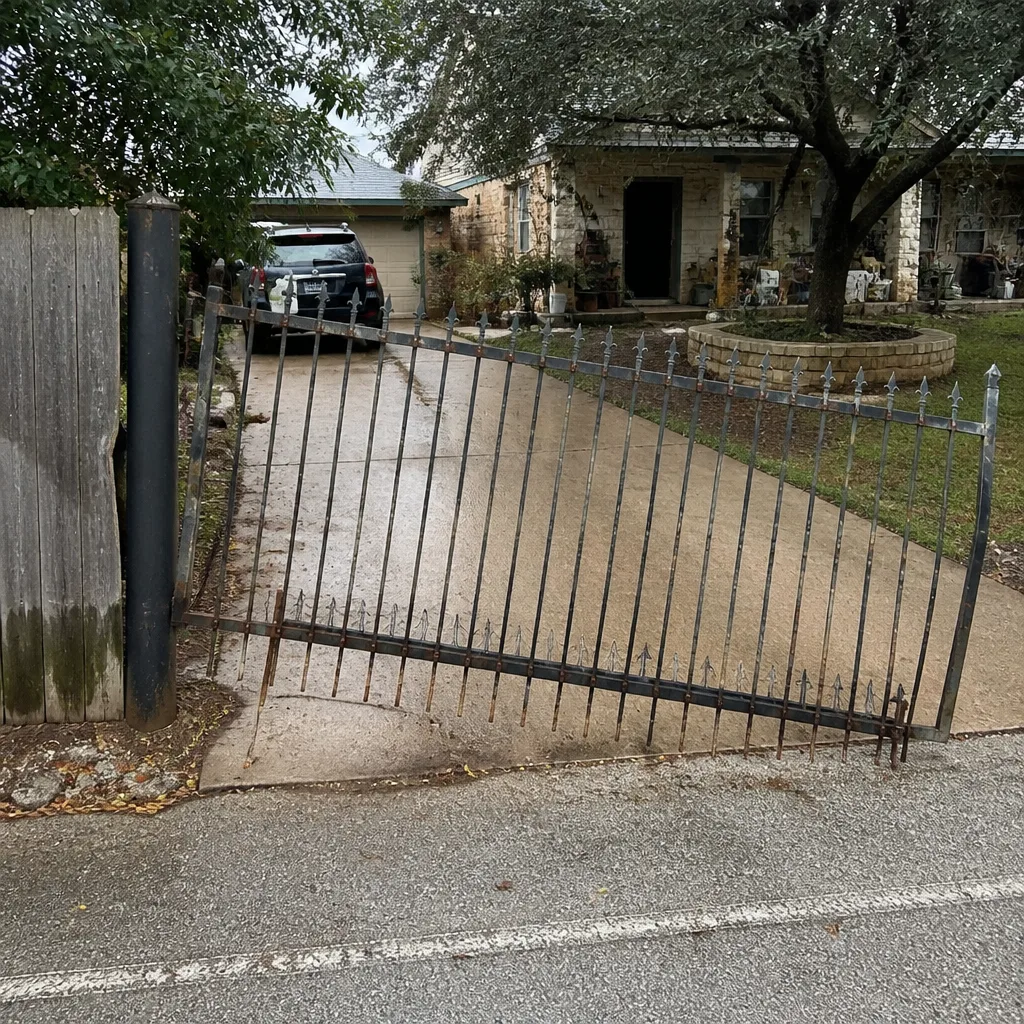
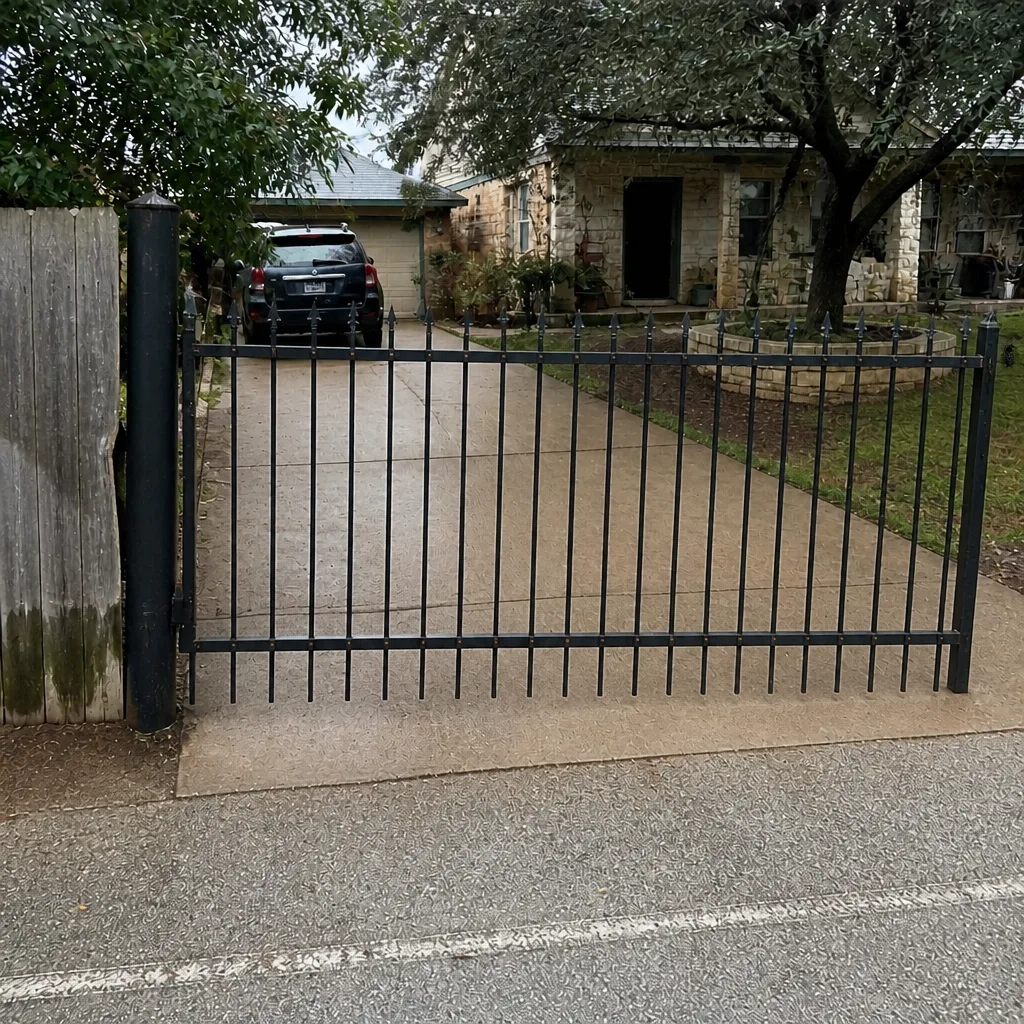
See the difference
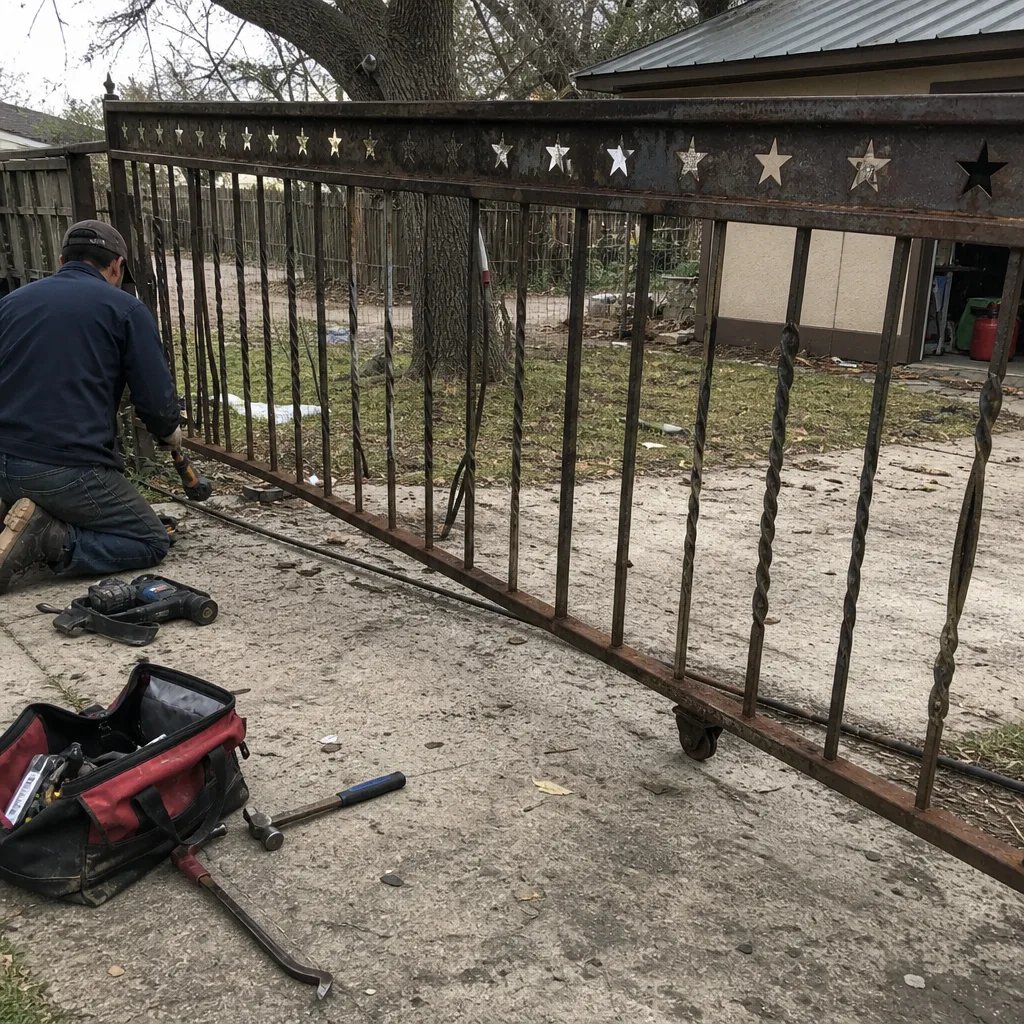 Before
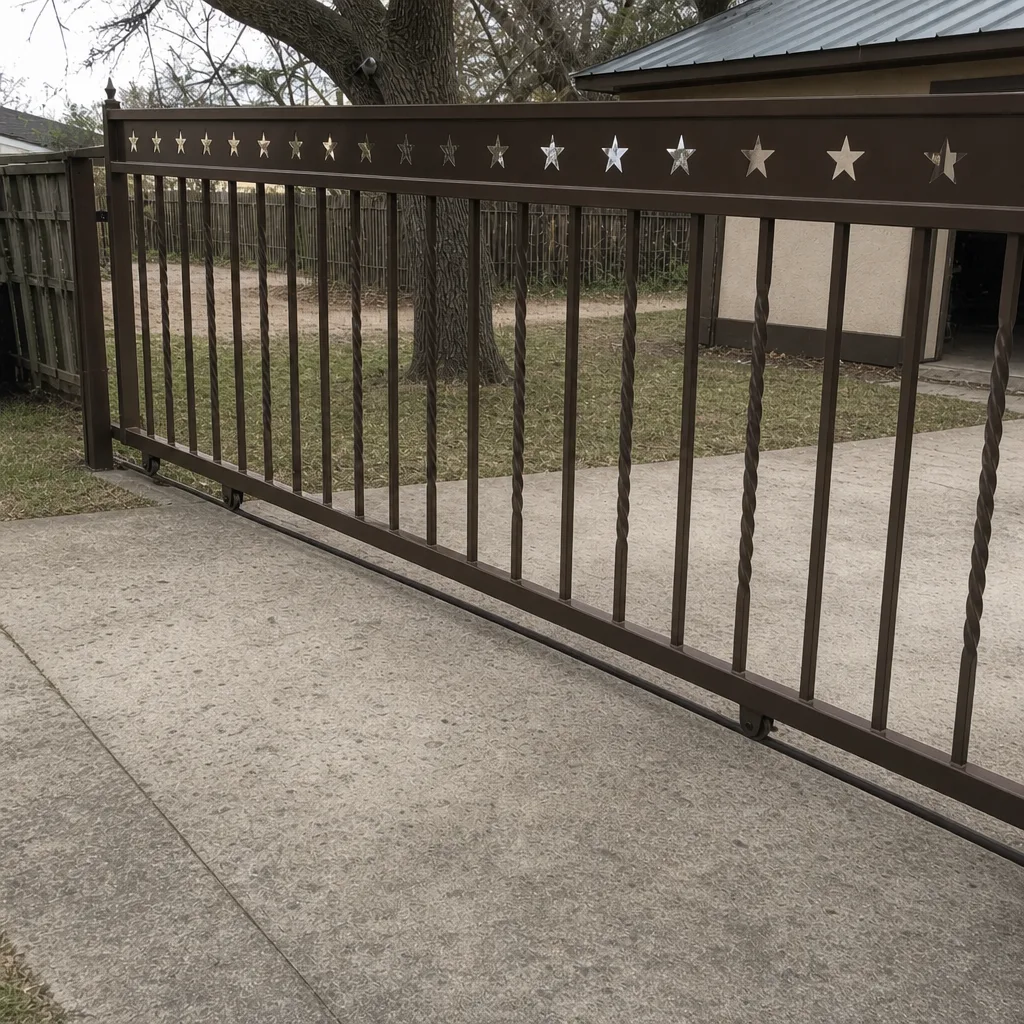 After
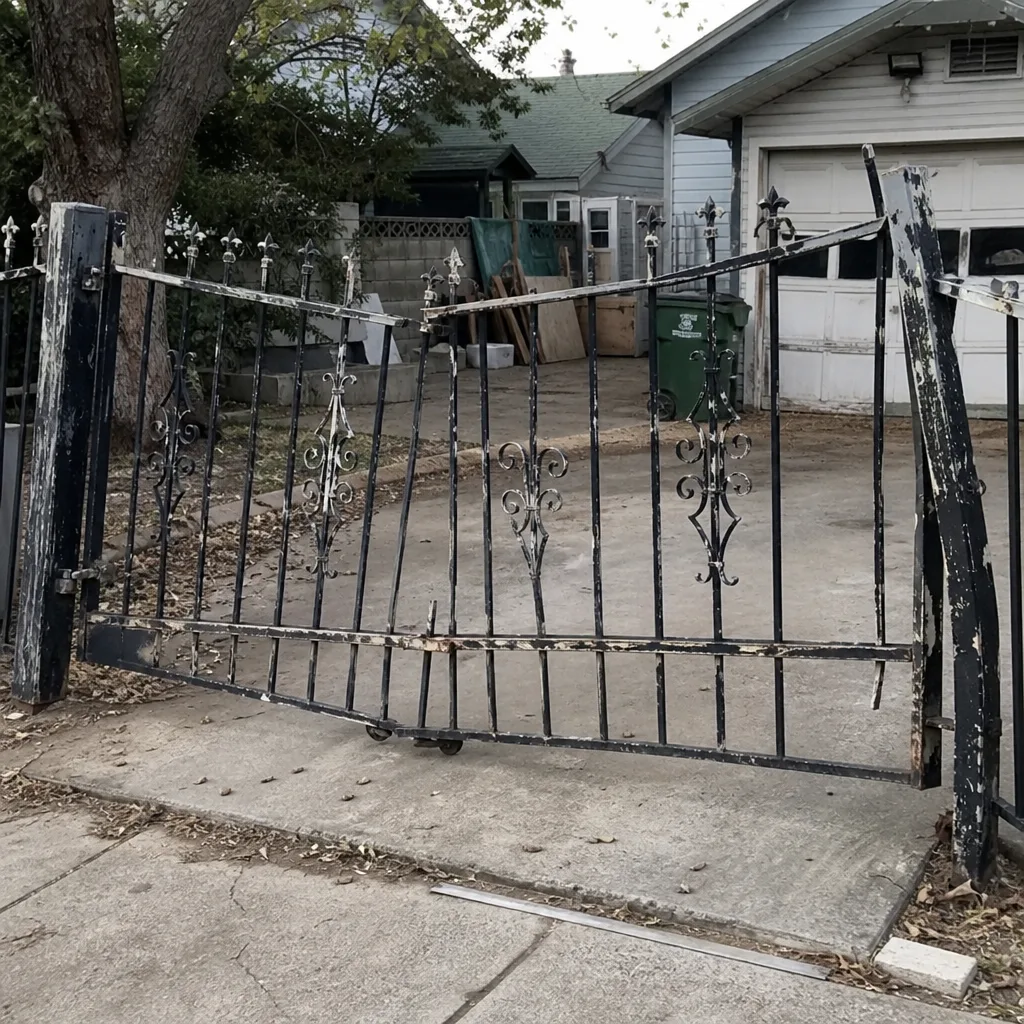 Before
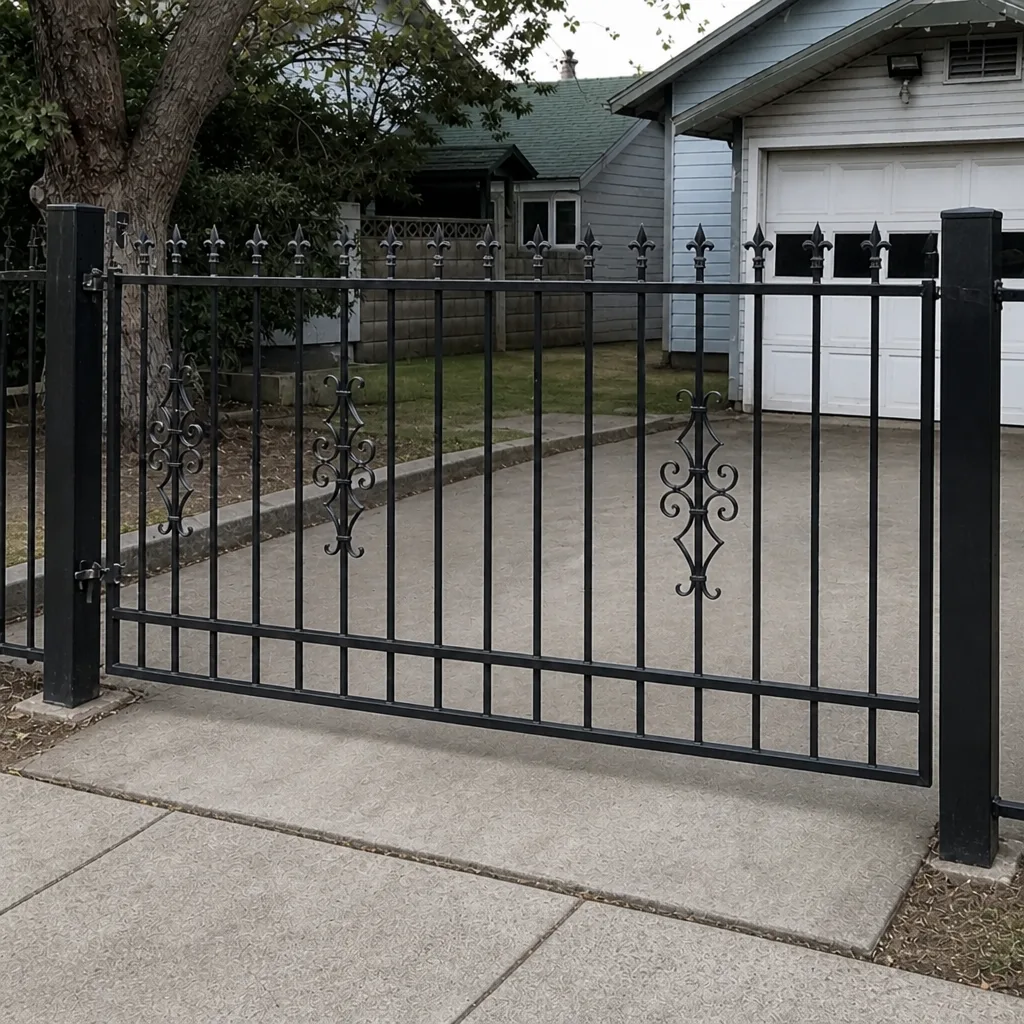 After
 Before
 After