
Last updated November 15, 2026
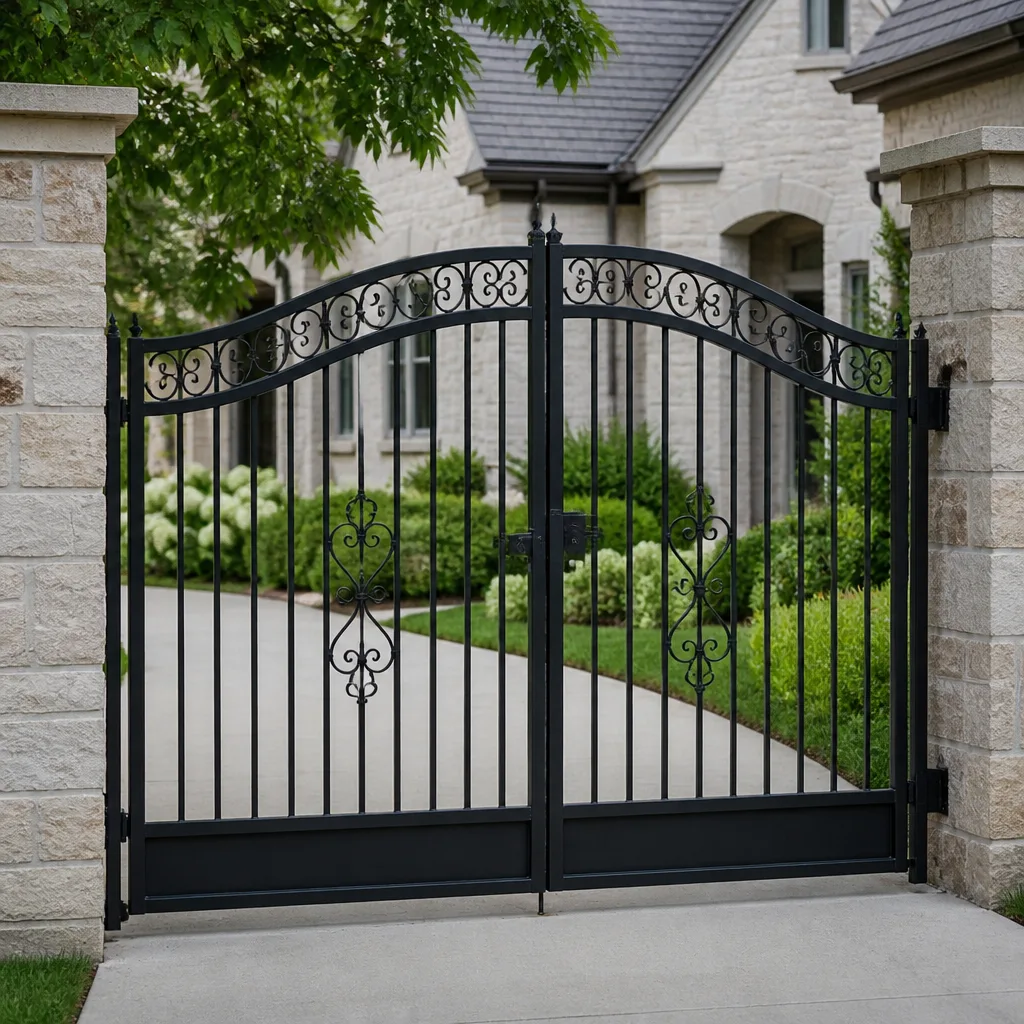 Wrought iron
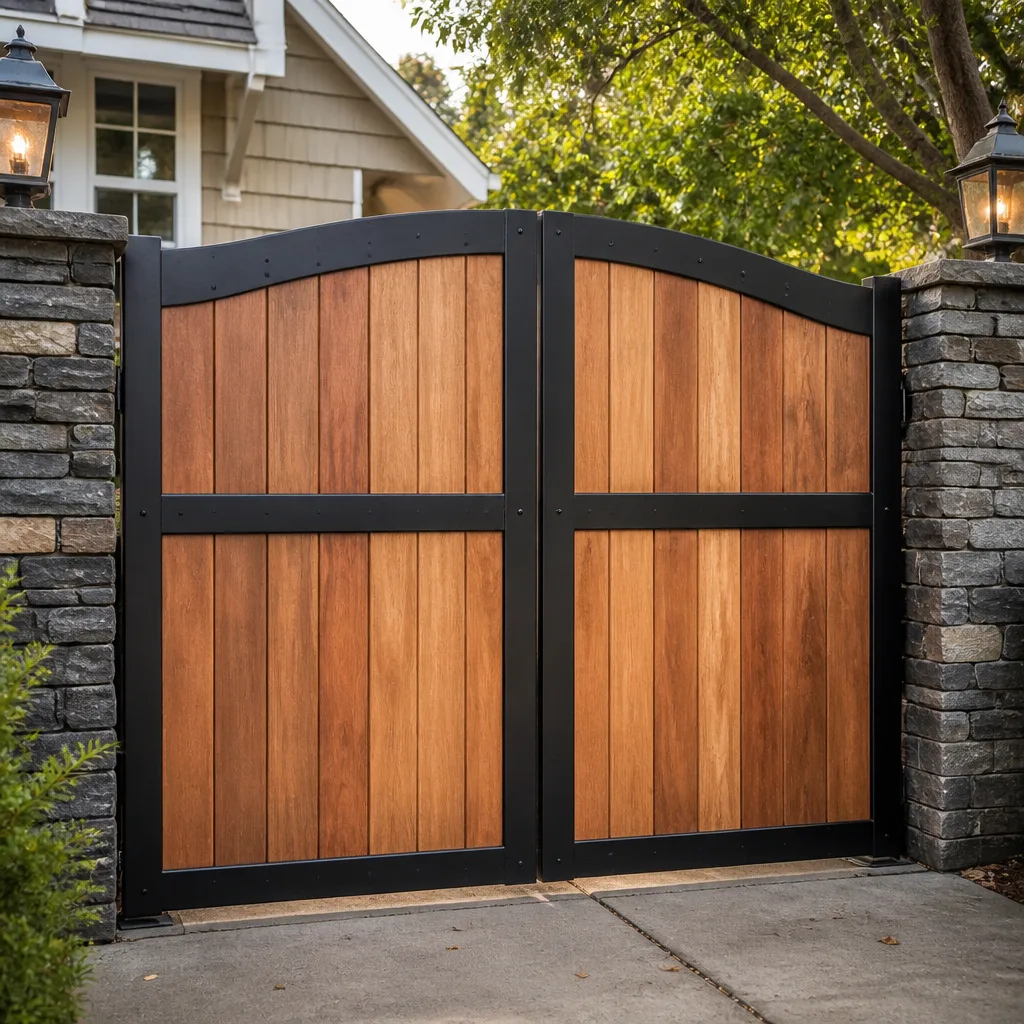 Wood & steel frame
 Farm & ranch
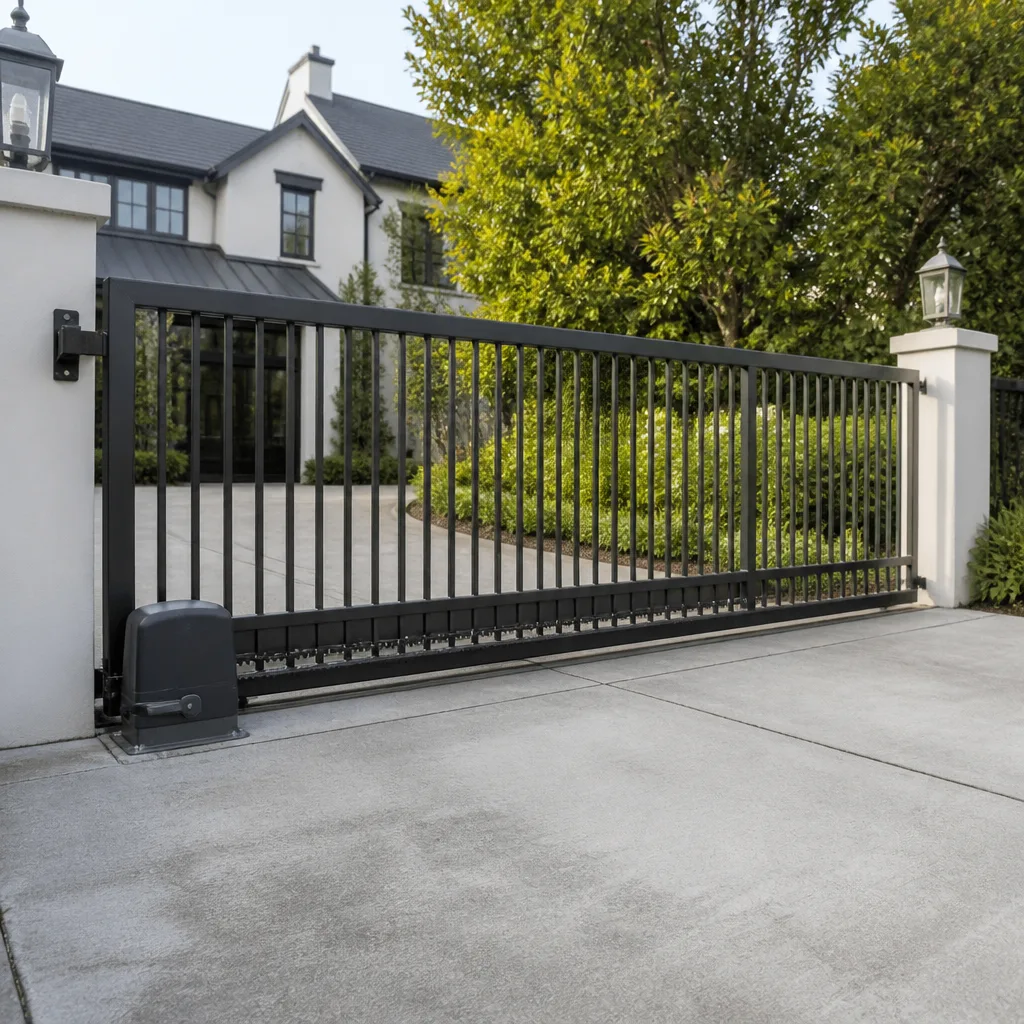 Sliding driveway gates
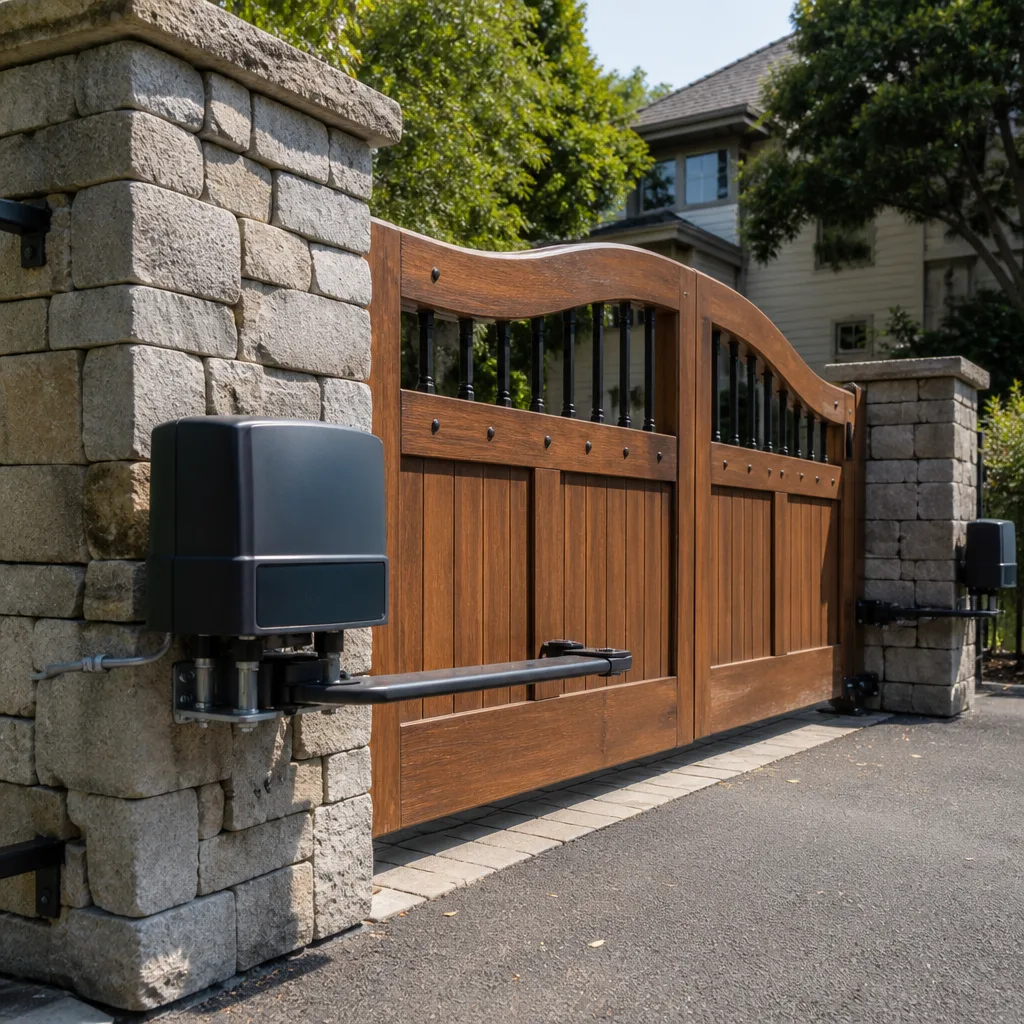 LiftMaster operators
Free on-site gate assessment - hinges, posts, and your LiftMaster or Nice gate operator checked before anything is quoted
The assessment is free and the quote is the invoice.
Get your free estimateGate Repair Emergency Preparedness Guide for New Braunfels Homes
A gate stuck open overnight and a gate stuck closed with someone waiting on the other side are not the same problem, and they don’t get the same response. Most homeowners discover that distinction while standing in the driveway with a flashlight, which is the worst possible moment to figure it out. The two failures pull in opposite directions: one is about securing a property, the other is about restoring access fast. Neither is solved by jiggling the remote and hoping. What you need before anything breaks is a short, practiced plan: where your manual release lives, how your operator behaves when power drops, what to say when you call, and which situations can wait until morning. This guide walks through all of it for New Braunfels homes, HOA entrances, and small commercial lots, with the brand-specific details that actually matter.
Quick Answer
For a gate stuck open in New Braunfels, secure the opening first with a physical lock or a manual slide-bar, then decide whether the failure is electrical or mechanical before you call. For a gate stuck closed during an access emergency, use the operator’s manual release to move the gate by hand, then call for repair. In both cases, knowing your brand’s release mechanism and your operator’s battery backup status ahead of time is what turns a panic into a five-minute procedure. Call (855) 939-0250. We answer 24/7. Fast dispatch from 7am to 7pm, Sunday through Friday.
Styles & brands we work with
- Wrought iron
- Wood & steel frame
- Farm & ranch
- Sliding driveway gates
- LiftMaster operators
Table of Contents
- The Two Kinds of Gate Emergencies
- How to Find and Use Your Manual Release (By Brand)
- The Gate-Stuck-Open Security Protocol
- The Gate-Stuck-Closed Access Protocol
- Storm and Power Outage Preparedness
- What to Tell the Technician When You Call
- Building Your One-Page Gate Emergency Card
- Pre-Outage Check Habits for New Braunfels Properties
The Two Kinds of Gate Emergencies
The first thing to sort out when a gate fails is which category you’re in, because the urgency and the immediate steps are completely different.
Security emergency (gate stuck open): The gate won’t close, or the operator runs but the gate stops mid-travel, or the gate is stuck fully open with no way to bring it back. Anything inside the property line is now exposed to the street. This is the scenario where the first ten minutes matter, because the window between the gate stopping and someone wandering in is short.
Access emergency (gate stuck closed): The gate won’t open. The operator runs but the gate won’t move, the arm is disconnected, the control board is dead, or the safety sensors keep reversing the gate back to closed. This is the scenario where you, your family, an emergency vehicle, or a delivery or service provider can’t get through. If someone needs medical access or you drive out of a single-entry community, this is the urgent one.
A third category – mechanical failure with no safety risk – is the one that can genuinely wait until regular dispatch hours. A gate that operates but drags, squeals, or occasionally reverses is wearing out, not failing. That’s a scheduled Gate Repair New Braunfels visit, not an emergency. For automated systems specifically, our electric gate repair handles the motor, control board, and sensor side of the same job.
In New Braunfels, the community layout shapes which emergency you’re likely to face. Single-entry subdivisions and gated HOA drives mean a stuck-closed gate blocks everyone, not just one household. Properties with long driveways and no secondary access face the same issue. Knowing which category your property falls into – and which one your neighbors share – is the first step in preparation.
How to Find and Use Your Manual Release (By Brand)
The manual release is the single piece of hardware that turns a stranded gate into a movable one, and its location varies by operator brand. Find yours before you need it. Walk out to your operator with a flashlight this week, identify the release, and figure out how it works. Then show everyone in the household.
Across the residential brands we see most often in New Braunfels – LiftMaster, Elite, Mighty Mule, and Ghost Controls – the release falls into a few patterns:
- LiftMaster swing and slide operators: The release is usually a keyed or levered handle on the operator housing near the gate arm, or a pull handle on the arm itself. On many swing models, you disengage the arm from the gate operator by pulling a release pin, then swing the gate by hand.
- Elite operators: Release mechanisms are typically on the operator body, often a keyed lever. Some Elite models use a bypass key that disengages the gear, letting the gate move freely.
- Mighty Mule: Commonly a manual release key or pin on the operator arm. On many models, a small key inserted into the release slot and turned frees the arm.
- Ghost Controls: Release is usually a pin or lever on the operator arm housing. The arm needs to be physically disengaged from the gate before the gate will swing.
- DoorKing (and other commercial-grade operators): Release mechanisms are more varied and sometimes require a specific tool or key. If your HOA or commercial lot runs a DoorKing operator, the release procedure should be documented by the property manager in advance – not figured out during a failure.
Whatever your brand, the sequence is: locate the release, confirm it disengages the gate from the operator, move the gate by hand to the position you need (open for access, closed for security), then re-secure it. Before you re-engage the release, check that nothing is jamming the gate’s travel path – a rock, a fallen branch, or a misaligned track on a slide gate. Never force a gate that won’t move by hand; the problem is bigger than the release. Our technicians have up to 14 years of experience with these mechanisms and can walk you through your specific system. For larger automated systems where the release is unclear, we recommend an on-site walkthrough rather than guesswork.
The Gate-Stuck-Open Security Protocol
A gate that won’t close is a property security problem the moment it happens. The first ten minutes are about physically securing the opening, not fixing the operator. Here’s the sequence we recommend:
- Confirm the gate is actually stuck. Watch it for a full cycle. If it closes and immediately reopens, the safety sensors or the loop detector are the likely cause – not the operator.
- Disengage the operator with the manual release. Pull the gate to the closed position by hand.
- Secure the gate physically. A padlock through the gate frame, a slide-bar, or a chain and lock through the gate uprights will hold it. Do not rely on the operator to keep it closed – it already failed once.
- Check for the reversing sensor first. A misaligned photo-eye, a leaf across the beam, or a shifted safety sensor is the most common cause of a gate that closes then immediately reverses. Wiping the sensor lenses and checking alignment takes a minute.
- Check the gate’s travel path. A rock, a fallen branch, an obstruction on a slide gate track, or a sagging hinge on a swing gate will trip most operators’ obstruction detection. Clear it.
- If those don’t resolve it, make the call. If you can’t safely secure the gate, call gate repair for a technician.
Should you call immediately or wait until morning? If you’ve physically secured the opening with a lock and the gate is holding, waiting until regular dispatch hours is fine. If you can’t secure it – the gate won’t stay closed, the frame is damaged, or the property is exposed – call. Call (855) 939-0250. We answer 24/7. A call outside dispatch hours is booked into the next opening, Sunday through Friday, 7am to 7pm.
This scenario plays out more often in New Braunfels on properties near open greenbelt or with long street frontage, where the gate is the only barrier between the street and the yard. If your property runs that way, a temporary physical lock kept near the gate is worth having.
The Gate-Stuck-Closed Access Protocol
A gate that won’t open is a different problem: you need to get through, or someone else does. The response is about restoring access quickly and safely.
- Try the manual release first. Locate your operator’s release (see the brand section above), disengage the gate, and push it open by hand.
- If the release works, leave the gate open and secure the opening another way – a temporary chain, a physical lock if you need to close it, or manual operation until the technician arrives.
- If the release won’t disengage the gate, do not force it. A gate that won’t move by hand after release usually has a mechanical failure in the arm, hinge, or track. Call for a technician.
- Check the operator’s power source. A tripped breaker at the control box, a dead battery backup, or a disconnected power supply are common and quickly diagnosed. If you’re unsure, do not open the control enclosure yourself – the wiring and controls carry live voltage.
- Check the remote and keypad separately. If the gate opens from the keypad but not the remote, the remote is the issue, not the operator.
- For medical or emergency access: If the gate blocks emergency vehicle access, do not wait for a repair. The release is the primary tool. If the release fails, call the technician and be explicit that the gate is blocking emergency access.
For HOA managers and small commercial property owners, the access emergency is the one that needs a written protocol. Every community member who may need to open the gate manually should know the release location and procedure. That’s a New Braunfels-specific reality in gated subdivisions and business parks where a single gate controls the only vehicle entrance.
Safety caveat: automated gates carry live power at the operator, and a gate with a damaged arm, broken hinge, or a slide gate off its track can fall or crush. If you see visible damage, stop and call a technician rather than attempt to force the gate open. Call (855) 939-0250. Fast dispatch from 7am to 7pm, Sunday through Friday.
Storm and Power Outage Preparedness
The time to verify your operator’s battery backup is before a storm, not during one. A gate that works on a normal day tells you nothing about how it behaves when power drops, and New Braunfels sees enough storm activity that this isn’t a hypothetical.
Here’s how to check battery backup function safely:
- Locate your operator’s battery. Most residential operators use a sealed backup battery in the operator housing or a small control enclosure. It should be visible without opening a live electrical panel.
- Look for a battery test button or indicator. Many LiftMaster and Elite operators have a battery test function on the control board or a battery status LED. If yours does, run the test per the label.
- Check the battery age and condition. Sealed lead-acid batteries in gate operators have a service life. A battery that’s past its replacement window won’t carry the gate through a multi-hour outage. If you don’t know the battery’s age, have a technician check it during your next regular visit.
- Confirm the operator’s low-voltage cutoff and auto-close settings. Some operators default to a fail-secure position (closed) on power loss and need a battery to open. Others default to fail-safe (open). Know which yours does.
- Test on a mild day, not a storm day. A battery test during a storm tells you whether the battery works when you need it. A battery test in good weather tells you whether you’ll need to replace it before the next storm. The second is the one to run.
After a storm, check the gate before using it. A slide gate can come off its track, a swing gate arm can bend, and a fallen branch can jam the travel path. If the gate won’t move cleanly by hand after releasing the operator, don’t run the operator – call a technician. Our electric gate repair handles control board, motor, and sensor damage from storm-related failures, and we work with the brand you already have.
What to Tell the Technician When You Call
A call that arrives with the right information gets a faster, cleaner repair. The difference between “my gate doesn’t work” and “I have a LiftMaster swing operator, the arm runs but the gate doesn’t move, and I released it manually” is the difference between a technician arriving prepared and a technician diagnosing from scratch.
When you call (855) 939-0250, be ready to tell the technician:
- The operator brand – LiftMaster, Elite, Mighty Mule, DoorKing, FAAC, BFT, Linear, Viking, or Ghost Controls.
- What the gate is doing – won’t open, won’t close, opens partway then reverses, runs but the gate doesn’t move, or the control board is dead.
- Whether the manual release worked – and if not, what happened when you tried.
- Whether the gate is stuck open or closed – this is the first thing that determines the response.
- Whether there’s visible damage – a bent arm, a damaged hinge, a slide gate off its track, or a broken sensor mount.
- The property type – single home, HOA entrance, or small commercial lot.
- Your contact information and gate location – so the technician can find the operator quickly.
If you don’t know the brand, check the operator housing or the control box. The brand name is usually printed on a label. If you can’t find it, tell the technician what you can see – the shape of the arm, the gate type (swing or slide), and any visible model numbers. That’s enough to get close.
For an HOA or commercial property, call with the property manager or responsible party available. A tech can’t service a gate on a shared property without access to the control enclosure and the property’s authorization. That’s a New Braunfels reality for gated communities where the operator sits behind a locked control box.
Building Your One-Page Gate Emergency Card
The most useful thing you can do this week is make a one-page reference card for your gate and post it where you’ll find it at 11 PM. It takes about ten minutes and it changes the entire experience of a gate failure.
Here’s what goes on the card:
- Operator brand and model – from the label on the housing.
- Gate type – swing or slide, single or double, residential or commercial.
- Manual release location – where the release handle, key, or pin is, and what it looks like. Sketch it if you can.
- Release procedure – one sentence on how to disengage the gate, specific to your brand.
- Power source location – where the control box and breaker are, and whether they’re inside a locked enclosure.
- Battery backup status – whether you have one, and when it was last checked.
- Gate repair phone number – (855) 939-0250. We answer 24/7. Fast dispatch from 7am to 7pm, Sunday through Friday.
- Who to call for emergency access – for HOA properties, the property manager’s number and any emergency contact for the community.
Post the card inside the garage, on the wall near the control box, or on the inside of the gate’s control enclosure if it’s accessible. Laminate it or put it in a plastic sleeve. A card that’s been rained on won’t help.
One more item worth adding for New Braunfels properties with long driveways or open sightlines: a note on which physical lock will hold the gate closed in a stuck-open scenario, and where it’s kept. A second, smaller card on the gate itself – inside the gate frame, not visible from the street – gives a neighbor or house-sitter the same information without exposing it.
Pre-Outage Check Habits for New Braunfels Properties
Most gate emergencies are the last straw on hardware that’s been giving hints for weeks. A short seasonal check catches the hints before they become failures. Here’s what to look at on a monthly basis:
- Sensor alignment. Photo-eyes on swing and slide gates drift. A leaf, a shift in the mount, or a dirty lens will cause the gate to reverse. Wipe the lenses and check alignment.
- Travel path cleanliness. Clear any obstruction from a slide gate’s track. On a swing gate, check the arc of travel for anything that could catch the gate.
- Hinge and arm condition. Look for sag, looseness, or bending at the hinges and the operator arm. A sagging gate puts strain on the operator and warns you of a bigger problem.
- Battery indicator. Note the battery status each month if your operator has an indicator. A battery that stays charged through a mild power flicker is fine; one that doesn’t is due for replacement.
- Manual release operation. Run the release once a season. A release that binds in the handle is easy to fix during a regular visit and very hard to deal with at midnight.
These checks are quick and stay within the gate specialist’s scope. If any of them turn up a real issue – a failing release, a damaged arm, a control board that’s behaving erratically – that’s the moment to schedule a visit. In New Braunfels, where storm season drives most gate failures, a pre-storm check cycle saves the most trouble.
For a full diagnosis or a repair that needs a technician on-site, call (855) 939-0250. Estimates are free, and the price is set by the written estimate before any work starts.
Common Mistakes to Avoid
- Forcing a gate that won’t move by hand after release. If the release works and the gate still won’t budge, the problem is mechanical – an arm, a hinge, or a slide track. Forcing it makes a repairable issue into a replacement. Stop and call.
- Opening the control enclosure without knowing what’s live. The control box carries live voltage. A tripped breaker or a disconnected plug can be checked from the outside; anything inside the enclosure should be left to a technician.
- Assuming battery backup works because the gate runs normally. A gate on grid power tells you nothing about outage behavior. Test the battery before the storm, not during it.
- Skipping the manual release walkthrough. A release that’s never been found is a release that gets found by flashlight at the wrong moment. Walk the release yourself and show everyone in the household.
- Calling with “my gate doesn’t work” and nothing else. Brand, symptom, and whether the gate is open or closed change the response. A one-line diagnostic saves a return visit.
- Not securing a stuck-open gate with a physical lock. Relying on the operator to hold a gate it already failed to close is a security gap. A padlock or slide-bar is the backup.
- Waiting through opening after opening to schedule the fix. A gate that reverses every third cycle and a gate that won’t close at all are the same progression. The reversing is the warning; treat it as the repair, not the symptom to live with.
See the difference
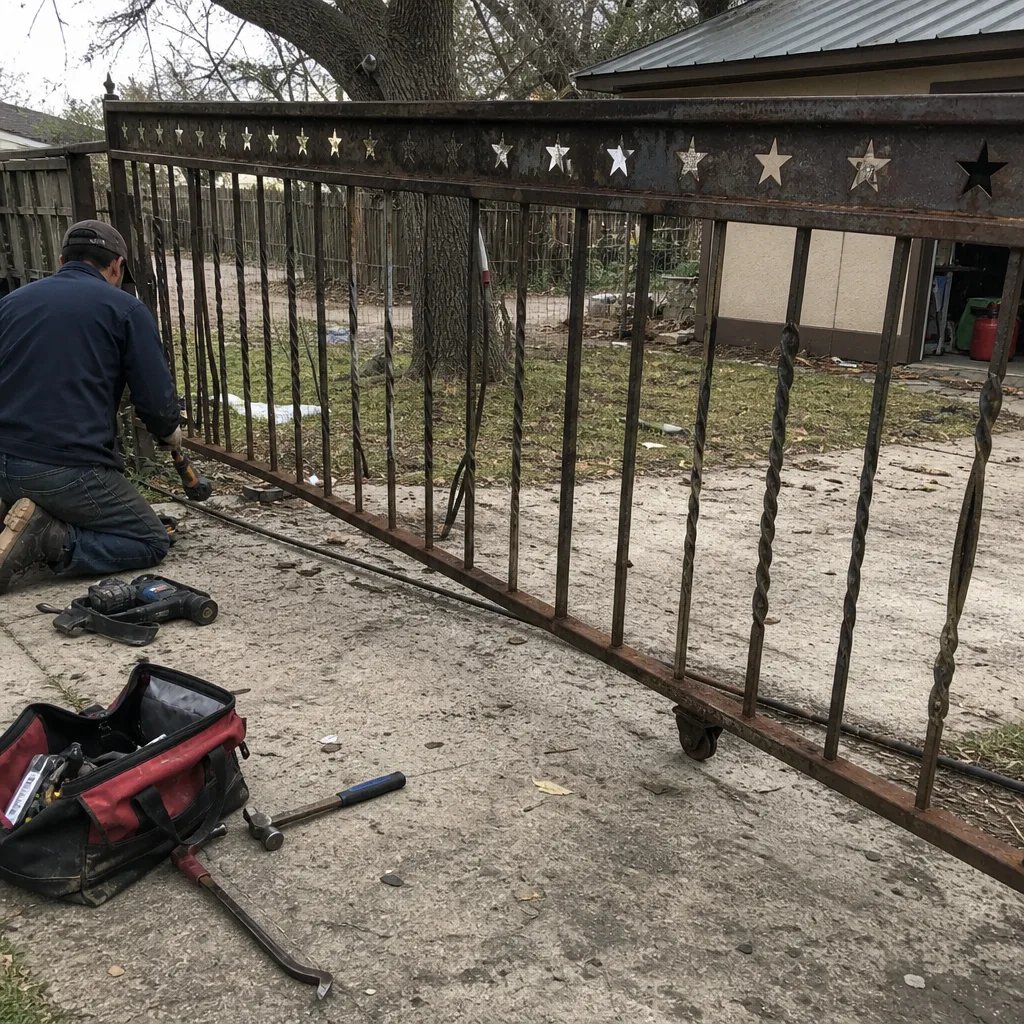 Before
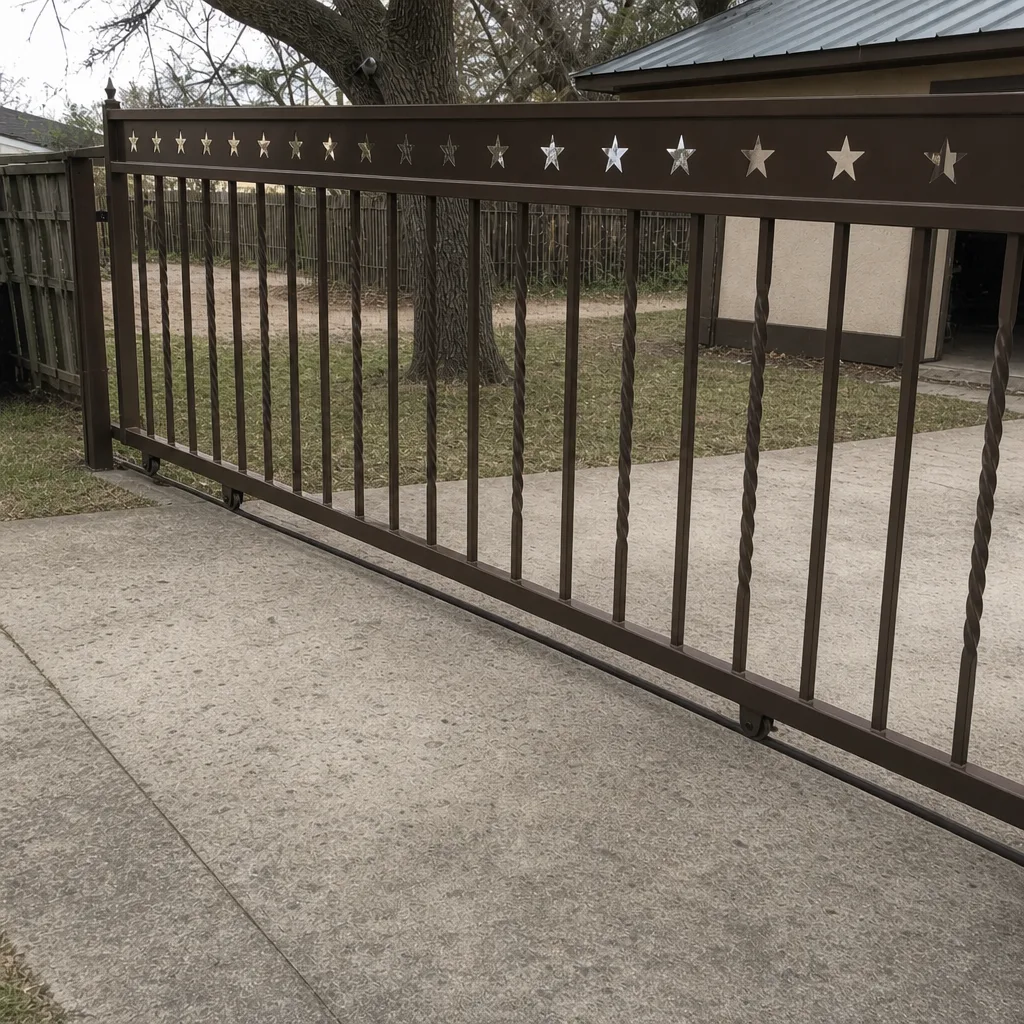 After
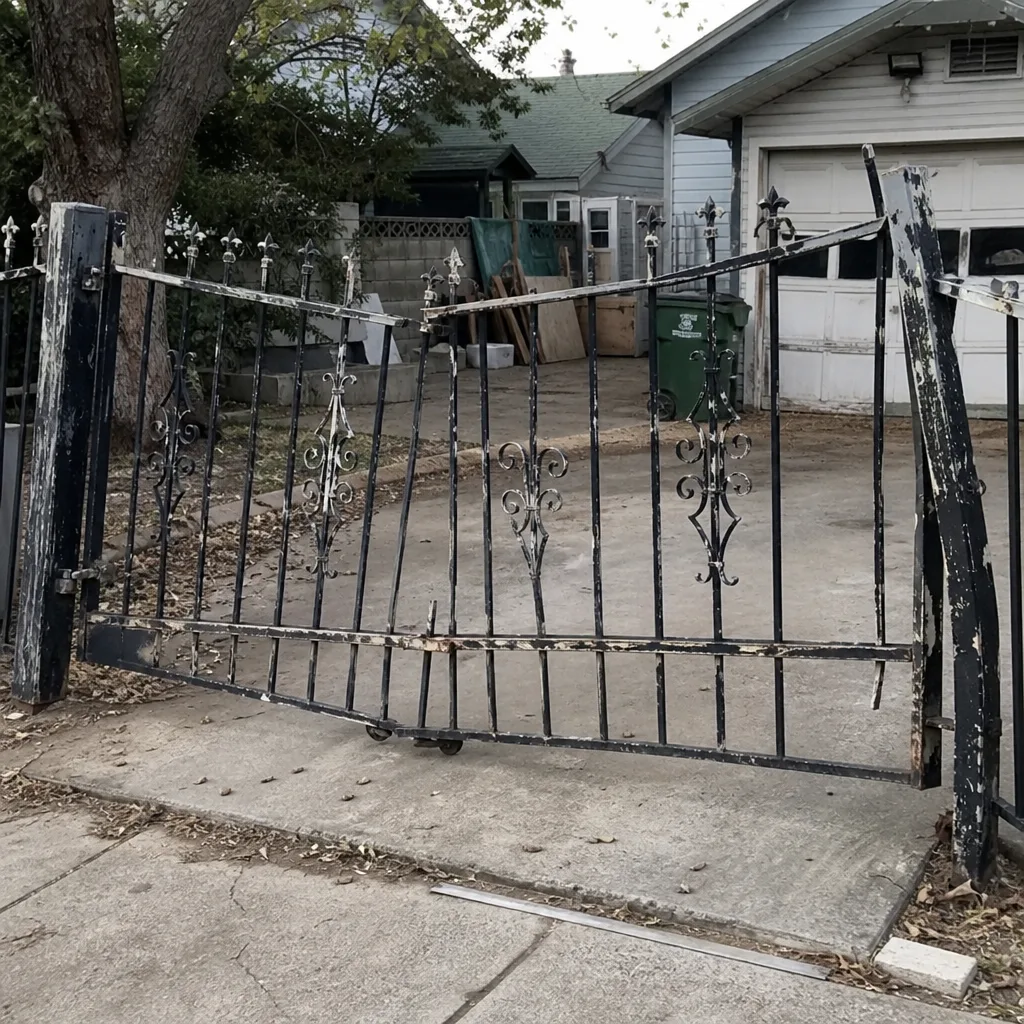 Before
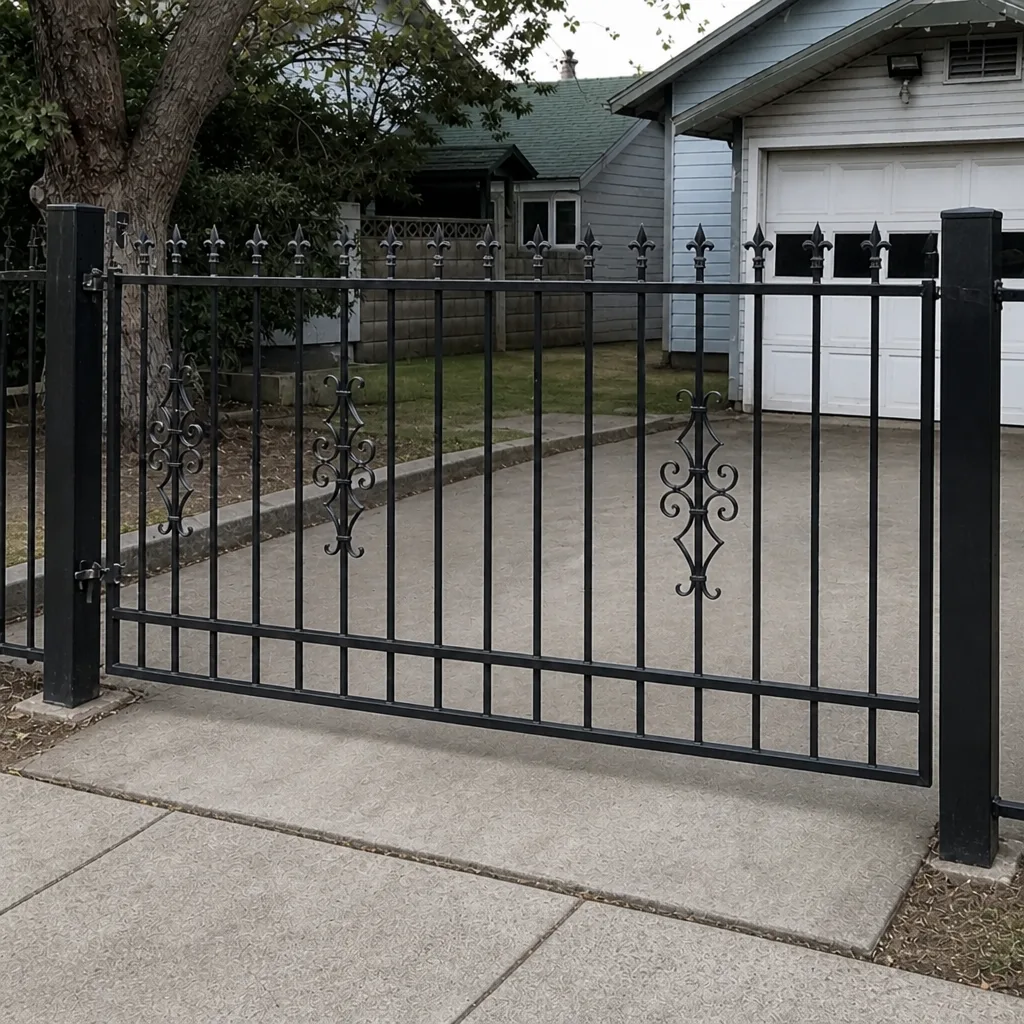 After
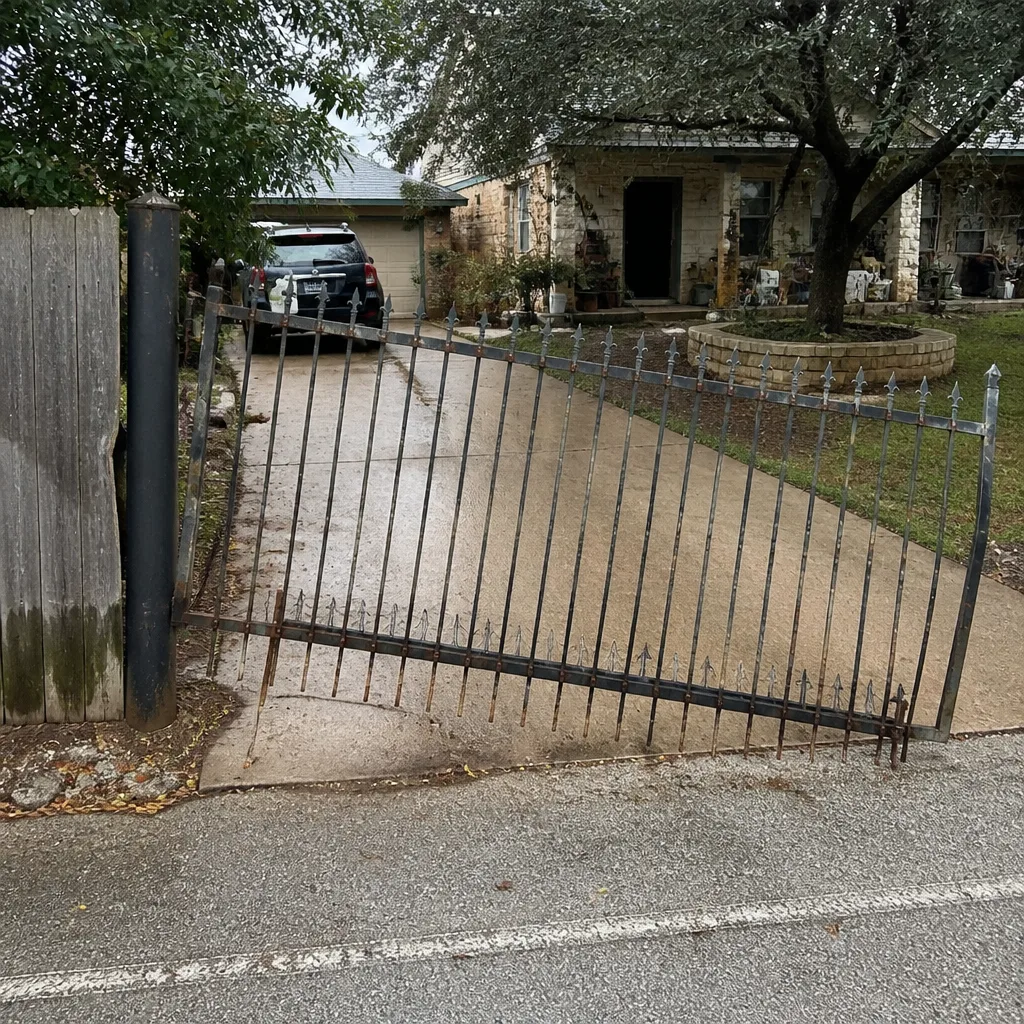 Before
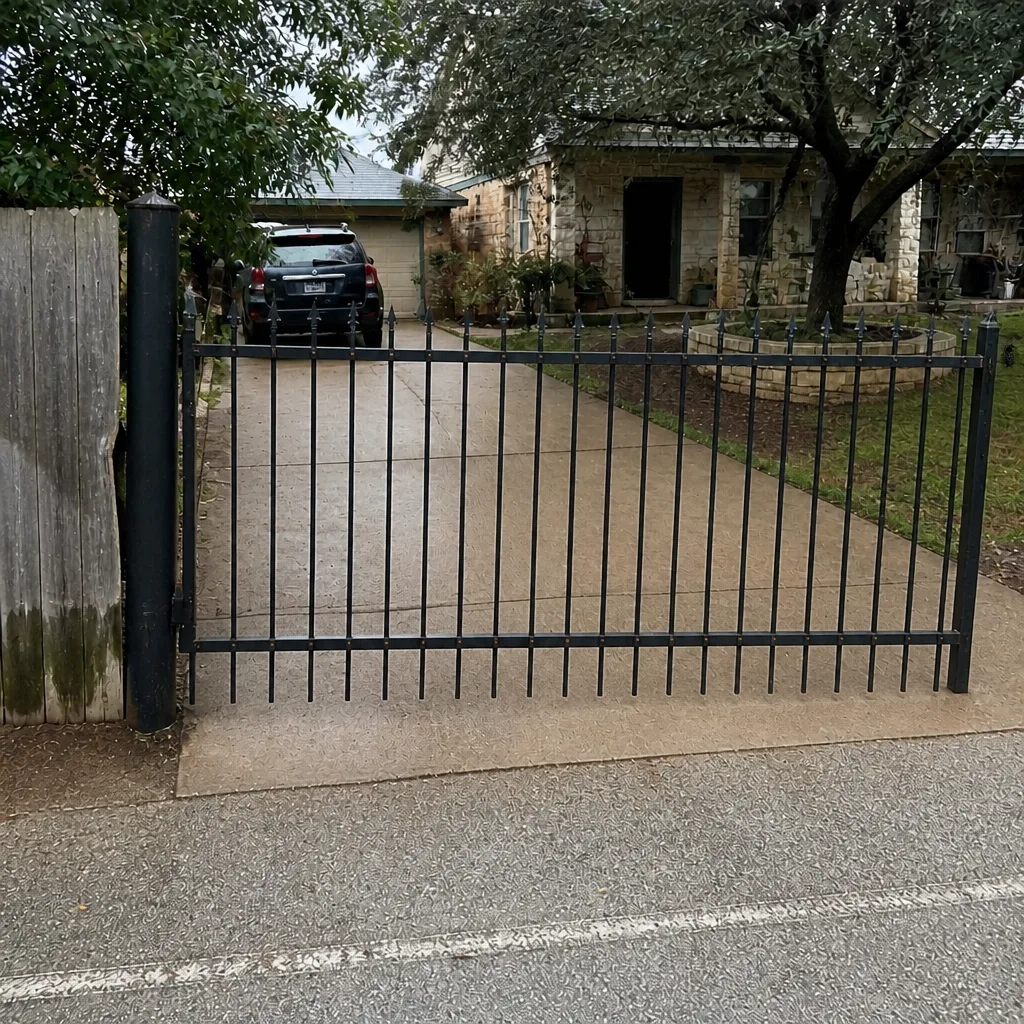 After
When to Call a Professional
Call for a gate repair when the operator runs but the gate doesn’t move, when the gate won’t stay closed even after a physical lock check, when a control board is dead or behaving erratically, when the safety sensors keep reversing the gate through a full travel cycle, or when visible damage exists on an arm, hinge, or track. Call for an access emergency when a stuck-closed gate blocks an emergency vehicle or prevents you from leaving. Call for security emergencies when a stuck-open gate can’t be physically secured. Call for the release mechanism itself if the handle binds or won’t disengage. Gate Repair New Braunfels offers free estimates in New Braunfels – call (855) 939-0250. We work on the brand you already, and we’ll tell you honestly whether the repair is the right call or whether replacement is the better path. That honesty is the core of how we operate.
Frequently Asked Questions
Secure the opening physically first, then troubleshoot. Pull the gate closed by hand using the manual release, then put a padlock or slide-bar through the gate frame to hold it. Only after it’s physically secure should you check the safety sensors and travel path. If you can’t secure the opening, call (855) 939-0250 – we answer 24/7, and a call outside dispatch hours is booked into the next opening, Sunday through Friday, 7am to 7pm.
It’s on or near the operator arm, and its exact location depends on the brand. On a LiftMaster swing operator, look for a keyed or levered handle near the arm or a pull pin on the arm itself. Elite operators usually have a keyed lever on the operator body. Mighty Mule and Ghost Controls commonly use a pin or key on the operator arm housing. DoorKing and other commercial operators vary and should be documented by the property manager. If you can’t find yours, call (855) 939-0250 for an on-site walkthrough – a free estimate covers the visit.
It depends on whether your operator has a working battery backup and how it’s configured. Many residential operators carry a sealed backup battery that keeps the gate functional through short outages, and others default to a fail-secure (closed) or fail-safe (open) position on power loss. The time to verify is before the outage – check your operator’s battery test function or have a technician assess the battery during a regular visit. During an outage, if the gate won’t move, use the manual release. Call (855) 939-0250 to schedule a battery and backup check.
We can narrow it down, but not diagnose it fully. What we ask for by phone is the operator brand, what the gate is doing, whether the manual release worked, whether the gate is stuck open or closed, and whether there’s visible damage. That gets the technician to your property with the right diagnosis path. Some issues – a misaligned safety sensor, a dead remote battery – can be resolved in the call. Others need on-site diagnosis. Call (855) 939-0250 for a free estimate.
Yes. We work on both residential and commercial-grade operators, including DoorKing and FAAC barrier systems, and we handle HOA and small commercial property access. For a shared-property gate, the property manager or responsible party needs to be available at the time of service for control box access. Call (855) 939-0250 to schedule, and we’ll confirm the scope before the visit.
Repair is usually the answer when the failure is isolated – a control board, a sensor, a single hinge, or a damaged arm. Replacement makes more sense when the operator is at the end of its service life and multiple components are failing, or when a mechanical failure has damaged the gate frame itself. We diagnose first and give you the honest call in the written estimate. The price is set by the written estimate before any work starts. Call (855) 939-0250 – estimates are free.
The Bottom Line
Gate emergencies in New Braunfels come in two forms, and the split is worth memorizing: a stuck-open gate is a security problem that starts with a physical lock, and a stuck-closed gate is an access problem that starts with the manual release. The thread that ties both together is preparation. Find your release this week. Post a one-page card with your brand and the release procedure. Test the battery before storm season. Call with the brand and the symptom so the technician arrives with a direction instead of a question mark. None of that takes long, and all of it changes what a gate failure costs you in time and stress.
Contact
If your gate is down and you’re not sure which emergency you’re in, call us. We work on the brand you already have, from a LiftMaster swing operator to a DoorKing commercial barrier, and we’ll tell you straight whether it’s a repair or a replacement. Call (855) 939-0250 for a free estimate. We answer 24/7. Fast dispatch, 7am-7pm, Sunday through Friday.
Written by the team at Gate Repair New Braunfels.