
Last updated November 15, 2026
 Wrought iron
 Wood & steel frame
 Farm & ranch
 Sliding driveway gates
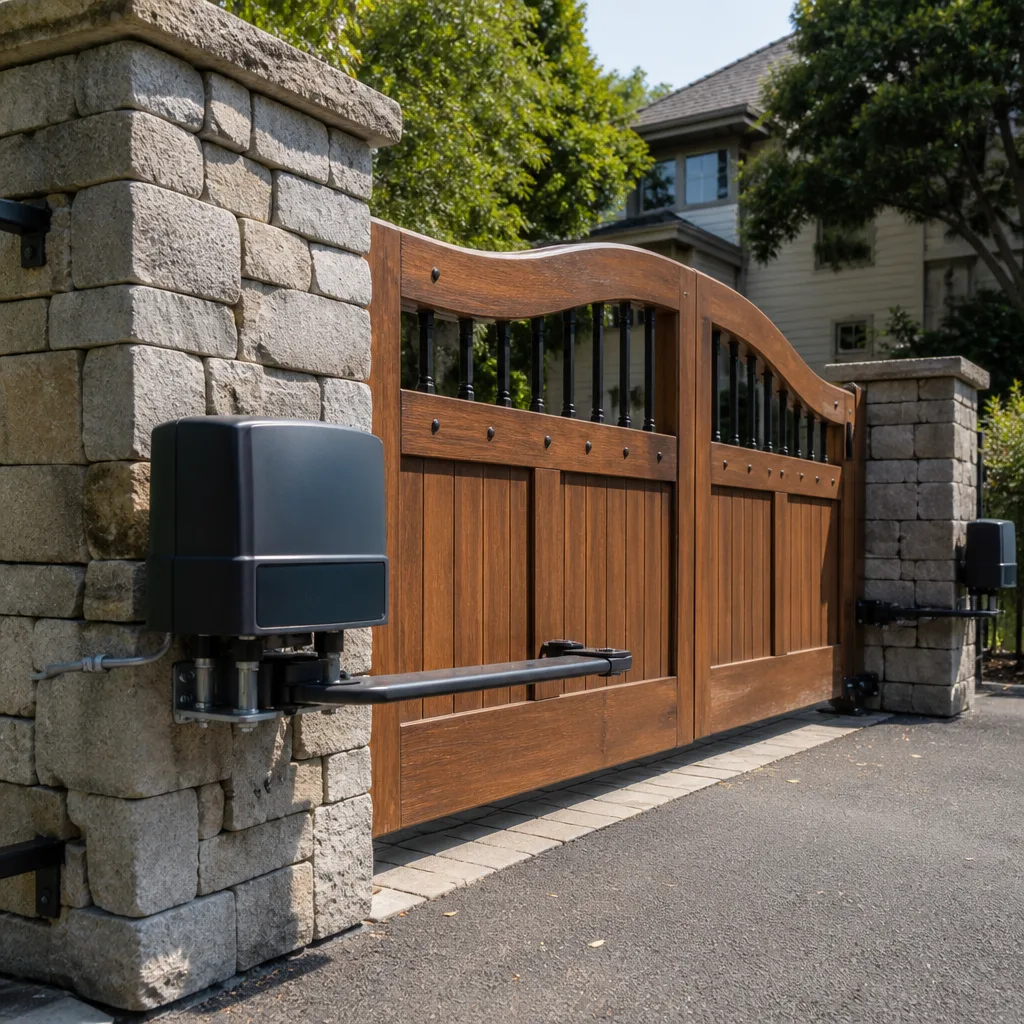 LiftMaster operators
Free on-site gate assessment - hinges, posts, and your LiftMaster or Nice gate operator checked before anything is quoted
The assessment is free and the quote is the invoice.
Get your free estimateDIY vs Professional Gate Repair: The New Braunfels Homeowner’s Decision Guide
Adjusting a gate’s limit switch is a ten-minute homeowner task. Replacing the operator on a dual swing gate that weighs 600 lbs combined is not. Confusing the two is how injuries happen and how a repair that started at a few hundred dollars turns into a full reinstall. The mistake most homeowners make is judging the whole job by general handiness. The real dividing line isn’t skill. It’s which component is involved, and whether that component can hurt someone if it fails. This guide maps the decision by task type rather than by confidence level, so you know which adjustments are safe to handle yourself, which repairs create a safety liability, and how to diagnose a fault before you call anyone in New Braunfels.
Quick Answer
Some gate work is genuinely homeowner-appropriate: cleaning photo-eyes, testing the manual release, programming a keypad, and logging error codes. Electrical work, operator replacement, and structural weld repair should always go to a trained gate technician, because a gate that fails under load can crush a person or a vehicle. The practical rule is simple: if the task involves wiring, the operator body, or the gate’s structure, call a professional; if it’s a cleaning, testing, or programming task, you can usually handle it yourself.
Styles & brands we work with
- Wrought iron
- Wood & steel frame
- Farm & ranch
- Sliding driveway gates
- LiftMaster operators
Table of Contents
- Where the DIY Line Actually Falls
- The Tasks That Are Genuinely Homeowner-Appropriate
- Why Electrical, Operator, and Weld Work Should Never Be DIY
- How a Failed DIY Repair Can Void the Operator Warranty
- The Diagnostic You Can Do Before Calling
- Parts Sourcing Timelines and When DIY Costs More
- Why Brand Matters in the Repair-or-Replace Decision
- What’s Different About Gate Repair in New Braunfels
Where the DIY Line Actually Falls
The DIY-versus-professional question is usually framed as a question of handiness. That framing is wrong. A homeowner who has never touched a wiring diagram can safely reset a photo-eye pair, and a homeowner who rebuilds engines for a living still shouldn’t replace a gate operator that controls a heavy sliding panel. What separates the two isn’t skill. It’s consequence.
Picture a typical automated swing or slide gate. It has three layers. The first layer is access and control: keypads, remotes, receivers, photo-eyes, safety edges, and the limit switches that tell the operator when to stop. The second layer is the operator itself: the motor, control board, gearbox, and the arm or chain that drives the gate. The third layer is the gate structure: posts, hinges, tracks, rollers, and welds. The first layer is largely homeowner territory. The second and third layers are not.
Here’s the test to apply to any task:
- Does it involve the electrical wiring or power? Professional.
- Does it involve removing, opening, or replacing the operator? Professional.
- Does it involve welding, cutting, or reshaping the gate structure? Professional.
- Does it involve only cleaning, pressing buttons, testing a release, or logging a code? You can handle it.
The reason this line matters so much for gates is weight and motion. An automated gate is a moving object that can weigh well into the hundreds of pounds and that operates without a person watching every cycle. When it’s working right, that’s convenience. When something is out of adjustment, that’s a machine that can crush a hand, a child, or a car. The line between a homeowner-safe adjustment and a repair that creates a serious safety liability runs right through the middle of most gate systems, and this guide is about finding it before you pick up a wrench. Homeowners and HOA managers throughout New Braunfels run into that line constantly, and it’s rarely where they expect it to be.
The Tasks That Are Genuinely Homeowner-Appropriate
Plenty of gate problems are solved without a technician, and we’d rather tell you that than take a call for a dirty photo-eye. Here are the tasks that fall cleanly into homeowner territory, spelled out as a checklist.
- Clean the photo-eyes. The safety sensors on either side of the gate opening are optical. Dust, spiderwebs, pollen, and grit collect on the lens over time and cause false obstructions, so the gate reverses or refuses to close. Wipe both lenses with a soft cloth. This solves a surprising share of “my gate won’t close” calls.
- Test the manual release. Every automated gate has a manual release or bypass so you can operate it by hand during a power outage. Learn where it is and confirm it works. This is a test, not a repair, and it’s the single most useful thing a homeowner can know about their gate.
- Check the safety edges and reverse test. With the gate operating, walk the safety edge test as described in your operator manual. A gate that doesn’t reverse on obstruction has a safety problem a technician needs to look at, but running the test is something you can do routinely.
- Program minor keypad and remote functions. Adding a code to a keypad, changing a PIN, or pairing a new remote is normal owner-level programming on most residential systems, including the Linear and Ghost Controls units common on New Braunfels residential gates.
- Visual inspection. Look at the hinges, rollers, track, and gate posts. Grease what the manual says to grease, clear debris from the track, and note anything that looks loose or out of line. Note it. Don’t fix it yet.
- Log error codes. If the control board flashes a code or the operator beeps a pattern, write it down. That record saves diagnostic time later.
None of that work requires opening the operator housing or touching a live circuit. Keep it to cleaning, testing, and programming, and you’re operating well within what a homeowner should do.
Why Electrical, Operator, and Weld Work Should Never Be DIY
This is the part of the guide that matters most, so we’ll be blunt. Three categories of gate repair are not homeowner work: anything involving the electrical supply, anything involving removal or replacement of the operator, and anything involving the structural welds or posts. The reason isn’t that homeowners aren’t capable. It’s that a mistake in any of those three areas can seriously injure someone, and the injury doesn’t announce itself at the moment of the mistake. It shows up the next time the gate runs.
- Electrical work. Gate operators are wired into line voltage. Control boards, transformers, and the power run from the house or panel to the operator carry current that can shock or kill. Opening that housing without the correct knowledge and lockout discipline is dangerous, full stop.
- Operator replacement. An operator is matched to the gate’s weight, width, and travel. A residential swing gate commonly weighs 200 to 400 lbs per leaf; a dual swing gate can be 600 lbs combined. Swapping the operator means supporting that mass, matching the drive arm or chain geometry, and re-teaching limit and force settings. Get it wrong and the gate can slam, over-travel, or fail to reverse on obstruction.
- Structural weld repair. A cracked hinge weld, a bent post, or a sagging gate frame is a structural failure. Welding, cutting, or heat-straightening the frame is skilled metalwork, and a poor weld on a gate that carries weight is a latent failure waiting for the wrong moment.
The safety case is the primary reason, but there’s a practical one too. When a gate technician works on the operator, they check force limits, obstruction sensing, and running clearance as part of the job. That’s the part that keeps a 400-lb gate from becoming a 400-lb safety liability. When that check gets skipped on a DIY repair, nobody notices until something goes wrong.
If your gate or its operator has failed and you’re not sure which category the fault falls into, the safe move is to stop and get it looked at. We handle electric gate repair as a dedicated specialty, including control board, motor, and sensor work, and we’re glad to tell you over the phone whether a symptom sounds like something you can safely check yourself.
How a Failed DIY Repair Can Void the Operator Warranty
A failed DIY repair can void the manufacturer’s warranty on the operator, and the cost of that isn’t small. The warranty is often the most valuable thing attached to a modern gate operator, and it’s the easiest thing to lose. Most operator warranties cover the control board, motor, and related electronics for a defined period, but those warranties typically exclude damage caused by improper installation, incorrect wiring, or work performed outside the manufacturer’s instructions. Open the housing, cross a wire, or install a replacement board incorrectly, and the resulting failure can fall outside coverage. That means the part you were trying to save money on is now a full-price part.
Here’s how to protect the warranty on the operator you already have:
- Read the warranty terms before you touch anything. The operator manual tells you what the manufacturer considers owner-level service and what voids coverage.
- Keep a record of professional service. If a licensed technician does the repair, keep the invoice. It’s your proof the work was done correctly if a warranty claim comes up later.
- Never swap a control board or motor as a troubleshooting experiment. “Try a new board and see if it fixes it” is the fastest route to a denied claim.
- Don’t wire around a safety device. Jumpering a photo-eye or bypassing a safety edge may seem like a quick fix, but it’s exactly the kind of modification that kills a warranty and defeats the gate’s safety design.
The dollar cost of a voided warranty is straightforward to estimate once you know the parts: a replacement control board or motor for a residential operator is often the most expensive single component on the system. Losing coverage there costs more than most homeowners expect, and it happens quietly. Keeping the work within owner-level tasks, or handing it to a technician, keeps the warranty intact. If your goal is a gate that keeps working for years and stays covered, that’s the calculation that matters, not whether you can save a service call.
The Diagnostic You Can Do Before Calling
You can cut your diagnostic time and cost by gathering the right information before you call. When a gate technician arrives with a clear picture of the symptom, the diagnosis goes faster and the repair is more likely to be done in one visit. That’s true whether you use us or anyone else.
Do this before you call:
- Document the symptom precisely. “The gate opens but won’t close” is useful. “The left leaf reverses about halfway, but only when the sun is on the photo-eye” is better. Write down what happens, in what order, and how often.
- Log every error code and beep pattern. Check the control board indicator lights and the operator display. Write down the exact code. This alone often identifies the failing component.
- Run the manual operation test. Open the manual release and move the gate by hand. Is it smooth, or does it bind? Does it drift on its own, or stay where you put it? A gate that’s hard to move by hand has a mechanical or structural issue independent of the operator, and knowing that in advance changes the diagnosis.
- Check the manifest of what you already tried. Did you clean the photo-eyes? Did you change the remote battery? Write it down so you don’t repeat steps.
- Note the model and brand of the operator. A label on the housing usually names the brand and model. Whether it’s a Viking slide operator or a DoorKing swing unit, that detail lets the technician arrive prepared.
That information is safe to gather. It’s reading and testing, not repairing. When you call, having it in hand tells the technician whether the problem is control, operator, or structure before anyone opens a panel, and it’s the difference between one visit and two.
Parts Sourcing Timelines and When DIY Costs More
Calling a gate specialist is often faster and cheaper than DIY once you account for parts sourcing. That’s not a sales line. It’s what happens when a homeowner orders the wrong part, waits on shipping, installs it, finds it doesn’t match the gate’s weight or travel, and orders again. The operator box that arrived in a week and didn’t fit costs the same as the one that did, and now you have two.
What a specialist factors in that a homeowner often doesn’t:
- Matching the part to the gate. Operator sizing is driven by gate weight, width, and travel. A residential operator rated for a lighter leaf will fail early on a heavier gate. We size the part to what you have, whether it’s a Light commercial operator or a residential unit.
- Availability. Not every part is on a shelf. Some control boards and specific operator models need ordering, and knowing the lead time before you start matters. A technician who works with the brand can often point to the right part the first time.
- Correct installation. A part that’s correct but installed wrong fails. That’s where the DIY timeline usually ends up: a correct part, an incorrect install, and a second call to finish what the first attempt started.
If you want a rough sense of whether a repair is worth pursuing versus replacing, the honest answer usually comes down to the operator’s condition and the parts involved. We don’t sell a replacement when a repair will do, and we don’t push a repair when the operator is at the end of its service life. That’s the conversation worth having before you spend money on parts. If you’re in the middle of that decision, gate repair covers what a diagnostic visit includes and how we work through the repair-or-replace question.
Why Brand Matters in the Repair-or-Replace Decision
Brand knowledge shrinks the DIY risk because it tells you what resources already exist. A homeowner with a Mighty Mule or Ghost Controls residential operator has a different set of options than a homeowner with a DoorKing or FAAC commercial-grade unit. The residential DIY systems are designed for owner installation and maintenance, with manuals and part availability aimed at the homeowner. The professional-grade operators are built for technician service, and their documentation and parts channels assume a trained hand.
That difference matters when you’re deciding what to do about a fault. On a residential Ghost Controls or Linear operator, a homeowner can reasonably clean the photo-eyes, test the release, program a keypad, and log a code, exactly as we described above. On a heavier swing operator or a commercial slide gate, the same fault can involve force settings and safety systems that need a technician who knows the system. In our experience, the homeowner-appropriate list doesn’t change by brand, but how fast a brand fault escalates to “call a technician” absolutely does.
We service nine gate brands, from entry-level residential units to commercial-grade operators: LiftMaster, FAAC, BFT, Linear, Viking, Ghost Controls, DoorKing, Elite, and Mighty Mule. That breadth matters for two reasons. First, it means the technician who looks at your gate has likely worked on that exact operator family before. Second, it means you’re not pushed toward a replacement because the person on the phone doesn’t service the brand you already own. We work on the brand you already have, and the diagnostic is brand-agnostic: we find the fault first, then talk about the fix. That holds whether your gate is in a residential neighborhood off Loop 337 or an HOA entrance on the north side of New Braunfels.
What’s Different About Gate Repair in New Braunfels
Gate repair in New Braunfels has a few local realities that change the DIY calculus. First, the housing mix matters. A large share of homes here are on more than one lot or on properties with a gated drive or courtyard, and HOA-governed communities often have shared gates with access control that serve dozens of households. On a shared HOA gate, the repair decision isn’t yours alone: the operator and its safety systems affect every resident who passes through, and the HOA manager usually wants a technician’s written assessment before authorizing work. That’s not a place for a homeowner to experiment.
Second, the local climate is hard on the moving parts. Central Texas summers are long and can push the gate’s metal and the operator housing hot, and the dust and pollen common across the Hill Country collect on photo-eyes faster than many homeowners expect. We see more false-obstruction faults and more worn hinges and rollers in a New Braunfels summer than the parts themselves would suggest. That points back to the homeowner-safe list: keep the photo-eyes clean, keep the track clear, and test the release and reverse regularly, and you’ll prevent a meaningful slice of the calls that would otherwise be repairs.
Third, the gate stock here leans toward the residential brands and the professional-grade commercial operators, and both show up on the same street. A neighborhood off Gruene may have one type; a commercial property on the east side of New Braunfels may have another. Knowing the brand on your gate tells you which repair route is realistic. If you need a wider view of the area, New Braunfels is the place to start, and Gate Repair New Braunfels is our home base for gate work.
Common Mistakes to Avoid
- Jumpering a safety device to “test” it. Bypassing a photo-eye or safety edge to see if the gate closes is the fastest way to defeat the safety system and void the warranty. Test the device the way the manual describes instead.
- Replacing the operator yourself to save the service call. On a gate that weighs a few hundred pounds per leaf, the risk of a mis-sized operator, a poor install, or an injury outweighs any savings. Get a quote before you buy a part.
- Ignoring a bind in the manual operation test. A gate that’s hard to move by hand has a mechanical problem that a new operator won’t fix. Fix the structure first.
- Assuming a dirty photo-eye is a dead control board. Clean and test the sensors before you conclude the board has failed. It’s the most common false alarm in New Braunfels.
- Welding a cracked hinge or post without addressing the cause. A weld on a sagging frame just moves the failure. Diagnose why the frame is sagging before repairing the metal.
- Skipping the manual release test for months. The day the power goes out is the worst time to discover the release is seized or the bypass doesn’t work. Test it routinely.
- Ordering a part from a listing without matching it to the gate. Operator sizing is driven by gate weight and travel. The cheapest listing is expensive if the part is wrong for your gate.
See the difference
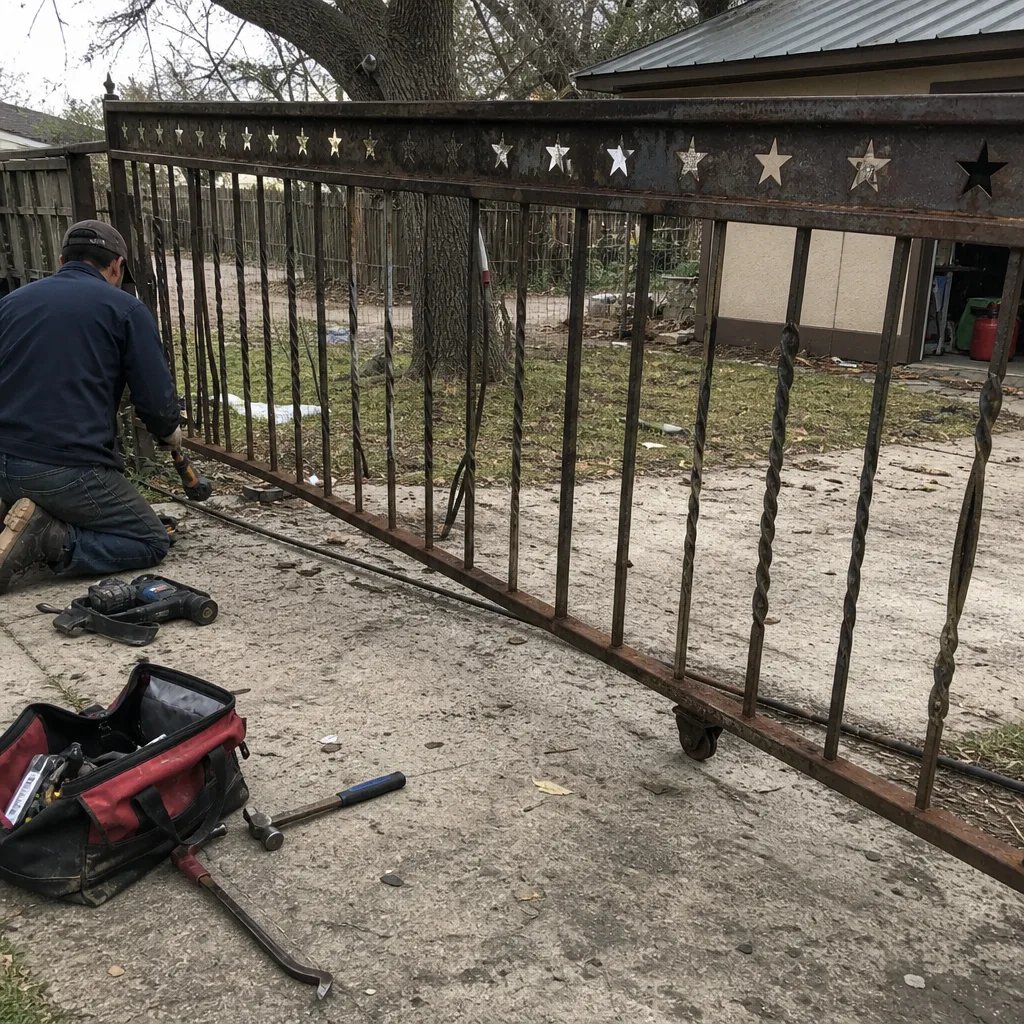 Before
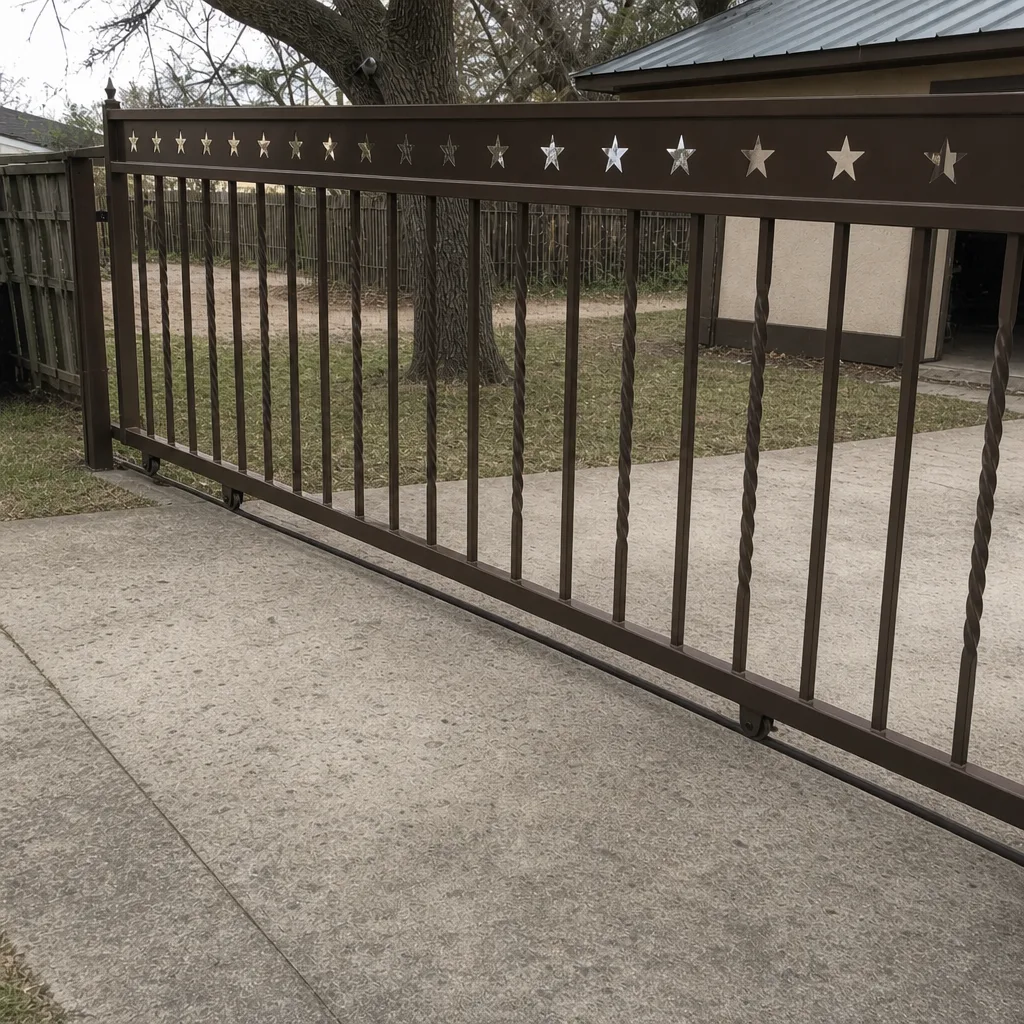 After
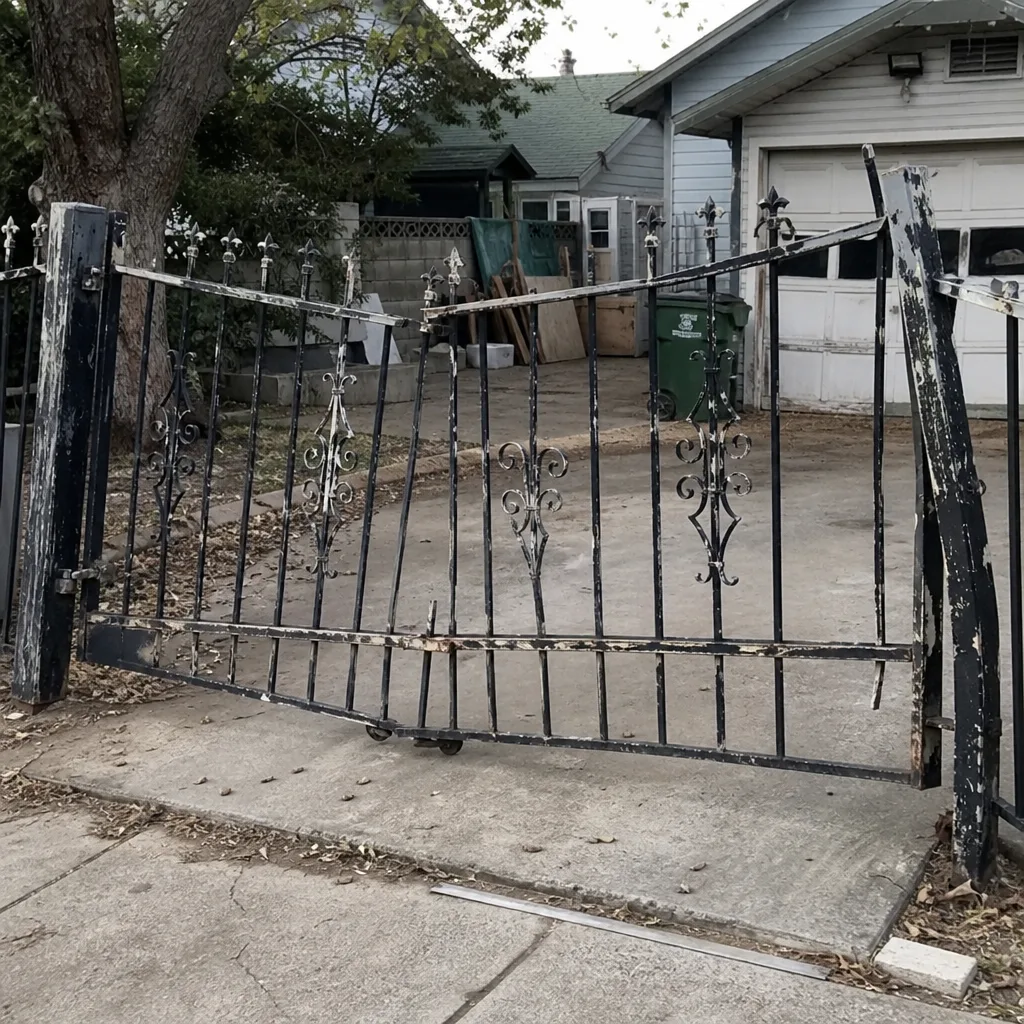 Before
 After
 Before
 After
When to Call a Professional
Call a gate technician when the fault involves the electrical supply, the operator, the control board, the safety edges, or the gate structure. Call when a shared HOA gate has failed, because the decision isn’t yours to make alone. Call when the manual operation test shows a bind or a sag, and call when a symptom keeps coming back after a cleaning or a programming reset. And call if you’re simply not sure which category the fault falls into. Gate Repair New Braunfels offers free estimates in New Braunfels. Call (855) 939-0250. We answer 24/7, and fast dispatch runs from 7am to 7pm, Sunday through Friday. Our technicians have up to 14 years of experience, and the price is quoted and agreed before any work starts.
Frequently Asked Questions
You can safely handle the homeowner-level tasks, but not the electrical, operator, or structural work. Cleaning photo-eyes, testing the manual release, running the reverse test, programming a keypad, and logging error codes are all fine to do yourself. Anything involving the wiring, the operator body, the control board, or a weld on the gate frame belongs to a trained gate technician. Call (855) 939-0250 for an exact quote – estimates are free.
It can, yes. Most operator warranties exclude damage from improper installation, incorrect wiring, or work done outside the manufacturer’s instructions, so a failed DIY repair can void coverage on the component you were trying to fix. Keep professional service records if you want warranty protection. Call (855) 939-0250 for an exact quote – estimates are free.
The price is set per job by a written estimate, so the only honest answer is a quote after a diagnostic. A simple sensor or photo-eye fix costs less than an operator or control board repair, and a structural repair costs more than either. We quote and agree the price before any work starts. Call (855) 939-0250 for an exact quote – estimates are free.
Before you call, clean the photo-eyes, run the manual release test, log any error codes or beep patterns, and note the operator’s brand and model. That information shortens the diagnostic and often gets the repair done in one visit. Call (855) 939-0250 for an exact quote – estimates are free.
Same-day repair is often possible for common faults, but not every fault. A shared HOA gate with an access-control issue or a control board fault may need a part, and parts aren’t always on a shelf. We’ll tell you honestly at the diagnostic whether it’s a same-day job. Call (855) 939-0250 for an exact quote – estimates are free.
We service nine gate brands across the residential-to-commercial range, including Linear, Viking, Ghost Controls, and DoorKing, so there’s a good chance we service the brand you already own. We work on the brand you already have rather than steering you toward a replacement. Call (855) 939-0250 for an exact quote – estimates are free.
The Bottom Line
The DIY-versus-professional question for gate repair comes down to the component, not your confidence. Cleaning photo-eyes, testing the manual release, programming a keypad, and logging error codes are homeowner tasks, and doing them cuts your diagnostic time. Wiring, operator replacement, and structural weld work are not homeowner tasks, and a mistake there can injure someone and void the operator warranty. Run the manual test, document the symptom, and get a written estimate before you spend money on parts. If the fault is on the professional side of the line, call (855) 939-0250. We answer 24/7, and fast dispatch runs from 7am to 7pm, Sunday through Friday. Free estimates.
Written by the team at Gate Repair New Braunfels.