
Last updated November 15, 2026
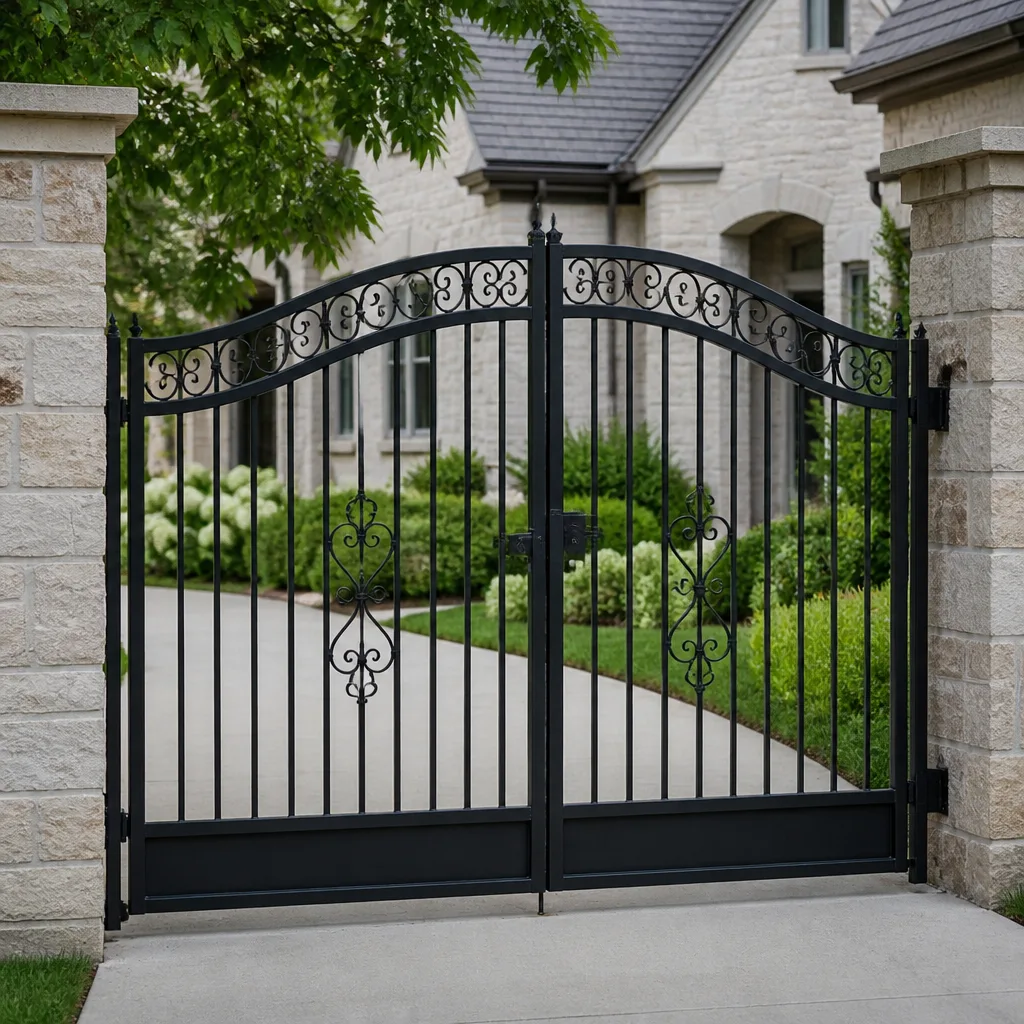 Wrought iron
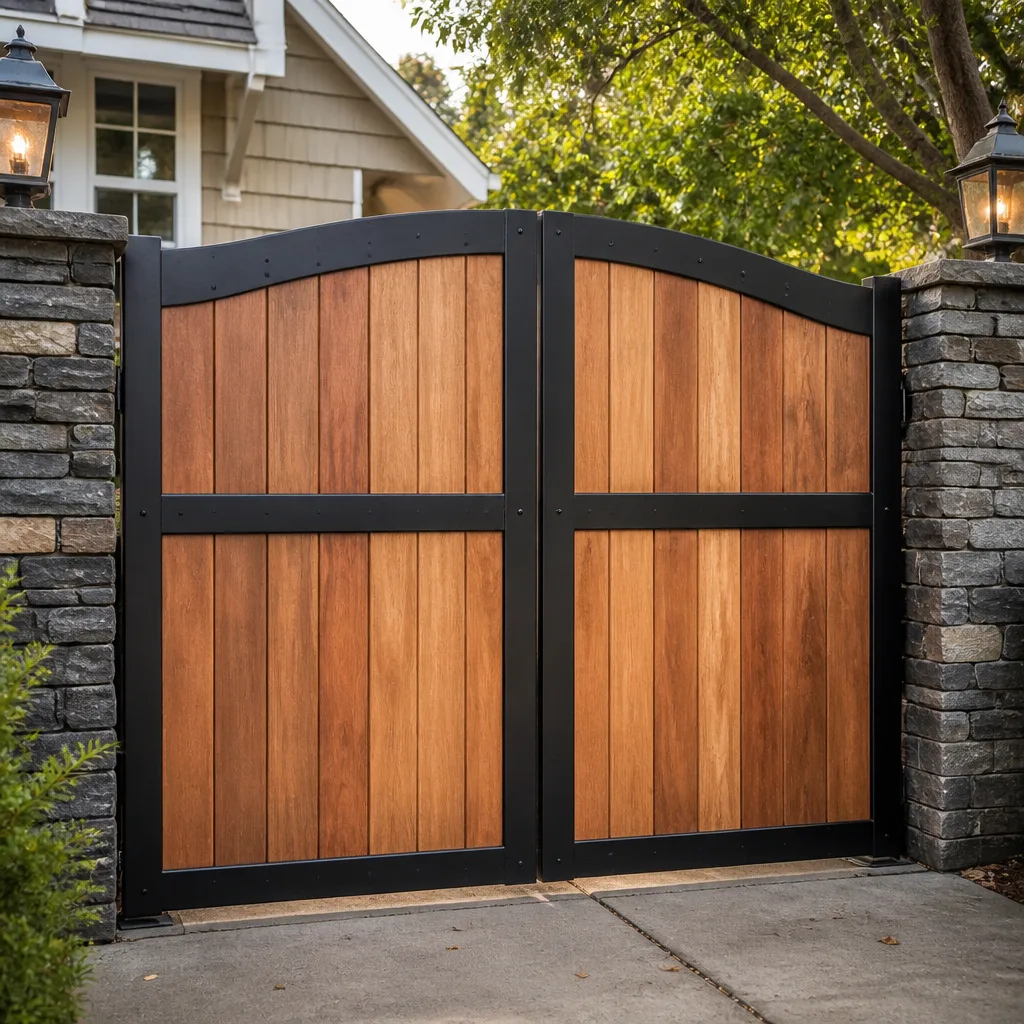 Wood & steel frame
 Farm & ranch
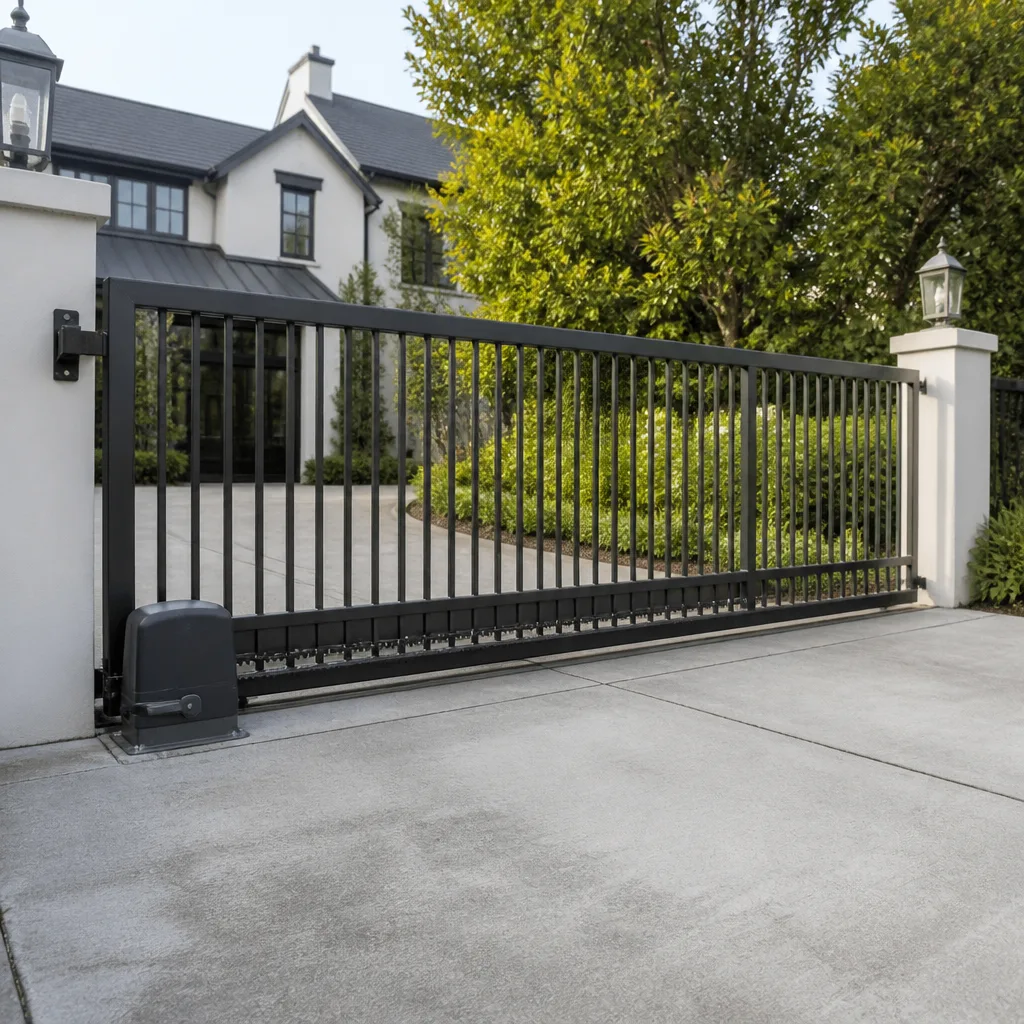 Sliding driveway gates
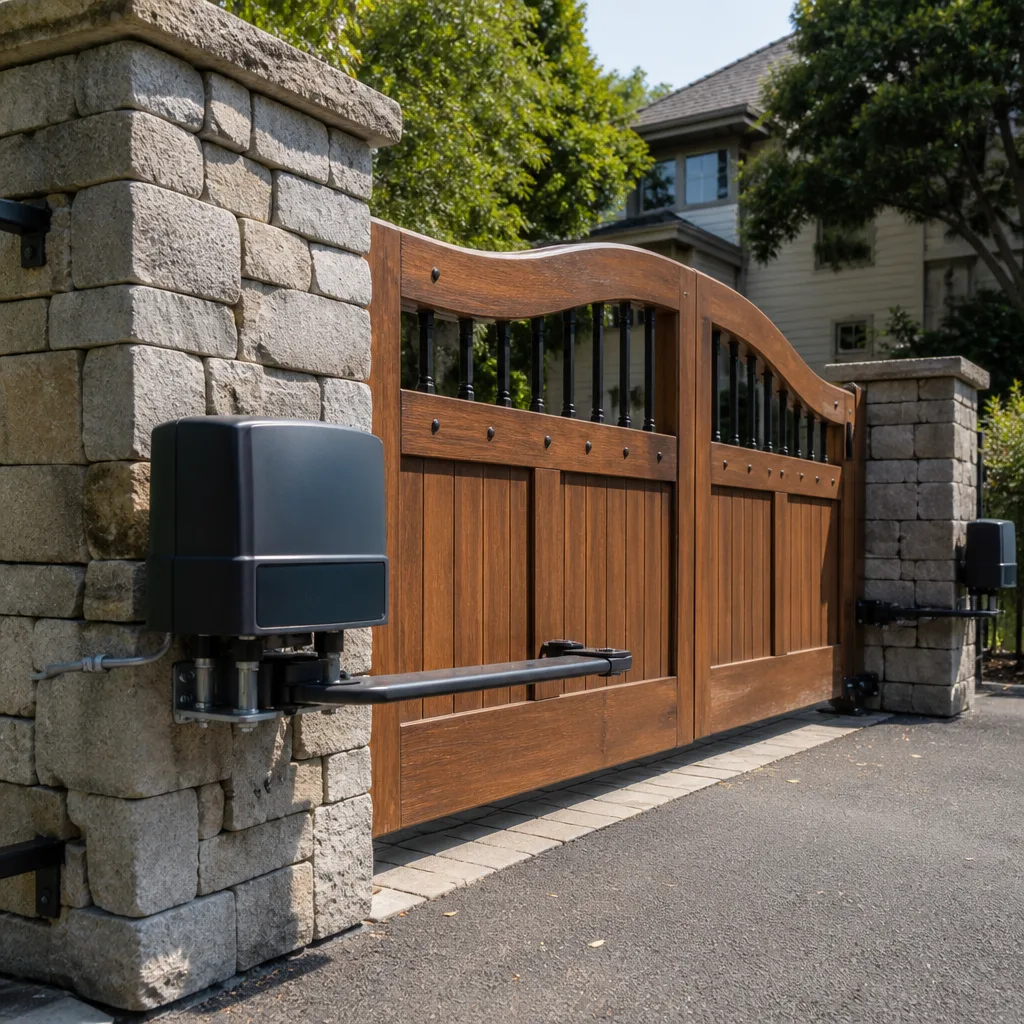 LiftMaster operators
Free on-site gate assessment - hinges, posts, and your LiftMaster or Nice gate operator checked before anything is quoted
The assessment is free and the quote is the invoice.
Get your free estimateThe Complete Guide to Gate Repair in New Braunfels
The gate didn’t fail overnight. It gave you weeks of warning you didn’t know how to read – the pause that got a little longer each morning, the closer that stopped pulling the last few inches, the remote that suddenly needed two presses instead of one. Most gate failures in New Braunfels trace back to two or three mechanical weak points, and by the time the gate stops moving, those points have been telling you something for a while. This guide maps the anatomy of a residential or commercial gate system – swing, slide, and barrier arm – so you can have an informed conversation with a technician instead of a guessing game. You’ll learn which components wear first, what the first ten minutes of a real diagnostic looks like, and how to document your system before you call.
Quick Answer
Gate repair in New Braunfels comes down to identifying which of three subsystems failed – the mechanical hardware (hinges, rollers, tracks), the operator (motor and drive), or the control layer (board, sensors, wiring) – because each is scoped and priced completely differently. A gate that moves slowly, stalls partway, or reverses on its own is almost always a motor or control-board symptom, not a hinge problem. Knowing the brand, model, and operator type before a technician arrives shortens parts lead time and keeps the estimate honest.
Styles & brands we work with
- Wrought iron
- Wood & steel frame
- Farm & ranch
- Sliding driveway gates
- LiftMaster operators
Table of Contents
- How a Gate System Is Built: Swing, Slide, and Barrier Arm
- What Central Texas Heat Wears Out First
- Why “It Works But It’s Slow” Points to Motor Failure
- What a Gate Specialist Checks in the First 10 Minutes
- How to Document Your Gate Before You Call
- Repair or Replace: How the Decision Actually Gets Made
- Safety: What You Should Never Adjust Yourself
- What Gate Repair Costs in New Braunfels
How a Gate System Is Built: Swing, Slide, and Barrier Arm
Every gate repair starts with a structural question: what kind of gate is it? The configuration determines which parts carry load, which parts wear first, and how much labor the fix takes. In New Braunfels we see all three configurations on residential driveways, HOA entries, and small commercial lots, and the repair scope changes completely between them.
Swing gates pivot on hinges and are opened by an arm operator that pushes or pulls the leaf. The mechanical load sits on hinge plates, the post-mounted brackets, and the operator arm. Swing gates are the most common residential style, and most of their failures are hinge sag, arm misalignment, or a limit switch that no longer reads the open and closed positions correctly.
Slide gates roll or cantilever along a track or v-rail. The load sits on the rollers, the track, and the operator’s drive gear or chain. A slide gate that drags, jumps, or stops halfway is usually a track or roller issue rather than a motor issue – though a failing motor will mimic a dragging gate by overheating and stalling.
Barrier arms (also called crash arms or parking arms) are found at commercial entries and controlled-access lots. The arm rotates on a counterweighted hub driven by a dedicated operator. Because there’s no gate leaf to sag, barrier arm failures are almost entirely operator, control board, and sensor problems – the mechanical side is simple, the electronics side is not.
Understanding which of the three you have tells you a lot about the likely repair before anyone opens a panel. It also tells you which parts a technician should be carrying, and that’s where brand coverage matters. A slide gate running a Viking operator needs different parts than a swing gate running a Linear arm. For a broader look at how these systems get serviced locally, see our Gate Repair New Braunfels overview.
What Central Texas Heat Wears Out First
New Braunfels summers are hard on gate hardware in predictable ways. Heat doesn’t break a gate all at once – it accelerates wear on the components that already take the most strain. Knowing the order of failure helps you catch a problem before it becomes a full stop.
The components that wear first in Central Texas heat, roughly in order:
- Control boards and capacitors. Electronics sit inside a metal operator housing that bakes in direct sun. Capacitors are the most heat-sensitive part on the board and are the usual culprit behind a motor that hums but doesn’t turn.
- Hinge plates and pivot bushings (swing gates). Metal expands in the heat and lubrication breaks down faster. A hinge that was tight in spring starts to bind by July, loading the operator arm in a way it wasn’t designed for.
- Photo eyes and safety sensors. Optical sensors fog, cloud, or lose alignment as housings expand and contract through the day. A gate that reverses for no visible reason is often a misaligned photo eye.
- Limit switches. These tell the operator where open and closed are. Heat-driven expansion in the gate frame can throw them out of adjustment, and the gate starts stopping short or overrunning.
- Batteries in solar and backup systems. Solar-charged operators like many Ghost Controls units depend on a healthy battery. Heat shortens battery life, and a weak battery shows up as a slow or inconsistent gate long before it fails outright.
Winters in New Braunfels are mild, so cold-weather failures aren’t the story here. The wear pattern runs the other way – the long hot stretch from late spring through early fall is when components age fastest. That’s why a gate that ran perfectly last October can start acting up in June without anything having “broken.”
Why “It Works But It’s Slow” Points to Motor Failure
A slow gate is not a minor inconvenience. It’s the most reliable early signal of an operator on its way out, and it’s the symptom most homeowners wait on too long. When a gate slows down, the motor is working harder to move the same load than it used to – and something is causing that extra resistance.
There are four common reasons a gate slows, and they escalate in cost:
- Mechanical drag. A binding hinge, a dry roller, or a track that’s out of alignment. This is the cheapest fix and the one to rule out first.
- Voltage drop. Wiring that’s undersized, corroded at a connection, or damaged underground delivers less power to the operator. The motor runs, but weakly.
- A failing capacitor or control board. The motor gets the signal but not the current it needs. This is the classic “hums but won’t move” or “moves slowly” failure, and the board is usually the part to check.
- A worn motor or gearbox. The internals are simply at the end of their life. At this point the operator is usually beyond economic repair.
The reason a slow gate matters is that items one through three get more expensive the longer they’re ignored, because a motor forced to run against resistance wears out faster. What would have been a hinge adjustment turns into a motor replacement. If your gate has been slowing for a few weeks, that’s the moment to have it looked at – not the morning it stops entirely.
If the gate has already stopped and you’re in New Braunfels, our electric gate repair service covers the full electrical and mechanical side of the system.
What a Gate Specialist Checks in the First 10 Minutes
The first ten minutes of a diagnostic separate a gate specialist from a generalist. A generalist often starts at the symptom – the gate won’t open – and works backward by trial. A specialist starts at the load and the power, in a set order, because that order finds the real cause fastest.
Here’s the framework we use on-site, in the order it happens:
- Manual release test. The operator is disengaged and the gate is moved by hand. A gate that moves freely by hand has a mechanical or control problem. A gate that binds by hand has a mechanical problem that must be fixed before the operator is re-engaged, or the operator will just fail again.
- Power and voltage check at the operator. The supply voltage at the board is measured, not assumed. Undersized or damaged wiring is ruled in or out early.
- Control board inspection. The board is inspected for burned traces, swollen capacitors, corrosion, and insect or moisture intrusion. Board faults are the most common cause of a gate that won’t respond to any command.
- Safety device test. Photo eyes are checked for alignment and cleanliness, and the safety edge or reverse function is tested. A gate that reverses on its own often has a failing sensor, and that’s a safety issue, not just an annoyance.
- Limit switch and travel check. The gate is run through a full open-and-close cycle and the stop points are verified. Limit switches out of adjustment show up immediately.
- Hardware inspection. Hinges, rollers, tracks, and brackets are checked for wear, binding, and misalignment under load.
What a generalist skips is usually steps two through four – the voltage and control-layer checks – because they require a meter and the familiarity to read a board. That’s where most misdiagnoses happen: a motor gets replaced when the actual problem was a $2 capacitor or a misaligned photo eye. Being fluent across the brands matters here too. Whether we’re looking at a Linear swing operator, a BFT slide system, a Viking barrier arm, or a Ghost Controls residential unit, the diagnostic sequence is the same, and the parts are sourced for the brand you already have.
How to Document Your Gate Before You Call
Before a technician arrives, you can do something that saves real time: document the system. Parts lead time depends heavily on knowing the brand, model, and operator type before anyone picks up a wrench, and a lot of repairs get delayed because the gate could only be identified once someone was standing in front of it.
Gather these details first:
- Brand and model of the operator. Look for the label on the operator housing – the metal or plastic box mounted to the post, wall, or gate frame. Brands we work with regularly include Linear, Viking, Ghost Controls, and BFT, among others, and each has its own parts catalog.
- Operator type. Is it a swing arm, a slide operator, or a barrier arm? Is it a solar or battery unit, or hardwired to the house?
- Gate material and weight class. A steel slide gate weighs far more than an aluminum swing gate, and the operator has to be matched to the load.
- Age of the operator, roughly. You may not know the exact year, but “installed around the time we bought the house” is useful context.
- What the gate does wrong, in order. Write down the sequence – for example, “remote opens it, it stops halfway, then reverses after ten seconds.” A precise symptom description shortens the diagnostic.
- Photos of the operator label, the control board with the cover off, and the hinges or track. These help confirm the model before the visit so parts can be lined up.
If you’re an HOA manager or commercial property owner, keep this documentation on file for every gate on the property. Gate systems in New Braunfels HOA entries and commercial lots often get serviced by different vendors over time, and a single sheet with brand, model, and type per gate saves an enormous amount of back-and-forth.
Repair or Replace: How the Decision Actually Gets Made
Whether a gate gets repaired or replaced is a judgment call, and it should be an honest one. We frame it around three questions, not around what sells a new system.
First, is the failure isolated or systemic? A single control board, hinge, or photo eye is a repair. A motor, gearbox, and board failing in the same operator is a system at the end of its life. One failed component is a repair; three points to replacement.
Second, are parts available for the brand and model? This is where brand coverage earns its keep. A common brand and model means parts in days. An older or discontinued operator can mean sourcing used or aftermarket parts, and at that point the math tilts toward replacement. Our familiarity with the brands you already have is what lets us answer this honestly instead of pushing a new system because it’s easier to source.
Third, is the gate’s mechanical condition sound? A great operator on a sagging, rusted, or misaligned gate will fail again. If the gate leaf, posts, and hardware are worn out, replacing the operator alone is money spent twice. Repairing the gate and replacing the operator together is often the right call.
When replacement is the honest answer, we install new gates as well as repair existing ones, so the conversation doesn’t have to restart with a different company. For local context on the area we work in, see New Braunfels.
Safety: What You Should Never Adjust Yourself
Gate systems have two genuinely dangerous zones, and both deserve a professional. The first is the electrical side: the operator is fed by line voltage, the control board holds charge even after power is cut, and wiring mistakes on the supply side are a shock and fire hazard. Never open the operator housing or the control panel to troubleshoot – that work belongs to a trained technician with the right meter and the training to read the board safely.
The second is the mechanical crush zone. A heavy swing or slide gate carries momentum, and the safety edge and photo eyes exist to stop it on contact. Those devices should never be disabled, bypassed, or “adjusted” to make a gate close faster. A gate that reverses for no obvious reason is doing exactly what its safety system is designed to do – don’t override it, find out why it’s triggering. If a gate is moving erratically, stops in the path of travel, or fails to reverse on contact, keep people and vehicles clear and call a professional.
For any repair involving the operator’s wiring, the control board, or the safety devices, use a trained gate technician. That’s the safety line we don’t cross, and it’s the reason gate repair on an automated system is specialist work.
What Gate Repair Costs in New Braunfels
Gate repair pricing in New Braunfels follows the subsystem that failed, not the brand name. A mechanical adjustment, a control-layer fix, and a motor replacement are three very different jobs, and a written estimate scopes each one separately. We don’t quote a number over the phone, because a misdiagnosis costs more than a proper diagnostic. But it helps to know which of the three buckets your repair is likely in before you call.
- Mechanical repair – hinge plate adjustment, roller or track repair, arm realignment, bracket work. Typically the least expensive category because it’s hardware, not electronics or a motor.
- Control-layer repair – control board, capacitor, limit switch, photo eye, or safety sensor replacement. Moderate cost, and the most common category overall.
- Operator or motor replacement – the motor, gearbox, or full operator swapped for a new unit matched to the gate’s weight and type. The highest-cost category.
Whatever the diagnosis, the price is quoted and agreed before any work starts. You get a written estimate that lists the diagnosis and the parts, and you approve it. If a technician finds a second problem mid-repair, you hear about it before anything is touched. That’s the standard, and it’s the same whether the job is a Linear swing gate on a residential driveway or a BFT barrier arm at a commercial entry.
Common Mistakes to Avoid
- Waiting until the gate stops completely. A slow or intermittent gate is the cheapest repair you’ll ever make. Waiting for a full failure turns a control-board fix into a motor replacement, and the downtime is longer.
- Replacing the motor first. A generalist often swaps the motor when the real problem is a capacitor, a photo eye, or a limit switch. Have the power and control layer checked before anyone quotes a motor.
- Disabling the safety edge or photo eyes. Bypassing a safety device because the gate “keeps reversing” is dangerous and hides the real fault. The sensor is telling you something is wrong.
- Calling a general handyman for electrical work. The operator’s wiring and control board are not generalist territory. A gate specialist carries the meter, the brand familiarity, and the safety awareness for the job.
- Skipping the manual release test. A gate that binds by hand should never have an operator forced against it. If the gate is hard to move manually, the mechanical problem has to be fixed before the operator is re-engaged.
- Not knowing your brand and model. Parts lead time depends on identifying the operator. Photos of the label and the control board before the call save a return trip and days of waiting.
- Greasing everything. Not every gate part wants lubrication the way a homeowner assumes. The wrong grease attracts grit and accelerates wear on tracks and rollers. Ask what to lubricate and what to leave alone.
See the difference
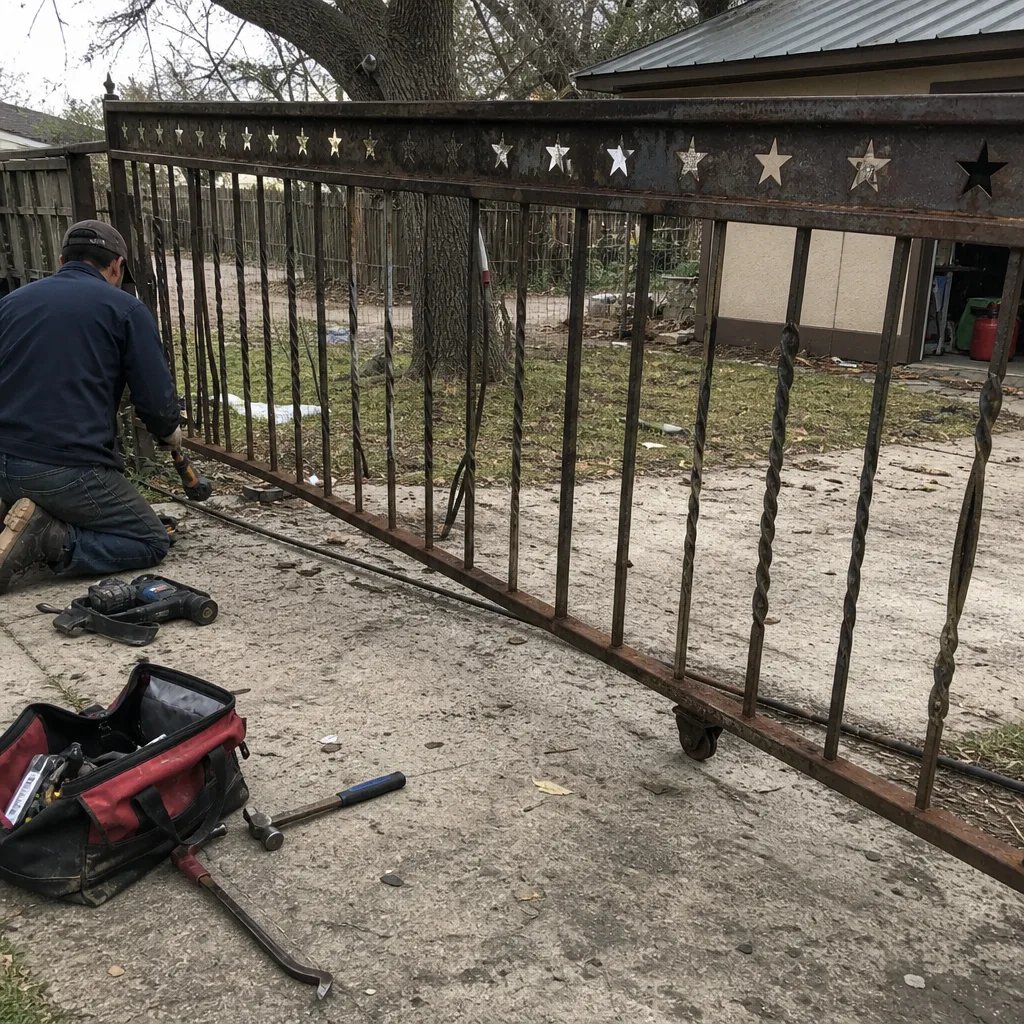 Before
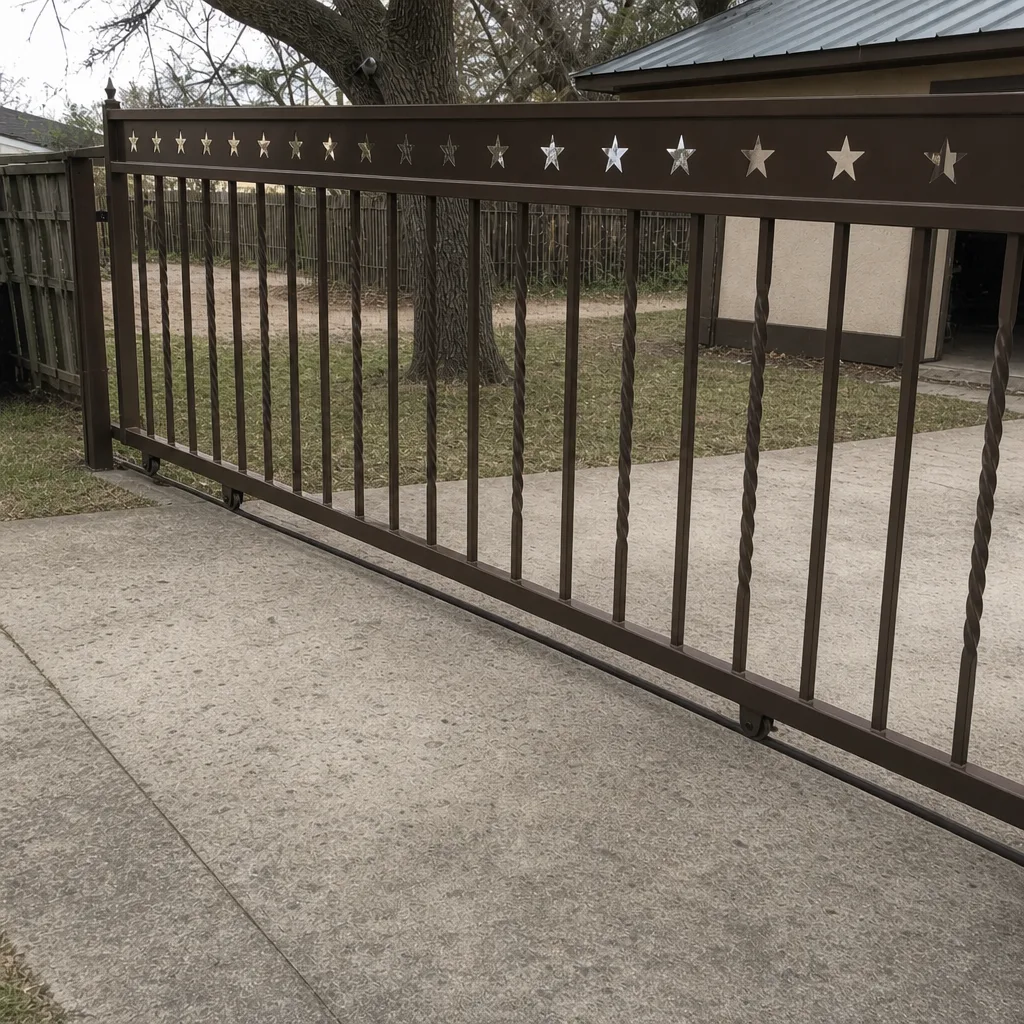 After
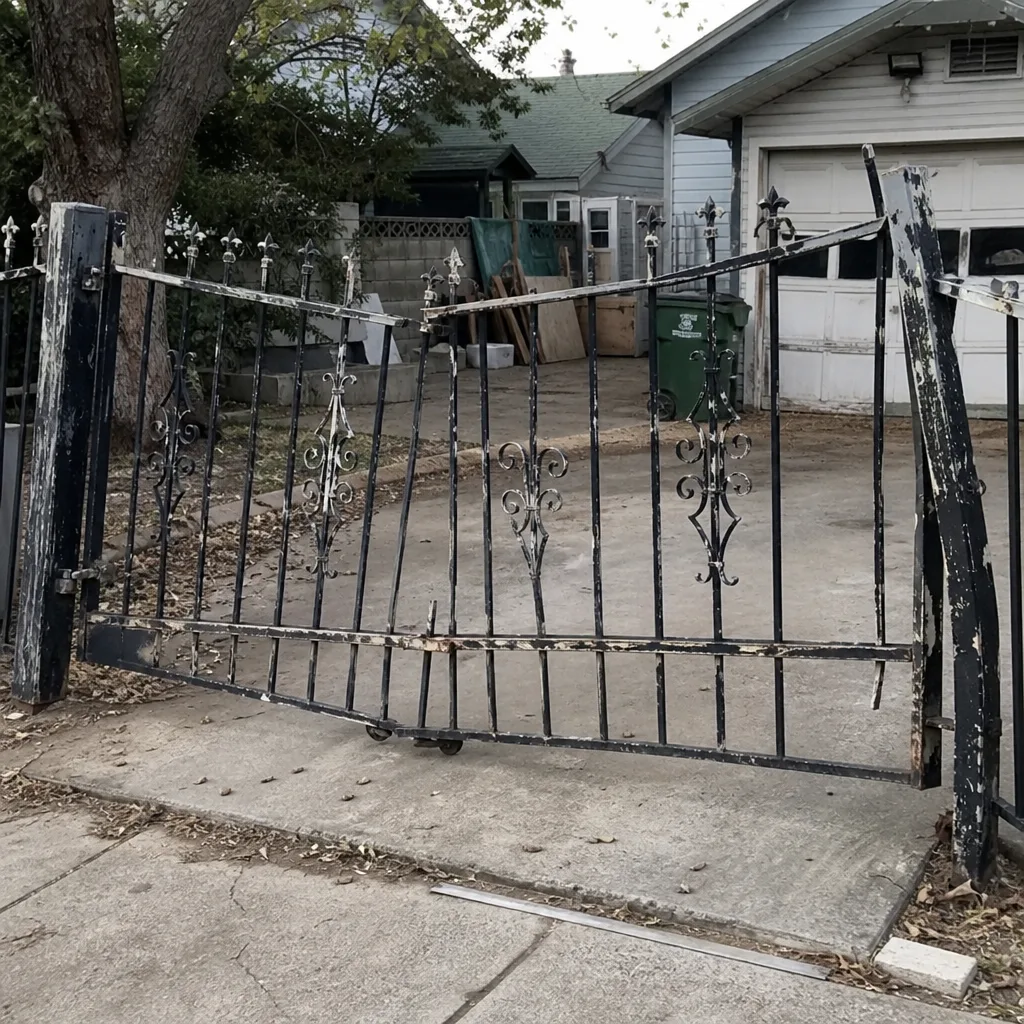 Before
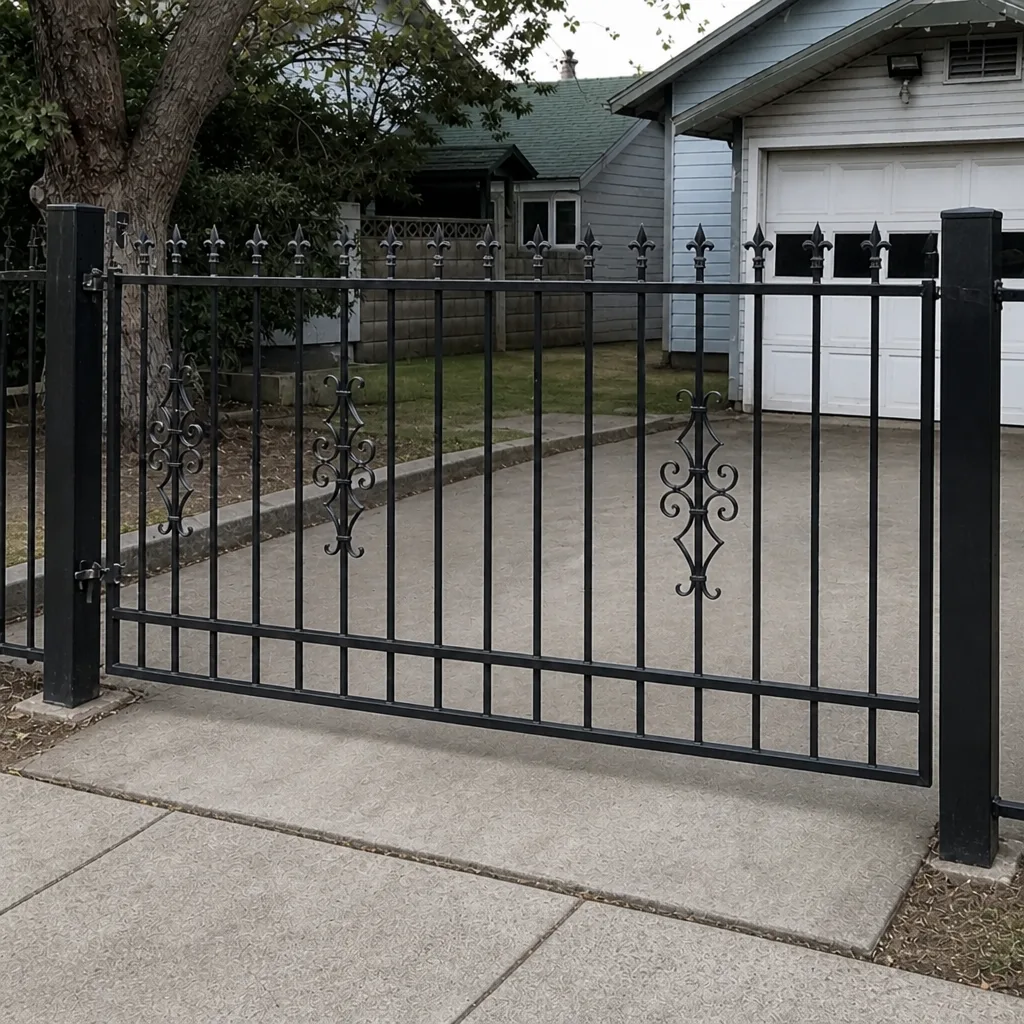 After
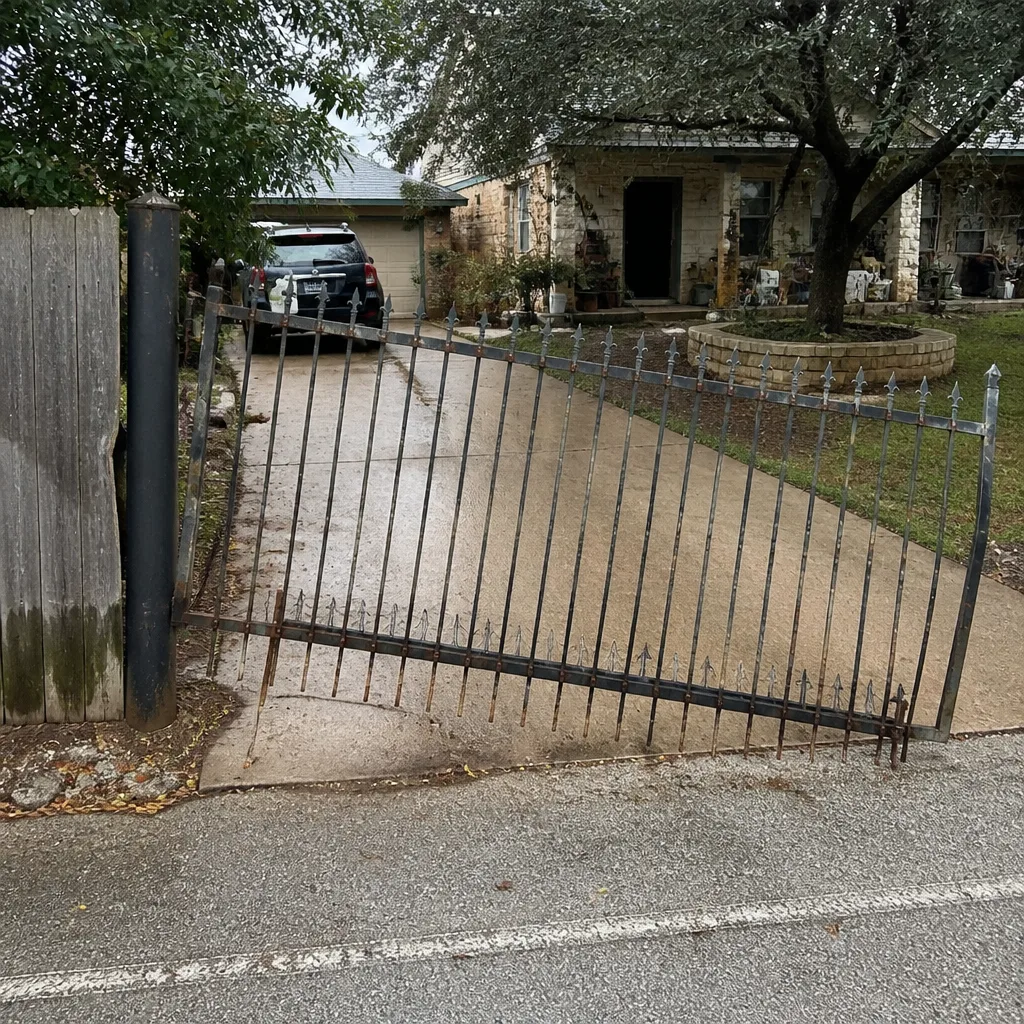 Before
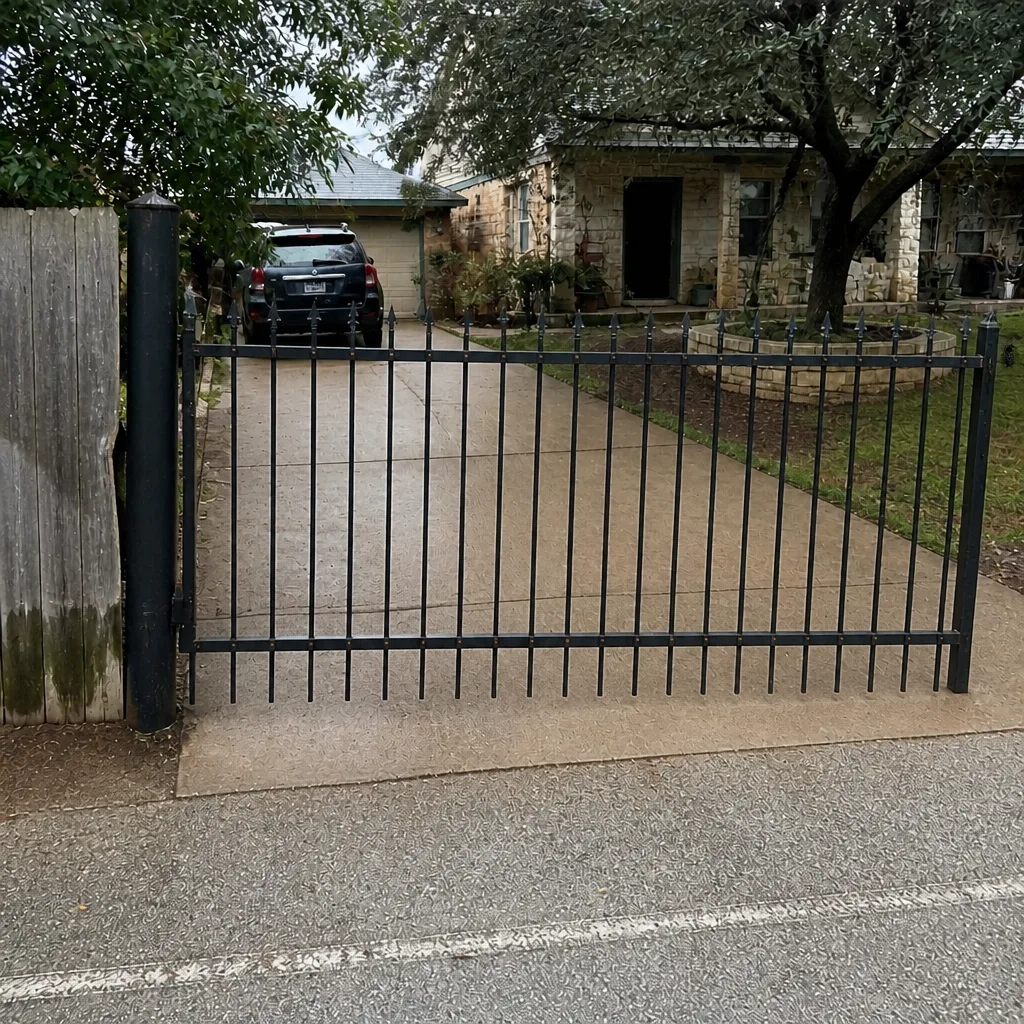 After
When to Call a Professional
Call a gate specialist any time the operator, the control board, or a safety device is involved – and any time the gate is slow, intermittent, or reverses for no visible reason. That’s the point where a generalist misdiagnoses and a specialist resolves. Call us if the gate hums but won’t move, if it stops partway through travel, if the remote or keypad only works sometimes, if the photo eyes or safety edge trigger without an obstruction, or if the operator is old enough that parts availability is in question. Gate Repair New Braunfels offers free estimates in New Braunfels – call (855) 939-0250. We answer 24/7, with fast dispatch from 7am to 7pm, Sunday through Friday.
Frequently Asked Questions
Gate repair in New Braunfels is priced per job by a written estimate, and the cost depends on which subsystem failed – mechanical hardware, the control layer, or the operator. A hinge or track repair typically costs less than a control-board fix, which in turn costs less than a full operator replacement. Call (855) 939-0250 for an exact quote – estimates are free and the price is agreed before any work starts.
Yes, same-day electric gate repair is often possible for the diagnosis and for many common repairs, because the control-board, sensor, and hinge work we do most can be done in a single visit. Parts availability is the one variable, which is why we ask for your brand and model when you call. Call (855) 939-0250 – we answer 24/7, with fast dispatch from 7am to 7pm, Sunday through Friday.
Yes, and it’s the earliest warning of motor failure. A slow gate means the motor is fighting resistance from a binding hinge, low voltage, a failing capacitor, or a worn gearbox, and the longer it runs that way the faster the motor wears out. Have it checked before it stops. Call (855) 939-0250 for a free estimate.
We service the brand you already have across nine major gate systems, including LiftMaster, FAAC, BFT, Linear, Viking, Ghost Controls, DoorKing, Elite, and Mighty Mule – covering entry-level residential operators through commercial-grade units. That range is what lets us diagnose honestly instead of recommending a replacement because a brand is unfamiliar.
Yes, a new gate installation includes the power run to the operator and the safety edges and photo eyes that stop the gate on contact. Installation is a scheduled, measured job, not a same-day repair, so we start with a free on-site measure and a written price. Call (855) 939-0250 to get scheduled.
Repair makes sense when a single component – a control board, hinge, sensor, or limit switch – has failed and parts are available for your brand. Replacement becomes the honest answer when several parts of the operator fail at once, parts are discontinued, or the gate’s mechanical condition is worn out. We walk through that decision with you on-site rather than steering you toward a new system before it’s warranted.
The Bottom Line
Most gate failures in New Braunfels come down to a short list of weak points – the control board, hinges, limit switches, and photo eyes – and figuring out which one failed first is the whole game. A slow gate is a warning, not a nuisance. A precise symptom description and a photo of your brand label shorten the repair. And repair versus replace is a decision about parts availability and system condition, not a sales pitch. Our technicians have up to 14 years of experience working with the brand you already have. When you’re ready for an honest diagnostic, call (855) 939-0250 for a free estimate.
Written by the team at Gate Repair New Braunfels.