
Last updated November 15, 2026
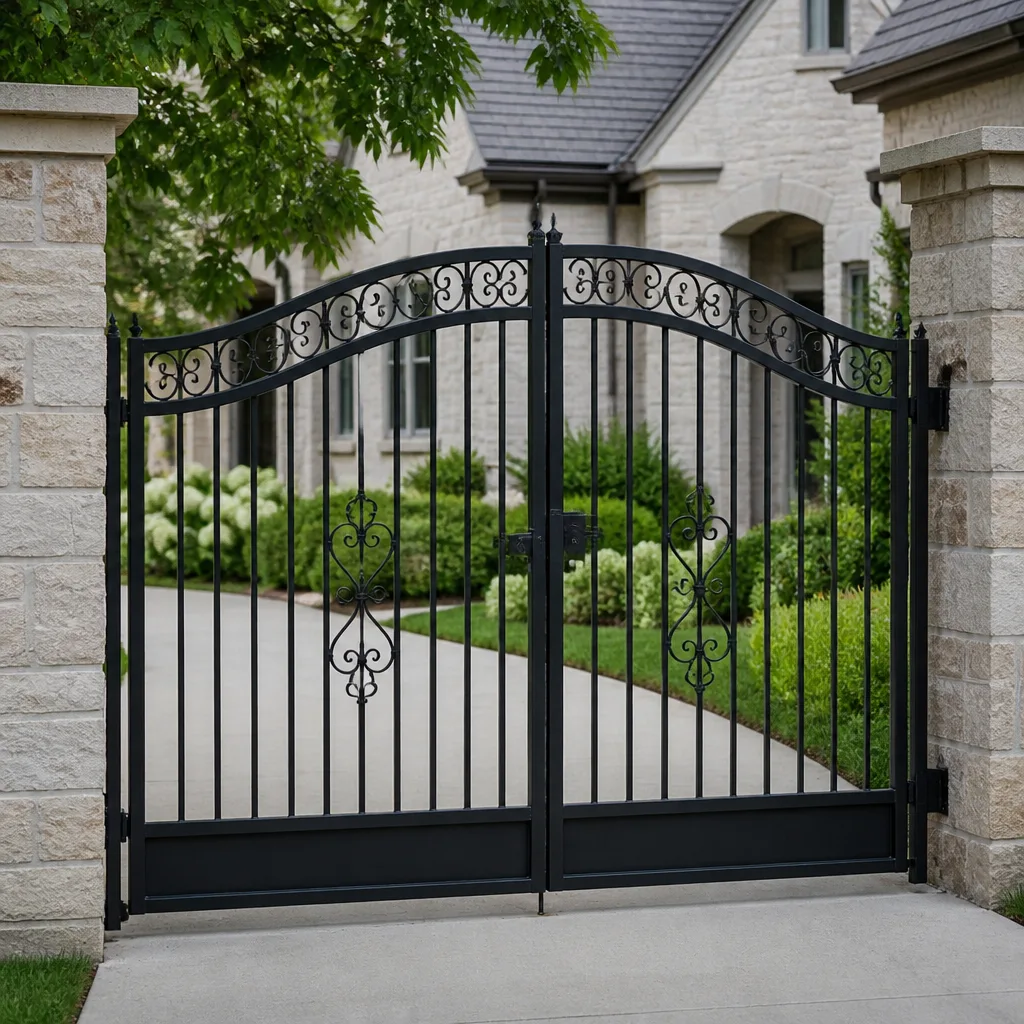 Wrought iron
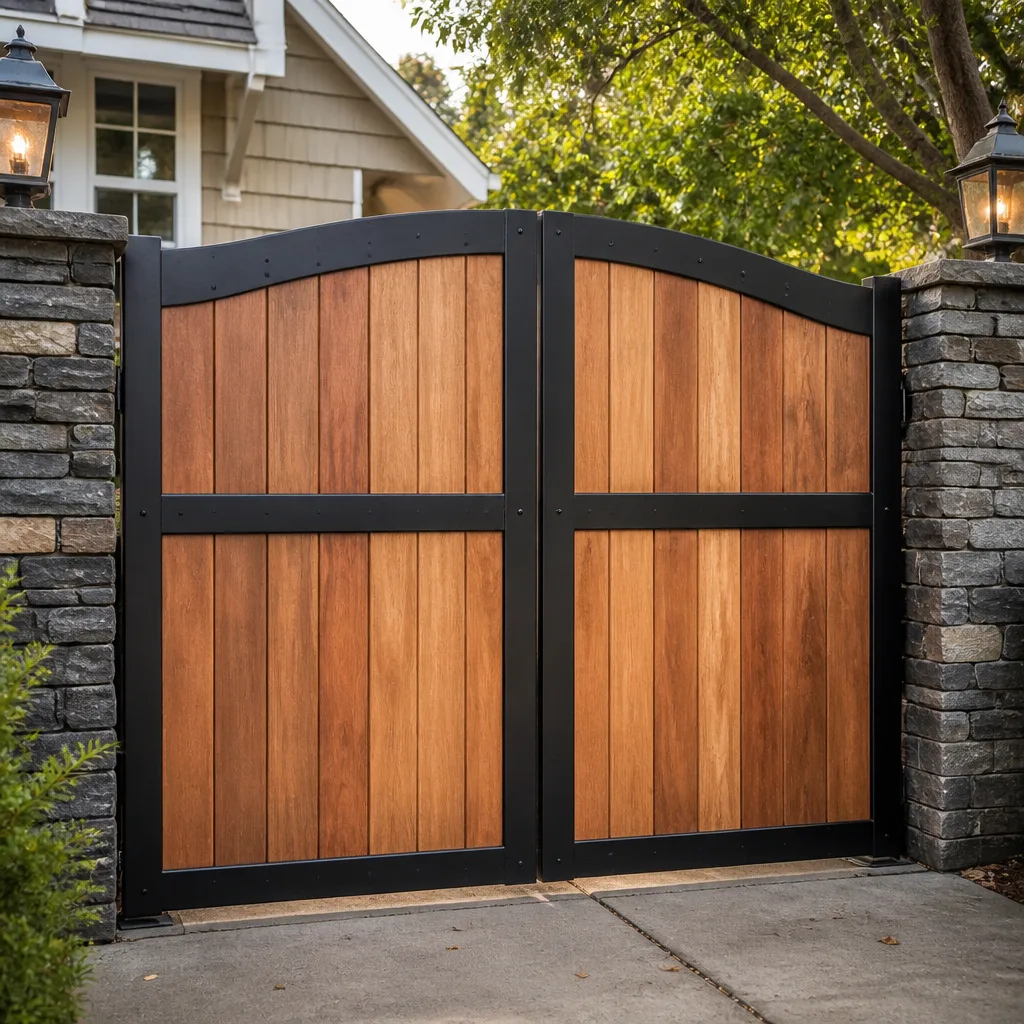 Wood & steel frame
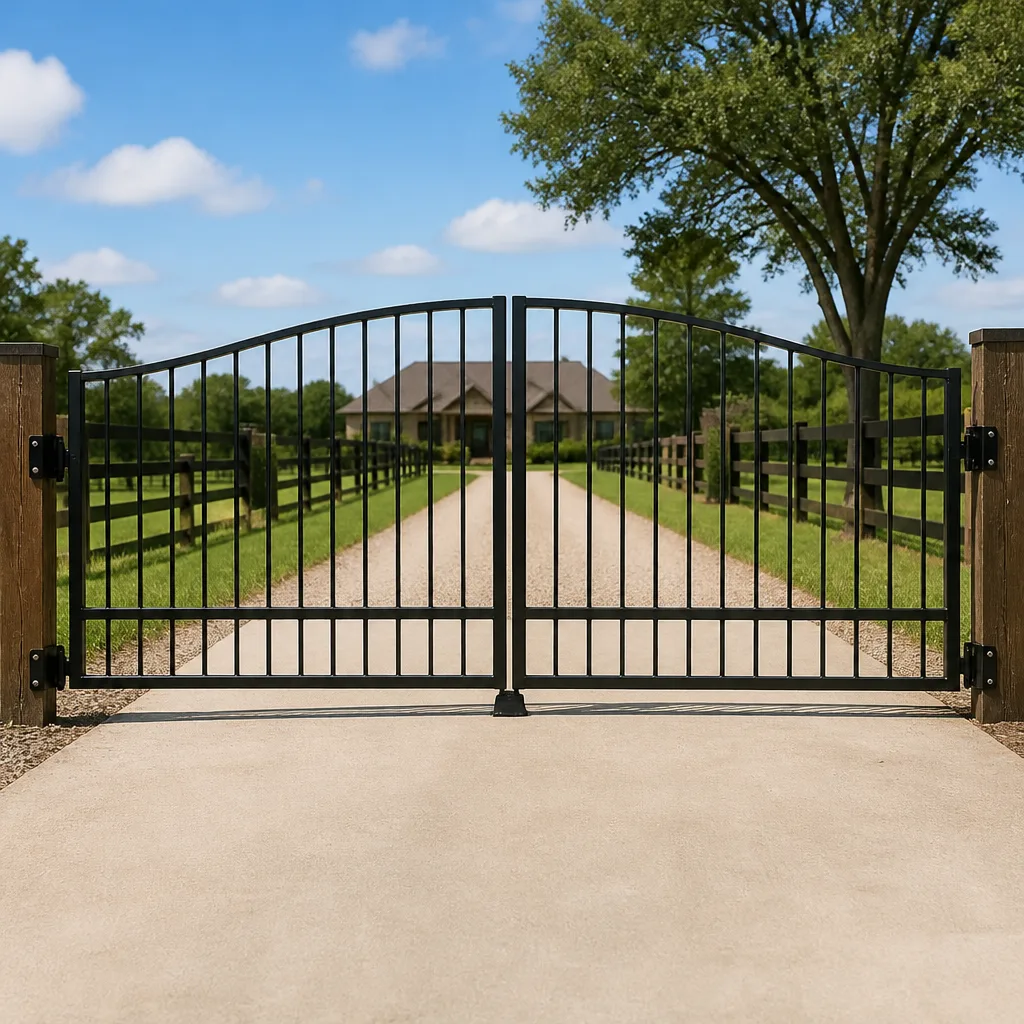 Farm & ranch
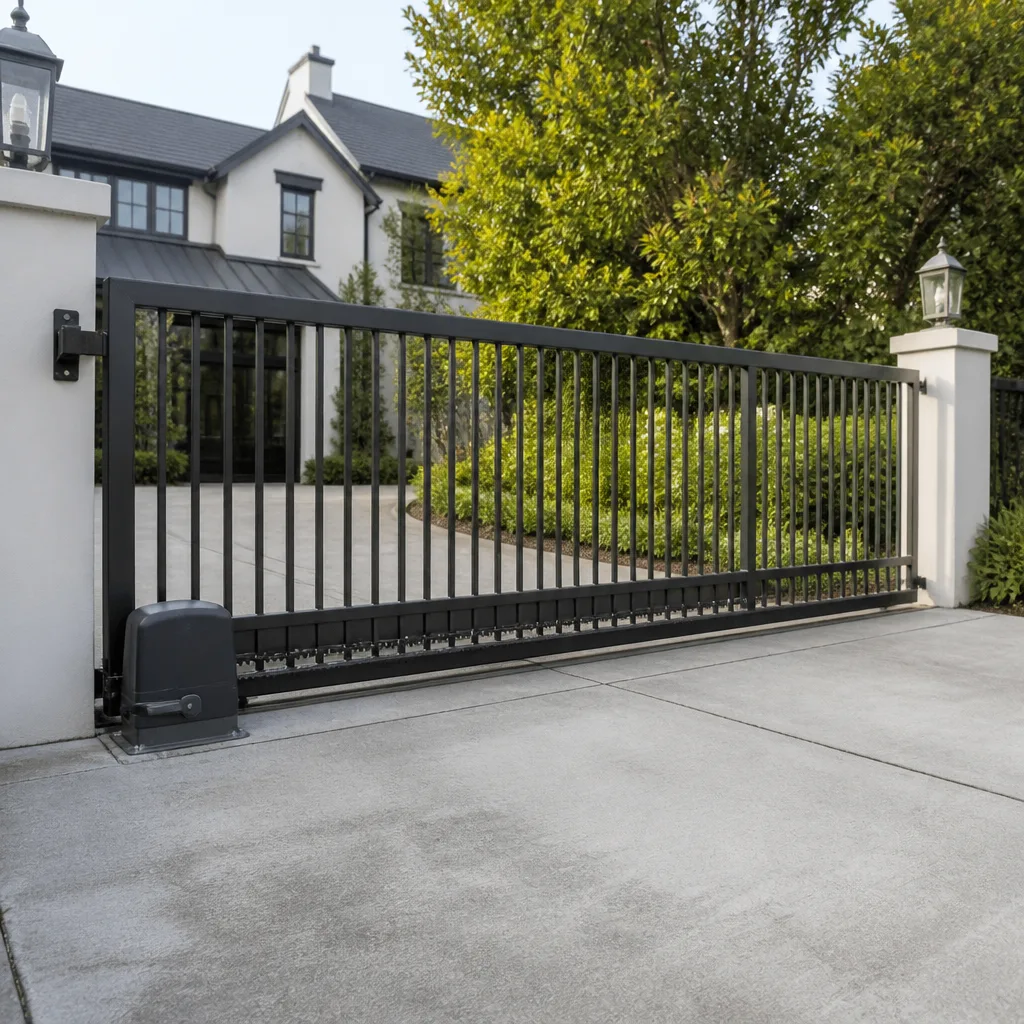 Sliding driveway gates
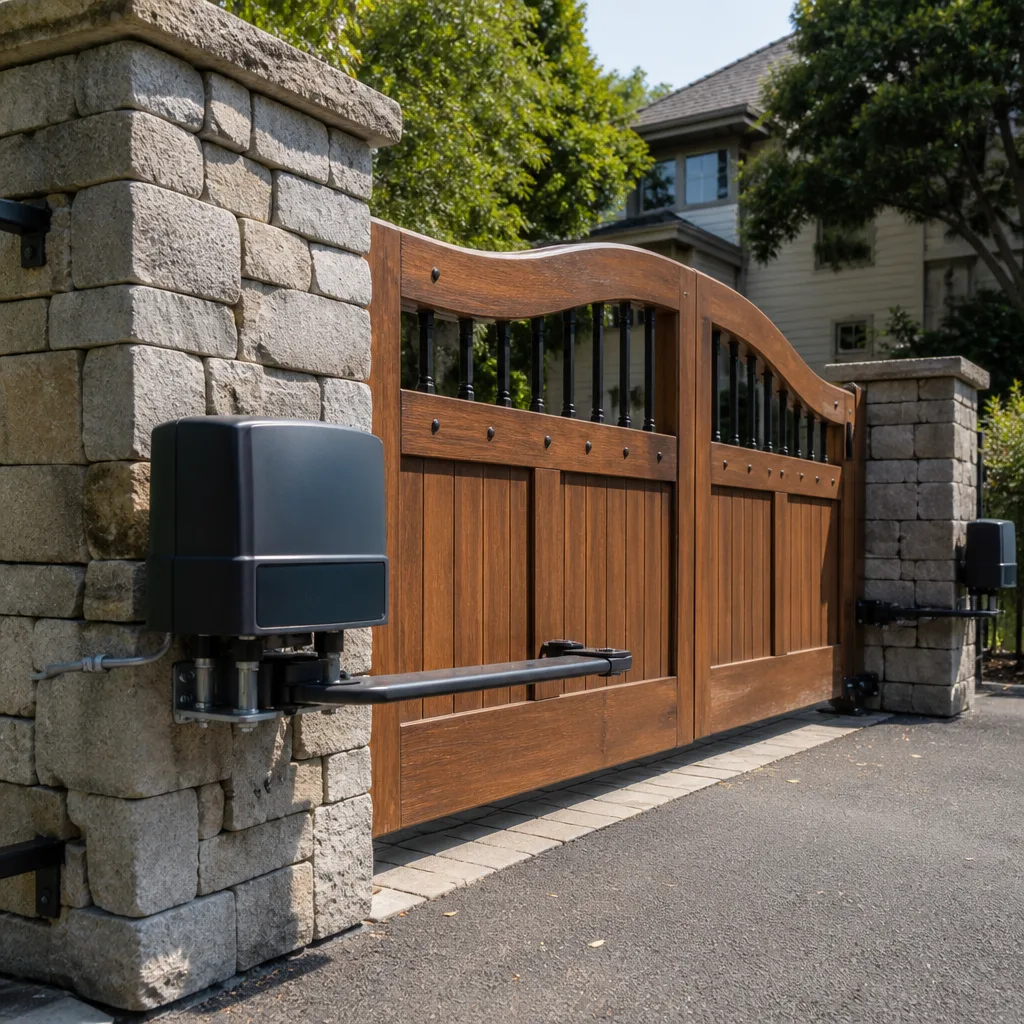 LiftMaster operators
Free on-site gate assessment - hinges, posts, and your LiftMaster or Nice gate operator checked before anything is quoted
The assessment is free and the quote is the invoice.
Get your free estimateChoosing the Right Gate Repair Brand: A Buyer’s Guide for New Braunfels
The operator brand that’s right for a gate cycled twice a day is the wrong choice for a gate cycled forty times, and most buyers never ask about duty cycle before purchasing the system they’ll be repairing for the next decade. Brand loyalty has almost nothing to do with it. What matters is whether the operator’s rated cycle count, its power source, and its parts network fit the way your New Braunfels property actually opens and closes its gate. This guide walks through duty cycle in plain terms, how to calculate the rating your gate needs, which brands keep parts close at hand in Central Texas, how heat, power fluctuation and caliche dust treat different operators, and where a premium name pays for itself in repairability versus where a mid-tier unit is the smarter buy. By the end you’ll be able to evaluate any gate operator on the metrics that drive long-term cost, not the ones that look good on a spec sheet.
Quick Answer
The best gate operator brand for a New Braunfels property is the one whose duty cycle rating matches your actual daily cycle count, whose parts are readily sourced in Central Texas, and whose control board is affordable to replace rather than proprietary and expensive. For a standard residential driveway cycled a handful of times a day, a mid-tier operator with universal components often outlasts and out-saves a premium commercial unit. For a high-traffic HOA or commercial entry cycled dozens of times daily, a professional-grade operator with a robust duty rating and local parts support is worth the premium. The brand is the last question, not the first.
Styles & brands we work with
- Wrought iron
- Wood & steel frame
- Farm & ranch
- Sliding driveway gates
- LiftMaster operators
Table of Contents
- What Duty Cycle Actually Means for a Gate Operator
- How to Calculate the Right Duty Rating for Your Gate
- Parts Availability: Which Brands Keep You Moving in Central Texas
- How Brands Handle New Braunfels Heat, Power, and Caliche Dust
- Repair Cost Track Record: Proprietary Boards vs. Universal Components
- When a Name-Brand Premium Pays for Itself
- A Practical Checklist for Evaluating Any Operator
- Matching the Brand to Your Property Type
What Duty Cycle Actually Means for a Gate Operator
Duty cycle is the number of open-and-close cycles an operator is engineered to handle within a given time window, usually expressed as cycles per hour or as a percentage of continuous running time. It’s the single most overlooked number on a gate operator spec sheet, and it’s the one that most directly predicts how often you’ll be calling for gate repair. A unit rated for light residential use and a unit rated for commercial use may look nearly identical from the outside. Inside, the motor windings, the gearbox, and the control board’s thermal design are built to entirely different tolerances.
Here’s what duty cycle means in practical terms. An operator cycled four times a day spends most of its life idle, so heat builds up slowly and has time to dissipate. That same operator cycled forty times an hour never fully cools, and the components that fail first are the ones that run hottest: the motor, the control board, and any capacitor or relay in the circuit. Two gates with the same panel weight and the same brand can have wildly different lifespans depending on how many vehicles pass through them each day.
In New Braunfels, this matters more than buyers expect because the summer heat already works against heat dissipation. A gate operator sitting in direct sun on a 100-degree afternoon is starting from a higher baseline temperature, so a unit that’s borderline on duty rating in a cooler climate can fail early here. Buying the correct duty rating isn’t about buying the biggest unit. It’s about matching the rating to the traffic, then letting the margin absorb the local heat.
- Light residential: roughly a handful of cycles per day, one household, one or two vehicles.
- Heavy residential or small HOA: dozens of cycles per day, multiple households sharing one entry.
- Commercial or high-traffic: continuous cycles during business hours, barrier arms, and access-controlled entries.
How to Calculate the Right Duty Rating for Your Gate
You can work out the duty rating you need in a few minutes with a notepad and an honest count. The goal is to know your real cycle volume before you ever compare brands, because the brand decision follows from the rating, not the other way around.
- Count the vehicles that use the gate on an average day. Each vehicle passing through is typically two cycles, one to open and one to close. A household with two cars coming and going twice daily is already around eight cycles.
- Add delivery, service, and guest traffic. In a New Braunfels neighborhood with regular deliveries, this can double the base household count without anyone noticing.
- Multiply for peak days. A weekend gathering, a moving truck, or a landscaping crew can push a light-residential gate into heavy-residential territory for a day, and the operator has to survive those spikes.
- Add a margin for heat. Because New Braunfels summers run hot, choose the next rating tier up from your raw count rather than sitting right at the edge.
- Match the operator class to the result. Light, heavy-residential, and commercial classes exist for a reason, and a professional-grade operator like a FAAC or BFT unit handles the top tier while a Mighty Mule or Ghost Controls unit is built for the bottom.
For a standard residential driveway in New Braunfels, most households land in the light-to-heavy residential band. For an HOA entry or a small commercial lot, the count climbs quickly into commercial territory, and that’s where the duty rating becomes the dominant factor in the purchase. If you’re unsure which tier you’re in, a technician can measure it on a site visit before you commit to a brand.
Parts Availability: Which Brands Keep You Moving in Central Texas
Parts availability is the quiet cost driver that never shows up on the spec sheet. Two operators with identical duty ratings can have very different ownership costs if one brand’s parts are stocked regionally and the other’s have to ship from a manufacturer with a week or more lead time. When a gate is your primary access point, a week without parts is a week of propping the gate open or parking on the street.
In our experience across Central Texas, the brands that tend to have the strongest local parts pipeline are the ones with wide professional distribution: LiftMaster, Linear, Elite, and DoorKing are commonly supported through regional supply channels, and a technician who works these brands regularly often has the common failure parts on hand or can source them quickly. Entry-level DIY brands like Mighty Mule and Ghost Controls are widely available at retail, which helps for consumer-level parts but can complicate things when a specific control board revision is needed. Professional-grade operators like FAAC and BFT tend to be well-supported through dealer networks, though a less common model may require ordering.
What this means for a New Braunfels buyer is straightforward: before you fall in love with a brand, ask how fast a replacement control board or motor can be sourced locally. If the answer is “a week or more,” factor that into the total cost. The cheapest operator to buy is not always the cheapest to own, and the difference usually shows up in parts logistics rather than in the purchase price.
- Fast regional sourcing: brands with broad professional distribution and dealer networks.
- Retail-available parts: consumer brands where common components are easy to find but specific revisions vary.
- Order-in parts: less common models where a board or motor may need to be ordered, extending downtime.
If a gate is down and you’re weighing repair against replacement, an electric gate repair diagnosis is the right first step, because it tells you whether the part is available and what it will cost before you commit.
How Brands Handle New Braunfels Heat, Power, and Caliche Dust
New Braunfels puts gate operators through a specific set of conditions that a spec sheet written for a national market doesn’t fully capture. The three that matter most are heat, power fluctuation, and dust from the caliche roads common in the surrounding area.
Heat is the big one. Long summers push control boards and motors harder than the same equipment faces in milder climates. Operators with better thermal design, larger heat sinks, and control boards rated for higher ambient temperatures hold up better. This is where a professional-grade operator often justifies its price even on a modest residential gate: the thermal margin is built in. When we service a board that’s failed in July or August, heat stress is frequently part of the story.
Power fluctuation is the second factor. Central Texas storms and grid events produce surges and brownouts, and the control board is usually the first component to absorb the damage. Brands with robust surge protection built into the board, or with boards that are affordable and easy to replace, recover faster. Brands with fragile proprietary boards can turn a minor surge into a major expense. A surge protector on the operator circuit is worth discussing with your technician regardless of brand.
Dust from caliche roads is the third. Caliche generates a fine alkaline dust that coats gate tracks, rollers, and operator housings, and over time it works into moving parts. Operators with sealed gearboxes and well-protected control enclosures tolerate this better. Slide gates on dusty properties need more frequent track cleaning, and swing gate hinges need attention, but the operator itself can be protected with a sealed enclosure and a routine cleaning schedule. None of this is brand-specific magic; it’s about matching the operator’s enclosure and sealing quality to the local environment.
Repair Cost Track Record: Proprietary Boards vs. Universal Components
The repair cost track record of a gate operator brand comes down largely to how its control board and motor are designed. Proprietary control boards that only work with one brand’s accessories and one brand’s replacement part tend to be expensive to replace, and they lock you into that brand’s pricing. Operators that use more universal components, standard limit switches, common relay types, and boards that are widely stocked, tend to be cheaper to keep running over a decade.
In our work, the brands that tend to have the most expensive proprietary boards are often the premium commercial units, which is the trade-off for their durability and feature set. The brands that tend to use more universal or widely available components are often the mid-tier and prosumer units, which makes them cheaper to repair even if they need service a little more often. Neither is automatically the right answer. A commercial entry gate that runs hundreds of cycles a day may justify a premium operator with an expensive board because the alternative is more frequent total replacement. A standard residential gate usually does not.
Ownership cost is the number to compare, not purchase price. Over a ten-year horizon, the operator that costs a little more up front but uses a $150 board instead of a $600 board can come out well ahead, especially if it also has better local parts availability. This is why we evaluate brands on repair frequency and repairability rather than horsepower. A brand-agnostic diagnostic approach, meaning we service competing brands and aren’t tied to one manufacturer, is how you get an honest answer about which operator is actually cheaper to own. When we recommend repair over replacement, it’s because the math on the existing unit supports it.
When a Name-Brand Premium Pays for Itself
A name-brand premium is worth paying when three conditions line up: high cycle volume, a critical access function, and strong local parts support. Under those conditions, a professional-grade operator from a brand like DoorKing or FAAC earns its price through duty rating, thermal margin, and long service life. An HOA entry gate that controls access for dozens of households, or a commercial lot where a failed gate means lost business, fits that profile. The premium buys reliability and a parts network that keeps downtime short.
A mid-tier operator is the smarter long-term investment when the gate is a standard residential driveway with modest cycle volume. Here the premium brand’s extra duty rating is capacity you’ll never use, and its expensive proprietary board is a repair bill waiting to happen. A well-matched mid-tier unit with universal components and good local parts availability will often deliver a lower ten-year cost with fewer surprises. That’s not a knock on the premium brands. It’s a recognition that a residential gate and a commercial gate have different jobs, and the right operator for one is the wrong operator for the other.
The honest middle ground is this: buy the duty rating you need, buy the parts availability you can verify, and let the brand follow from those two decisions. If you already own a gate and you’re deciding whether repair or replacement makes sense, that’s a conversation worth having with a gate repair New Braunfels specialist who can look at the actual hardware rather than sell you a brand.
A Practical Checklist for Evaluating Any Operator
Before you commit to any gate operator brand, run through this checklist. It’s the same set of questions we ask on a site visit, and it works whether you’re replacing an existing unit or buying a new gate system.
- What is my real daily cycle count? Count vehicles, add deliveries and guests, and add a heat margin.
- What duty rating does that require? Match the operator class to the count, not to the price.
- How fast can a replacement control board and motor be sourced locally? Ask directly, and get a real answer.
- Is the control board proprietary and expensive, or universal and affordable? This drives your ten-year cost.
- How does the operator handle heat and power fluctuation? Look at thermal design and surge protection.
- Is the enclosure sealed against caliche dust? This matters for slide gates and dusty properties.
- Who services this brand locally, and do they work on competing brands? A brand-agnostic technician gives you an objective recommendation.
If you can answer all seven, you’re in a position to choose well. If any answer is “I don’t know,” that’s the one to resolve first. A free on-site estimate is the fastest way to get real answers for your specific gate.
Matching the Brand to Your Property Type
Different New Braunfels properties call for different operator classes, and the brand conversation is really a property-type conversation. A single-family home on a quiet street has different needs than an HOA entry or a small commercial lot, and the operator should reflect that.
For a standard residential driveway, the priorities are a light-to-heavy-residential duty rating, universal components, and local parts availability. Brands that serve the residential and prosumer market well fit here, and the goal is a unit that’s cheap to repair and easy to source parts for. For an HOA entry, the priorities shift to duty rating and reliability, because a failed gate affects everyone in the community and downtime is visible. Professional-grade operators with strong local support make sense here. For a small commercial property, the same logic applies with an added emphasis on repairability, since commercial gates often see the highest cycle counts and the most wear.
One more factor specific to New Braunfels: power source compatibility. If your gate site has reliable grid power, a standard AC operator is fine. If it’s remote or the power is unreliable, a solar-compatible operator is worth considering, and not every brand offers a good solar option. It’s worth confirming the operator’s power requirements match your site before you buy. We work on the brand you already have, whether it’s a LiftMaster swing operator or a FAAC barrier arm, and we can tell you honestly whether the current unit is well-matched to the property or whether a different class would serve you better.
Wherever the gate sits in New Braunfels, the same rule holds: match the operator to the way the property uses its gate, and the brand will follow.
Common Mistakes to Avoid
- Buying on horsepower instead of duty cycle. A higher-horsepower motor doesn’t fix a duty rating mismatch, and it won’t stop a light-duty board from failing under constant cycling. Match the rating to the cycle count.
- Skipping the parts availability question. A brand with a week-long lead time on a control board will keep your gate open and your property exposed. Ask before you buy.
- Assuming premium always means cheaper to own. Premium commercial units often carry expensive proprietary boards. For a standard residential driveway, that premium can cost more over ten years than a well-chosen mid-tier unit.
- Ignoring New Braunfels heat when sizing the operator. A unit that’s borderline on duty rating in a milder market can fail early here. Add a margin for summer heat.
- Overlooking power fluctuation protection. Surges and brownouts are hard on control boards, and the board is usually the first thing to fail. A surge protector on the operator circuit is worth discussing.
- Letting caliche dust go unmanaged. Dust from the surrounding roads works into tracks and moving parts. Regular cleaning and a sealed enclosure protect the operator and the gate hardware.
- Choosing a generalist who treats gates as a side job. A gate specialist works on the mechanical and control sides of automated systems every day and can give you an objective, brand-agnostic recommendation. A New Braunfels gate specialist should be able to service the brand you already have before suggesting a replacement.
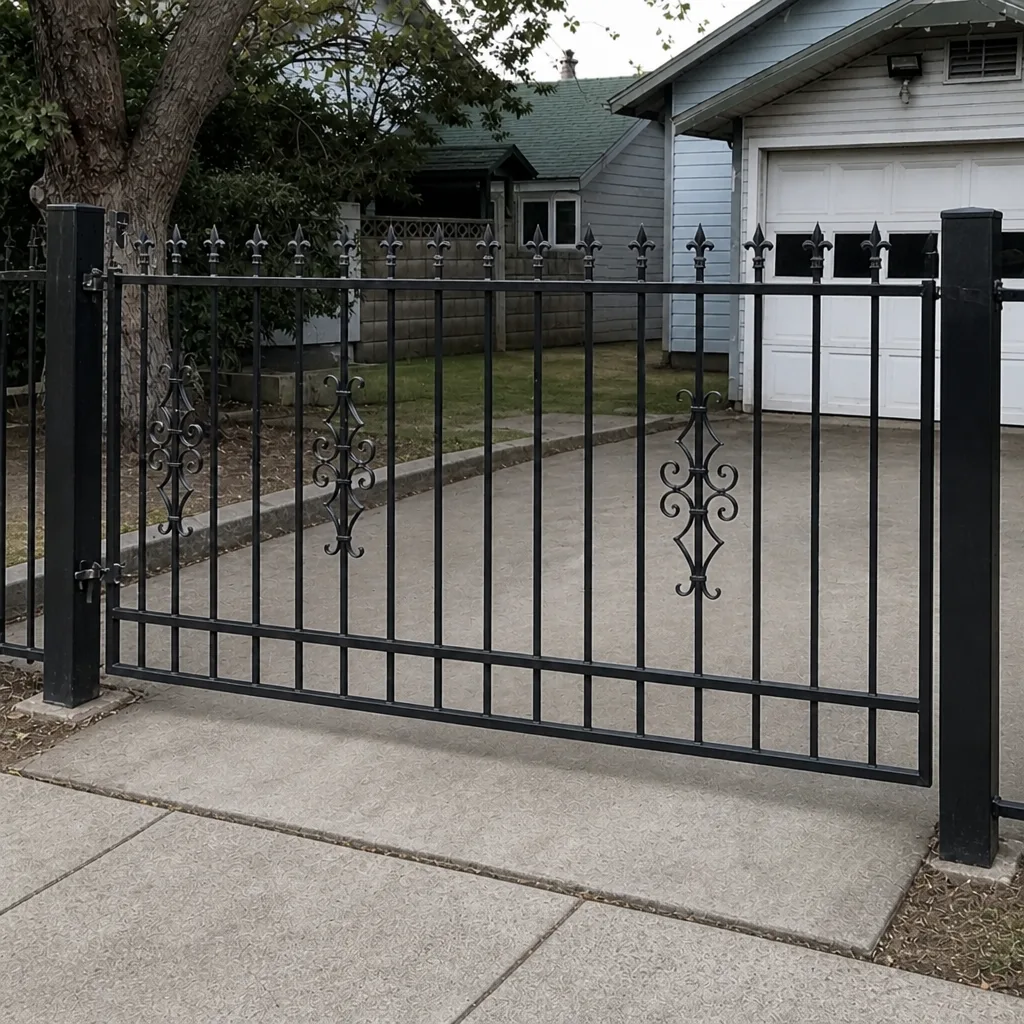
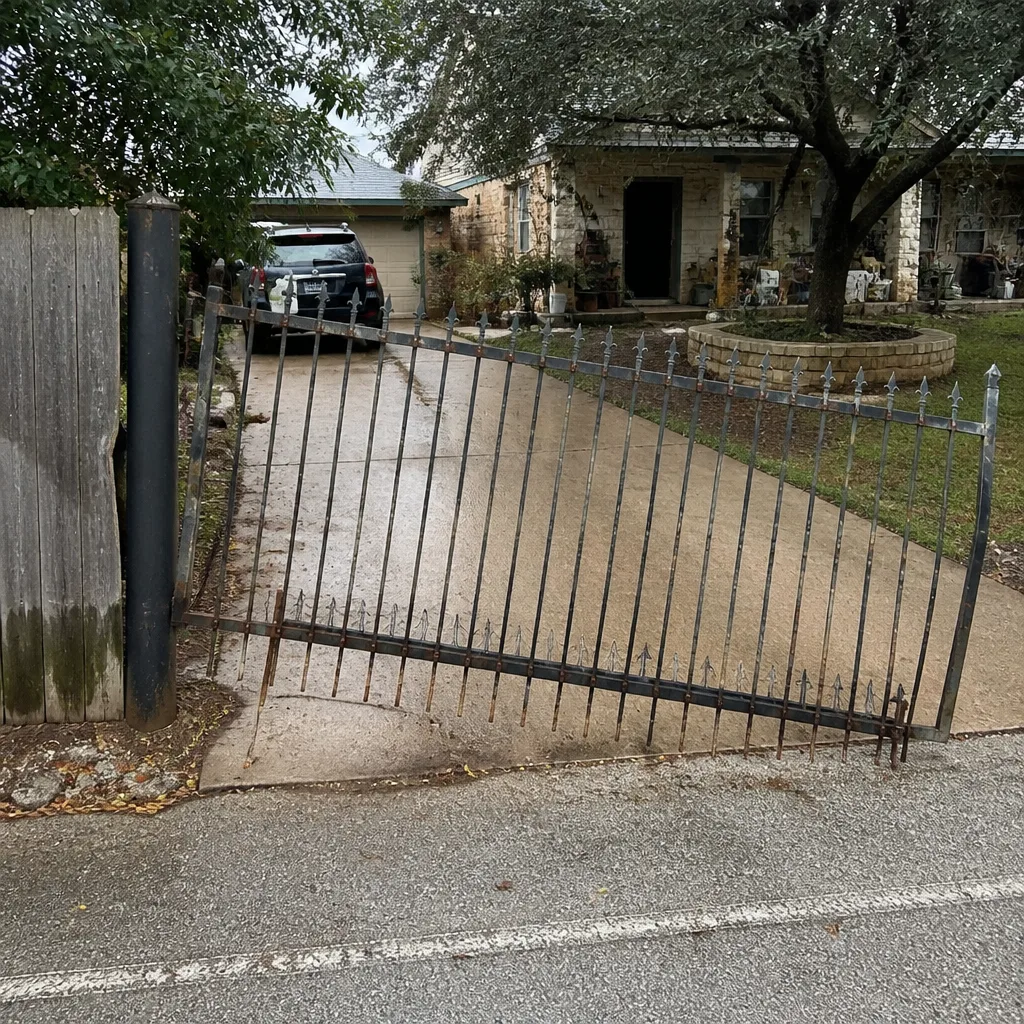
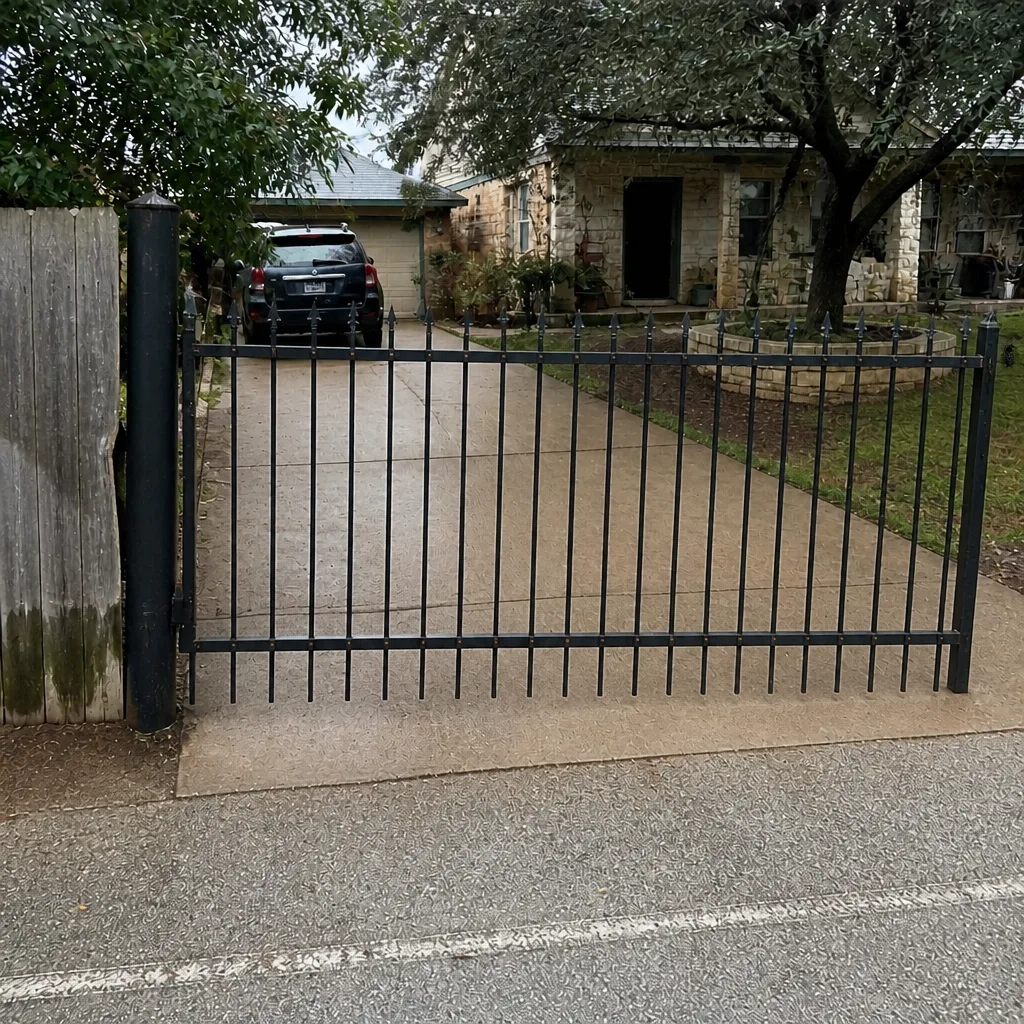
See the difference
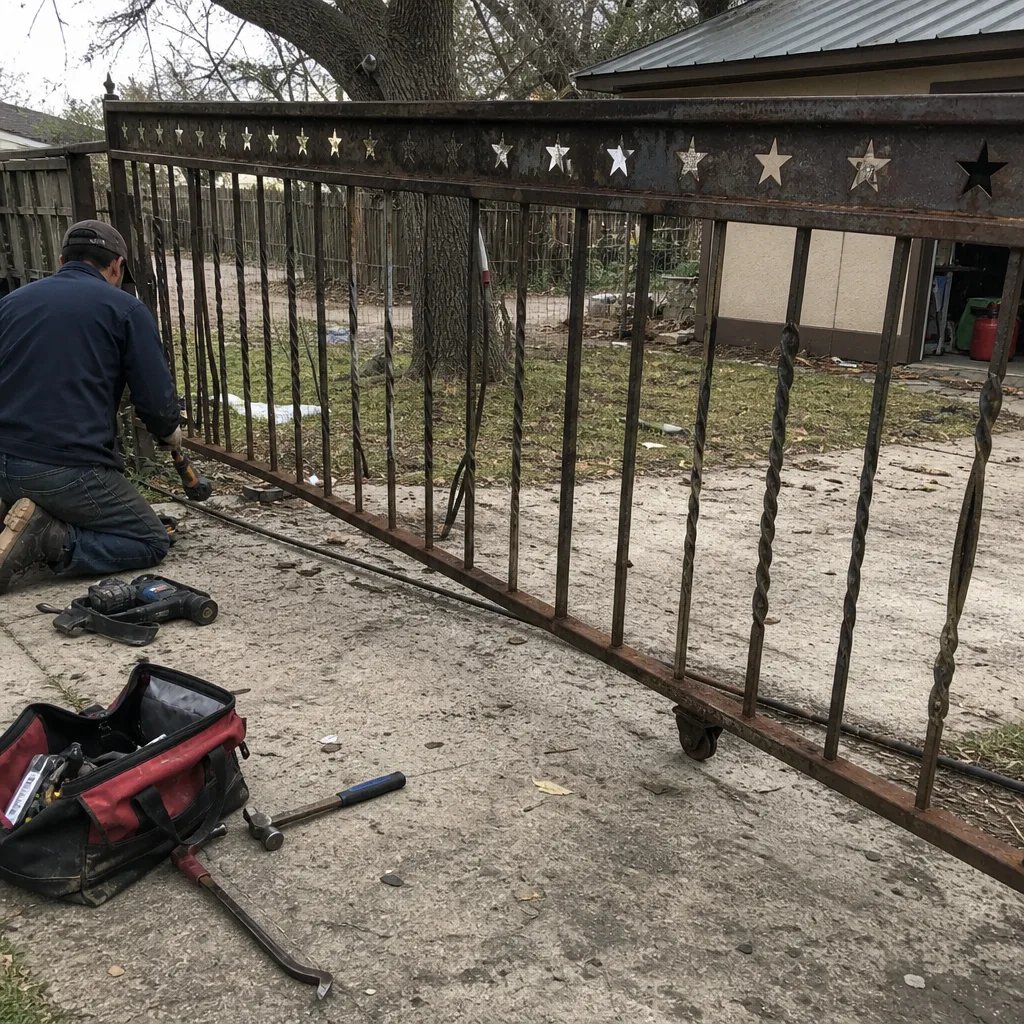 Before
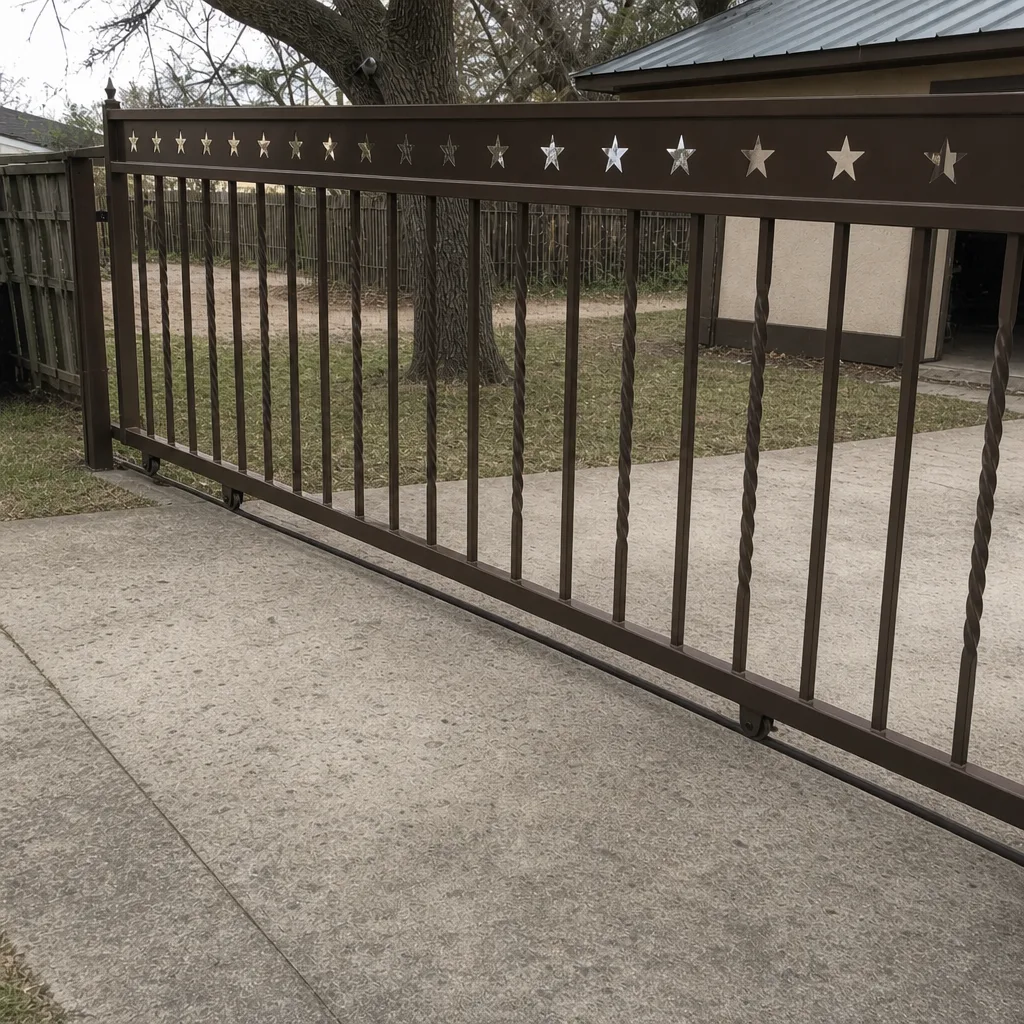 After
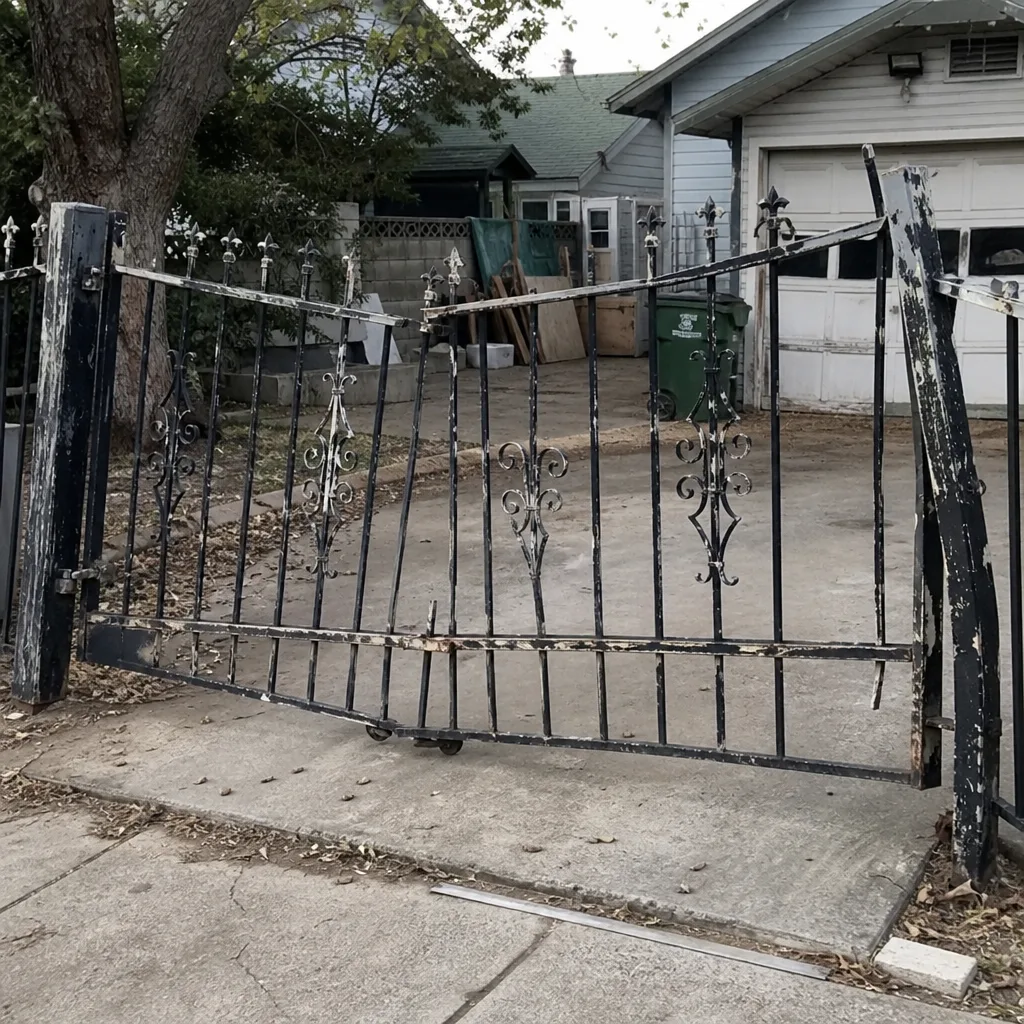 Before
 After
 Before
 After
When to Call a Professional
Call a professional when a gate operator stalls, reverses without warning, or stops responding to the remote, because those symptoms usually point to the control board, the motor, or a sensor, and diagnosing them safely requires a technician. Call when you see a slide gate drifting off its track, when the gate won’t fully close and leaves a gap, or when the operator housing is hot to the touch or trips a breaker. Any work on the operator’s electrical wiring and power supply carries real risk, and the heavy gate panels themselves can crush or pinch, so this isn’t a job to take on without training. Our technicians have up to 14 years of experience with both the mechanical and control sides of automated gates. Gate Repair New Braunfels offers free estimates in New Braunfels – call (855) 939-0250. We answer 24/7. Fast dispatch from 7am to 7pm, Sunday through Friday.
Frequently Asked Questions
There’s no single best brand, because the right pick depends on your cycle count and parts availability more than the name. For a standard residential driveway, a mid-tier operator with universal components and local parts support is usually the smarter long-term investment. Call (855) 939-0250 for an exact quote – estimates are free.
Count the vehicles that pass through your gate on an average day, double that for open and close, add delivery and guest traffic, and then move up one rating tier to allow for New Braunfels summer heat. A household with two cars typically lands in the light-to-heavy residential band. If you’re unsure, a site visit will confirm it.
Brands with broad professional distribution, such as LiftMaster, Linear, Elite, and DoorKing, tend to have the strongest local parts pipeline, while consumer brands like Mighty Mule and Ghost Controls are widely available at retail. Less common professional models like some FAAC and BFT units may need to be ordered. Ask about lead time before you commit.
It’s worth it when the gate is high-traffic or access-critical, like an HOA entry or a commercial lot, because the duty rating and parts network reduce downtime. For a standard residential driveway with modest use, a mid-tier operator is often cheaper to own over ten years. The written estimate will show you the difference before any work starts.
Yes. We work on the brand you already have, and our brand-agnostic diagnostic approach means we’re not tied to one manufacturer. That lets us recommend repair rather than replacement when the existing unit is still the right one. Call (855) 939-0250 to talk through what’s happening with your gate.
Same-day service is often possible, and fast dispatch runs from 7am to 7pm, Sunday through Friday. We answer 24/7, and a call outside dispatch hours is booked into the next opening. Call (855) 939-0250 for an exact quote – estimates are free.
The Bottom Line
Choosing a gate operator brand in New Braunfels isn’t about loyalty. It’s about matching duty cycle to your real cycle count, verifying how fast parts can be sourced locally, and weighing proprietary boards against universal components over a ten-year horizon. A high-traffic HOA or commercial entry justifies a professional-grade operator with strong local support. A standard residential driveway is usually better served by a well-matched mid-tier unit that’s cheap to repair. Heat, power fluctuation, and caliche dust are the local conditions that separate brands in daily use. Get the rating and the parts pipeline right, and the brand decision becomes easy. A free on-site estimate is the fastest way to see what your gate actually needs. Call (855) 939-0250 for a free estimate.
Written by the team at Gate Repair New Braunfels.